Author: arino

  • Best Bonsai Books: 6 Must-Reads, From Your First Tree to Japanese Classics

    Best Bonsai Books: 6 Must-Reads, From Your First Tree to Japanese Classics

    Affiliate disclosure: Some links on this page are affiliate links. If you buy through them, Aribonsai may earn a small commission at no extra cost to you. It doesn’t change what we recommend or how we rank anything.


    Why a good book still beats a hundred videos

    There’s more free bonsai information online than ever. Videos, forums, blogs, social media. So why buy a book?

    Because online advice is scattered, often contradictory, and usually missing context. One video says repot every year; another says every five. One forum post says never water in the sun; another calls that a myth. When you’re starting out, it’s hard to know who to trust.

    A good bonsai book gives you a complete, well-organized picture from someone who has spent decades with trees. It explains not just what to do, but why. And the best ones become reference books you return to every season, long after your first tree has grown up.

    The problem is choosing. There are dozens of bonsai books, from beginner guides to deeply technical classics, and many older titles are out of print or hard to find.

    In my experience, most growers need just two or three books: one clear, modern beginner guide, one book that challenges assumptions, and one classic that connects them to bonsai’s Japanese roots. This guide compares the best bonsai books we’d recommend, from your first tree to the classics that shaped bonsai in the West.


    Who this best bonsai books guide is NOT for

    It’s not a list of species-specific monographs. There are excellent books on single species, like Japanese maples or junipers. We mention a few, but this guide focuses on books with broad value.

    It’s not for people who only want quick tips. Books take time. If you want a single answer fast, a focused article may serve you better.

    It’s not a list of every bonsai book ever written. We’ve chosen titles that are widely recommended by experienced growers and clubs.

    Still with us? Let’s go.


    How we picked these (3 things that actually matter)

    1. Your level

    Bonsai books are written for very different readers. A beginner needs clear instructions and photos. An intermediate grower needs explanations of why techniques work. An advanced grower may want history, design philosophy or deep technical detail. We’ve noted which level each book suits.

    2. Who wrote it

    The best bonsai books come from people with deep, hands-on experience: nursery owners, teachers, and artists who trained in Japan. We’ve included each author’s background so you can judge for yourself.

    3. Modern accuracy vs classic value

    Bonsai knowledge has changed a lot. Modern books often reflect current horticultural understanding, especially on soil and watering. Older classics may be weaker on care details but offer irreplaceable insight into design and tradition. A good bookshelf has both.

    A few reading habits that matter more than the book

    None of these cost anything.

    • Read with a tree in front of you. Techniques make far more sense with a real tree.
    • Re-read each season. Spring, summer and autumn chapters mean more when you’re living them.
    • Take notes. Write what you tried and what happened.
    • Compare sources. When books disagree, look at why.
    • Join a club. Many clubs have libraries and recommended reading lists.
    • Adapt to your climate. Books written for one climate may need adjusting for yours.

    Best bonsai books comparison table

    BookAuthorLevelBest forApprox. price
    The Little Book of BonsaiJonas DupuichBeginnerYour first tree~$19 (hardcover)
    The Essential Bonsai BookJonas DupuichBeginner to intermediateBuilding real techniquesCheck price
    Bonsai HeresyMichael HagedornAll levelsQuestioning bonsai mythsCheck price
    Step-by-Step Bonsai (DK)Peter WarrenBeginner to intermediateVisual, Japan-trained guidanceCheck price
    Bonsai Techniques IJohn NakaIntermediateA classic referenceVaries (often secondhand)
    The Japanese Art of Miniature Trees and LandscapesYuji YoshimuraIntermediate to advancedJapanese roots and historyVaries

    Prices vary by edition, format and seller. Older titles may only be available secondhand.


    The 6 best bonsai books, reviewed

    1. The Little Book of Bonsai (Jonas Dupuich) – the best first book

    If you’re buying one book for a beginner, this is it.

    The Little Book of Bonsai was published by Ten Speed Press in 2020. It’s a 112-page illustrated hardcover, listed at around $18.99 by the publisher. It covers the essentials of bonsai care: wiring, watering, pruning, pests and disease, tools, repotting and fertilizing, for both indoor and outdoor trees, along with choosing a container, displaying a bonsai and selecting a species. Step-by-step photos accompany the instructions.

    Jonas Dupuich runs a Northern California bonsai nursery, teaches, and writes the long-running Bonsai Tonight blog. He co-founded the Pacific Bonsai Expo and specializes in growing Japanese black pine from seed. A local bonsai society includes it on its recommended beginner reading list.

    Pros

    • Clear, modern and well illustrated
    • Covers all basic care topics
    • Short enough to actually finish
    • Written by an experienced grower and teacher

    Cons

    • Not a deep design reference
    • Experienced growers may outgrow it

    Best for: beginners and anyone with their first tree.

    Search The Little Book of Bonsai on Amazon


    2. The Essential Bonsai Book (Jonas Dupuich) – the natural next step

    Once the basics feel comfortable, Dupuich’s second book is a logical follow-up.

    The Phoenix Bonsai Society lists The Essential Bonsai Book as its second recommended beginner guide, describing it as covering techniques for creating attractive trees. Where The Little Book of Bonsai focuses on keeping a tree healthy, this one moves toward shaping and developing trees.

    If you liked Dupuich’s clear, practical style in the first book, this is an easy choice.

    Pros

    • Builds on the beginner book
    • Focuses on creating attractive trees
    • Same clear, modern approach

    Cons

    • Overlaps somewhat with the first book’s basics

    Best for: beginners ready to move from care to design.

    Search The Essential Bonsai Book on Amazon


    3. Bonsai Heresy (Michael Hagedorn) – the book that makes you think

    Bonsai Heresy by Michael Hagedorn challenges many beliefs that get repeated in bonsai circles.

    The book is split into a technical section (about two-thirds) and an aesthetic section. A reviewer on the Bonsai Mirai forum describes it questioning ideas such as water droplets burning leaves in sunlight, akadama breaking down uselessly, and the idea that a tree’s hardiness zone reflects how cold-tolerant its roots are in a pot. It also encourages readers to question traditional design “rules” rather than accepting them blindly.

    That reviewer, relatively new to bonsai, called it “an absolute must-read” and the most valuable book of his bonsai journey. Others in the thread agreed it’s worth reading.

    If you’ve read our akadama guide or winter protection guide, you’ll recognize some of the topics Hagedorn digs into.

    Pros

    • Challenges common myths with clear reasoning
    • Valuable for beginners and experienced growers
    • Covers both technique and aesthetics
    • Engaging, illustrated format

    Cons

    • Assumes some interest in the “why”
    • Not a step-by-step care manual

    Best for: anyone who wants to understand bonsai more deeply.

    Search Bonsai Heresy on Amazon


    4. Step-by-Step Bonsai (Peter Warren, DK) – best visual guide with Japanese training

    Peter Warren brings something special to his books: serious training in Japan.

    According to his publisher, Warren completed a six-year apprenticeship in Tokyo under bonsai master Kunio Kobayashi. He now teaches and consults from his studio and nursery in London, has exhibited in Japan, the US and Europe, and writes for bonsai magazines. His DK title Step-by-Step Bonsai was published in 2014, and he has also written Grow Bonsai in DK’s Grow series.

    DK books are known for clear photography and step-by-step layouts, which suit visual learners well.

    Pros

    • Author trained for six years in Japan
    • Visual, step-by-step format
    • Good bridge between beginner and intermediate

    Cons

    • Less technical depth than specialist books
    • Check which edition you’re buying

    Best for: visual learners who want guidance rooted in Japanese training.

    Search Peter Warren bonsai books on Amazon


    5. Bonsai Techniques I (John Naka) – a true classic

    John Naka is one of the most influential figures in Western bonsai, and his Bonsai Techniques books are long-time favorites.

    On Bonsai Nut, many experienced growers list Naka’s volumes among their top picks. One describes Volume I as something that will “take a novice along quite readily,” covering soil uses, soil recipes and a monthly care guide. Volume II is described as more advanced, with inspiring material on grafting and branch placement. Another grower calls the books “bulletproof,” while noting they’re weaker on care information and soil mixes than newer books, and a third points out that some explanations are thin because the books grew from Naka’s personal notes.

    They can be harder to find new, so look for secondhand copies.

    Pros

    • A classic by a legendary teacher
    • Strong on design and technique
    • Widely respected by experienced growers

    Cons

    • Care and soil advice is dated in places
    • Some explanations are brief
    • Often only available secondhand

    Best for: intermediate growers building a serious library.

    Search John Naka Bonsai Techniques on Amazon


    6. The Japanese Art of Miniature Trees and Landscapes (Yuji Yoshimura) – the Japanese foundation

    If you want to understand where Western bonsai came from, this is the book.

    Yuji Yoshimura (1921–1997) was a second-generation Japanese bonsai master born in Tokyo. In 1952 he started the first bonsai course for foreigners in Tokyo, and from 1958 he taught extensively in the United States. His book The Japanese Art of Miniature Trees and Landscapes, published by Tuttle in 1957, was the first comprehensive, practical English-language work on bonsai. It became known as the “Bonsai Bible in English,” went through 37 printings, and was reissued in 1996 as The Art of Bonsai: Creation, Care and Enjoyment.

    Some care details reflect its era, but its grounding in Japanese tradition is unmatched.

    Pros

    • Foundational Japanese bonsai text
    • Written by a Japanese master
    • Huge historical significance
    • Reissued under a newer title

    Cons

    • Older care advice
    • Editions vary

    Best for: readers who want bonsai’s Japanese roots and classical styles.

    Search Yuji Yoshimura The Art of Bonsai on Amazon


    Which bonsai book should you read? (By level)

    You’ve just got your first tree: The Little Book of Bonsai.

    You’re ready to start shaping trees: The Essential Bonsai Book or Peter Warren’s Step-by-Step Bonsai.

    You want to understand why, not just how: Bonsai Heresy.

    You’re building a serious library: John Naka’s Bonsai Techniques I.

    You want bonsai’s Japanese foundations: Yuji Yoshimura’s classic.

    You’re buying a gift: The Little Book of Bonsai for beginners, Bonsai Heresy for experienced growers. Our bonsai gifts guide has more ideas.

    A simple three-book shelf

    For most growers, a great starting library is: The Little Book of Bonsai for care, Bonsai Heresy for understanding, and Yoshimura’s classic for tradition.


    Other bonsai books worth knowing

    These titles also come up often in recommendations from clubs and experienced growers:

    • Bonsai Pocket Guide by Jason Chan, the first beginner book on the Phoenix Bonsai Society’s list.
    • Bonsai Basic Design and Principles of Bonsai Design by David DeGroot, regarded as standard references on design.
    • The Bonsai Workshop by Herb Gustafson, noted for clear explanations and photos.
    • Bonsai: Its Art, Science, History and Philosophy by Deborah Koreshoff, praised by some growers as deeply written, though others find it dated.
    • Bonsai From the Wild by Nick Lenz, recommended for collected trees.
    • Forest, Rock Planting and Ezo Spruce by Saburo Kato, admired for forest plantings.
    • Bonsai with Japanese Maples by Peter Adams, for maple enthusiasts.

    What about Japanese bonsai books and magazines?

    Many of the most beautiful bonsai publications are produced in Japan, and they’re worth knowing about even if you don’t read Japanese.

    Japan has a long tradition of bonsai magazines and exhibition albums. Monthly magazines such as Kindai Bonsai feature high-quality photographs of trees, step-by-step styling sequences and coverage of major exhibitions. The albums published for Japan’s most prestigious exhibitions, such as the Kokufu-ten, are prized by collectors for their photography of top-level trees.

    You won’t follow every caption without Japanese, but the photographs alone are a masterclass in design. Studying how branches are arranged, how pots are matched to trees, and how trees are displayed can teach you a great deal. Many collectors outside Japan buy these publications secondhand for exactly that reason.

    In English, bonsai magazines such as Bonsai Focus also publish detailed work sequences, and Peter Warren is among the writers who contribute to them.

    If you’re serious about Japanese-style bonsai, a mix of English books for explanation and Japanese publications for inspiration is a powerful combination.


    How to get the most from a bonsai book

    1. Read the basics first, even if you’re impatient.
    2. Match chapters to the season. Read repotting chapters in late winter, pruning chapters in spring and summer.
    3. Try one technique at a time on one tree.
    4. Keep a journal with photos.
    5. Compare advice with your local climate and club members.
    6. Return to the book as your trees and skills develop.

    If you’re also building your tool kit, our bonsai tools for beginners guide pairs well with any beginner book.


    Common mistakes when choosing bonsai books

    Starting with a highly technical book. Beginners can get overwhelmed.

    Relying only on old books. Care and soil advice has moved on.

    Ignoring climate differences. Adapt advice to where you live.

    Buying too many at once. Two or three good books go further than ten unread ones.

    Treating any book as the only truth. Even great authors disagree.


    Conclusion: start simple, then go deeper

    The best bonsai books give you something no single video or forum post can: a complete, trustworthy framework from someone who has spent a lifetime with trees.

    Start with The Little Book of Bonsai for clear, modern care. Add Bonsai Heresy when you’re ready to question what you’ve learned. And when you want to understand bonsai’s origins, Yuji Yoshimura’s classic connects you to the Japanese masters who brought bonsai to the West.

    Read with a tree in front of you, adapt to your climate, and keep coming back as your skills grow.

    Ready to start reading? Search The Little Book of Bonsai, or search Bonsai Heresy on Amazon.
  • Best Bonsai Bench: 6 Bench and Shelf Options, From Cinder Blocks to Galvanized Steel

    Best Bonsai Bench: 6 Bench and Shelf Options, From Cinder Blocks to Galvanized Steel

    Affiliate disclosure: Some links on this page are affiliate links. If you buy through them, Aribonsai may earn a small commission at no extra cost to you. It doesn’t change what we recommend or how we rank anything.


    Your trees deserve to get off the ground

    Most bonsai collections start the same way. One tree on the patio table. Then three on the steps. Then a dozen scattered across the ground, the wall and an old garden chair.

    At some point, you need a proper bonsai bench.

    A good bench does far more than hold pots. It lifts trees off the ground, away from slugs, splashing soil and curious pets. It improves air circulation around the pots. It puts trees at a height where you can actually see them, water them and work on them without bending over all day. And it makes your collection look like a collection, not a pile of pots.

    The choices range from a few cinder blocks and boards to custom timber benches and galvanized steel nursery benches. Some growers swear by cheap wire shelving; others build something that looks like garden furniture.

    In my experience, the biggest bench mistakes are getting the height wrong and choosing something that can’t take the weight of wet pots and soil. This guide explains what matters, then compares six bonsai bench options, from the cheapest DIY build to sturdy metal benches.


    Who this bonsai bench guide is NOT for

    It’s not about indoor display stands. For displaying a single tree indoors or at a show, see our bonsai display stand guide.

    It’s not about work turntables. A turntable sits on top of a bench to help you work on a tree.

    It’s not a full carpentry tutorial. We’ll cover simple builds, but check detailed plans if you’re building something large.

    Still with us? Let’s go.


    How we picked these (3 things that actually matter)

    1. Height

    Bench height affects how you see your trees, how easily you water them and how comfortable you are working on them.

    On the Bonsai Mirai forum, growers suggest around 35 to 40 inches (about 90 to 100 cm) for a general bench. One points out that show tables are about 2.5 feet high, with trees often raised further on stands, so a bench around 3 feet gives a similar viewing height. On Bonsai Nut, members suggest about 30 to 36 inches for most trees, around 36 inches as a working height, and around 48 inches for display benches that bring trees closer to eye level.

    Taller growers may prefer slightly higher benches. Larger, heavier trees often suit lower, wider benches, while small shohin can go higher.

    2. Strength and width

    Wet bonsai pots are heavy. A bench must carry the weight of pots, soil and water without sagging.

    Bench tops of around 17 to 24 inches deep are common, according to forum members, though some growers use wider benches to maximize space. Long benches need extra support: one Bonsai Mirai forum member points out that an 8-foot bench needs a center set of legs.

    3. Material and weather

    • Treated or stained timber looks natural and suits a Japanese-style garden, but needs refinishing every few years.
    • Galvanized steel resists rust and pests and lasts a long time.
    • Wire or plastic shelving is cheap and easy, but less attractive.
    • Concrete blocks are almost indestructible and very cheap.

    A few bench habits that matter more than the bench

    None of these cost anything.

    • Place benches where trees get the right light. Most outdoor bonsai want plenty of sun, with some shade for sensitive species.
    • Leave space between pots for air circulation and easy watering.
    • Keep heavier trees low. It’s safer and easier to lift them.
    • Secure tall or top-heavy trees against wind.
    • Allow water to drain freely. Slatted tops dry faster than solid ones.
    • Leave room to walk around. You’ll want to see trees from all sides.
    • Plan for winter. Benches you can move or empty easily make winter protection simpler.

    Bonsai bench comparison table

    Bench / shelfTypeBest forDurabilityApprox. cost
    Cinder blocks + boardsDIY benchCheapest sturdy benchVery high (blocks), boards need replacingVery low
    DIY timber bench (Douglas fir)DIY benchAttractive garden displayHigh with refinishingModerate
    Chrome wire shelvingShelvingBudget, small treesModerate~$40 per set (forum estimate)
    Heavy-duty plastic shelvingShelvingMovable, weatherproofGoodLow to moderate
    vidaXL Galvanized Steel Plant StandMetal standSmall collections, patiosHighCheck price
    Galvanized tiered nursery benchMetal nursery benchLarge collectionsVery highHigher, quote-based

    Costs are approximate and depend on size, materials and location.


    The 6 best bonsai bench options, reviewed

    1. Cinder blocks and boards – the cheapest sturdy bench

    This is the classic beginner bonsai bench, and plenty of experienced growers still use it.

    On Bonsai Nut, one member describes a simple design: concrete blocks stacked two high, a 2×4 crosspiece, and deck boards on top, for a total height of about 34.5 inches. It’s cheap, quick to build, and the blocks will last essentially forever.

    The downsides are appearance and flexibility. It looks utilitarian, and the boards will eventually need replacing. But for a growing collection on a budget, it’s hard to beat.

    Pros

    • Very cheap
    • Extremely sturdy
    • Quick to build, no tools needed for the blocks
    • Easy to adjust height and length

    Cons

    • Utilitarian look
    • Boards need replacing over time
    • Heavy to move

    Best for: beginners and anyone expanding a collection on a budget.

    Search deck boards and concrete blocks at your local hardware store, or on Amazon


    2. DIY timber bench – the best-looking option

    If your bonsai area is part of your garden, a timber bench makes it look intentional and beautiful.

    Bonsai Empire shares a DIY bench built from Douglas fir and finished with a rosewood stain, about 8 feet wide. Its advice includes using screws with an anti-rust coating, pre-drilling all holes so the wood doesn’t crack, applying two coats of stain before assembly and one after, and expecting to restain about every five years. The design includes a lower level, which adds stability and gives storage for pots plus a shaded spot for accent plants.

    On forums, growers also mention pressure-treated lumber as a practical choice.

    Pros

    • Attractive, natural look
    • Lower shelf adds stability and storage
    • Can be built to any size
    • Suits a Japanese-style garden

    Cons

    • Needs tools and time to build
    • Wood needs restaining every few years
    • Long benches need center supports

    Best for: growers who want a bench that looks like part of the garden.

    Read Bonsai Empire’s DIY bench guide


    3. Chrome wire shelving – the budget shelf for small trees

    Wire shelving units are a popular quick solution, especially for smaller trees and shohin.

    On Bonsai Nut, one member describes chrome-plated wire shelving as inexpensive, at roughly $40 per set, and decent for the price. The open wire design lets water drain and air circulate, and multiple shelves let you fit more trees into a small space.

    Make sure lower shelves still get enough light, and check the weight rating, since wet pots add up quickly.

    Pros

    • Cheap and easy to assemble
    • Open design drains well
    • Multiple levels save space

    Cons

    • Lower shelves may get too little light
    • Can rust over time outdoors
    • Less attractive than wood

    Best for: small trees, shohin and tight spaces.

    Search chrome wire shelving on Amazon


    4. Heavy-duty plastic shelving – the weatherproof, movable option

    Plastic shelving doesn’t look like a traditional bonsai bench, but it has practical advantages.

    On Bonsai Nut, one member notes that heavy-duty plastic shelving doesn’t need painting and won’t rot, and can be moved into a garage for winter. Another grower points out that movable shelving also makes winter protection and pet safety easier.

    It’s less attractive than wood, but for growers who move trees seasonally, it’s very convenient. Our bonsai winter protection guide covers winter storage options.

    Pros

    • Won’t rot or rust
    • Light and movable
    • No painting or maintenance

    Cons

    • Less attractive
    • Lower weight capacity than steel
    • Can become brittle in strong sun over time

    Best for: growers who move trees into a garage or shed for winter.

    Search heavy-duty plastic shelving on Amazon


    5. vidaXL Galvanized Steel Plant Stand – a ready-made metal stand

    If you’d rather buy than build, a galvanized steel plant stand is a sturdy, low-maintenance option.

    vidaXL’s 2-tier plant stand in anthracite measures about 75.5 × 54.5 × 100 cm and is made from galvanized steel, which the retailer describes as strong, stable and better protected against corrosion, making it suitable for outdoor use. Two tiers let you display trees of different sizes.

    The listing doesn’t give a weight capacity, so check that before loading it with large, heavy pots.

    Pros

    • Galvanized steel resists corrosion
    • Ready-made, no carpentry
    • Two tiers for different sizes

    Cons

    • Weight capacity not listed
    • Fixed size
    • Industrial look

    Best for: patios and small collections where you want a ready-made metal stand.

    Search vidaXL galvanized plant stands on Amazon


    6. Galvanized tiered nursery bench – best for large collections

    For a serious collection, a nursery-grade bench is built to last.

    Australian manufacturer Sage Horticultural makes a galvanized steel three-tier bench designed to withstand daily nursery use, with no plastic parts. It stands 1,100 mm high, with tiers at 400, 750 and 1,100 mm, and comes in widths from 610 mm to 3,020 mm. The retailer lists bonsai among the plants it suits, and notes that the open design improves air circulation. Optional lockable casters make it movable. Price is by quote, with freight quoted separately.

    Tiered benches suit mixed collections well: larger trees low, smaller trees higher.

    Pros

    • Nursery-grade galvanized steel
    • Three tiers for mixed collections
    • Many widths
    • Optional casters

    Cons

    • Price by quote
    • Mainly available in Australia
    • Industrial appearance

    Best for: large collections and serious growers in Australia, or anyone wanting a nursery-grade bench.

    Search galvanized tiered nursery benches on Amazon


    Which bonsai bench should you buy? (By situation)

    You’re on a tight budget: cinder blocks and boards.

    You want a beautiful garden display: a DIY timber bench.

    You grow shohin or small trees in a small space: wire shelving.

    You move trees indoors for winter: heavy-duty plastic shelving.

    You want a ready-made, low-maintenance stand: a galvanized steel plant stand.

    You have a large collection: a galvanized tiered nursery bench.

    A practical setup

    Many growers combine benches: a sturdy main bench at about 3 feet for most trees, a higher display bench for favorite trees, and a lower bench for heavy specimens. A bonsai turntable on the main bench makes working on trees much easier.


    Bonsai benches in Japan

    In Japan, bonsai benches are often called tana, a word that simply means shelf or rack. Visit a bonsai nursery there and you’ll usually see long rows of simple, sturdy benches, often made of wood or concrete, holding trees at a comfortable working height with plenty of air around each pot.

    The style is practical rather than decorative. Trees are grouped by species and needs, sun-loving pines in the open and more delicate trees where they get some shade. Benches are built strong, kept clean and spaced so growers can walk around and water easily.

    That’s a useful model for any home bonsai area. A bonsai bench doesn’t need to be fancy. It needs to be strong, at the right height, in the right light, and easy to work around. A few well-placed, simple benches will do more for your trees than one elaborate piece of furniture.


    Bench layout ideas for small spaces

    Not everyone has a large garden. If your space is a balcony, patio or small yard, these ideas help.

    • Go vertical. Tiered stands and shelving let you fit more trees into a small footprint. Keep the sunniest top level for sun-loving trees.
    • Use a narrow bench along a wall or railing. A depth of around 17 inches is often enough for small and medium trees.
    • Mix heights. A low bench for heavy trees and a taller shelf for shohin can share the same space.
    • Check balcony weight limits. Wet soil and ceramic pots are heavy. If you’re on a balcony, keep the load sensible.
    • Secure everything against wind. Balconies and rooftops can be very windy. Tie down or anchor tall shelves and top-heavy trees.
    • Leave a little space between pots. Even in a small area, airflow matters.

    A small, well-organized bonsai bench area can hold more trees than you’d expect, and it’s much easier to care for than pots scattered across the ground.


    How to plan a bonsai bench

    1. Count your trees, and add room to grow.
    2. Measure your space, including walking room around the benches.
    3. Choose the height, usually between about 30 and 40 inches for most trees.
    4. Decide the depth, often 17 to 24 inches.
    5. Check sun and shade throughout the day.
    6. Plan for watering. If you use automatic watering, run lines along the bench. Our bonsai automatic watering system guide covers options.
    7. Build or buy with strength in mind, including center supports on long benches.

    Common bonsai bench mistakes

    Building too low. You’ll bend constantly and won’t see your trees well.

    Building too high. Watering and lifting heavy pots become awkward.

    Ignoring weight. Wet pots are heavy; benches sag or collapse.

    Skipping center supports. Long boards bow over time.

    Crowding trees. Poor airflow encourages pests and disease.

    Placing benches in the wrong light. Sun-loving trees struggle in shade.


    Conclusion: the right height, strong enough, in the right place

    A bonsai bench is one of the best investments you can make for your collection. It protects trees, improves airflow, makes watering easier and lets you actually enjoy what you’ve grown.

    For most beginners, cinder blocks and boards are the simplest start. For a beautiful garden, a timber bench is worth building. And for large collections, a galvanized nursery bench will last for decades.

    Aim for around 3 feet high, build it strong enough for wet pots, and place it where your trees get the light they need.

    Ready to build or buy? Read Bonsai Empire’s DIY bench guide, or compare galvanized plant stands on Amazon.

  • Best Bonsai Brush: 6 Japanese Brooms and Bark Brushes, From Shuro Palm to Brass

    Best Bonsai Brush: 6 Japanese Brooms and Bark Brushes, From Shuro Palm to Brass

    Affiliate disclosure: Some links on this page are affiliate links. If you buy through them, Aribonsai may earn a small commission at no extra cost to you. It doesn’t change what we recommend or how we rank anything.


    The last tool you use, and the first one people forget

    Every bonsai session ends the same way. You’ve pruned, wired or repotted, and now there’s soil on the rim of the pot, bits of bark in the moss, cut leaves on the bench, and dust everywhere.

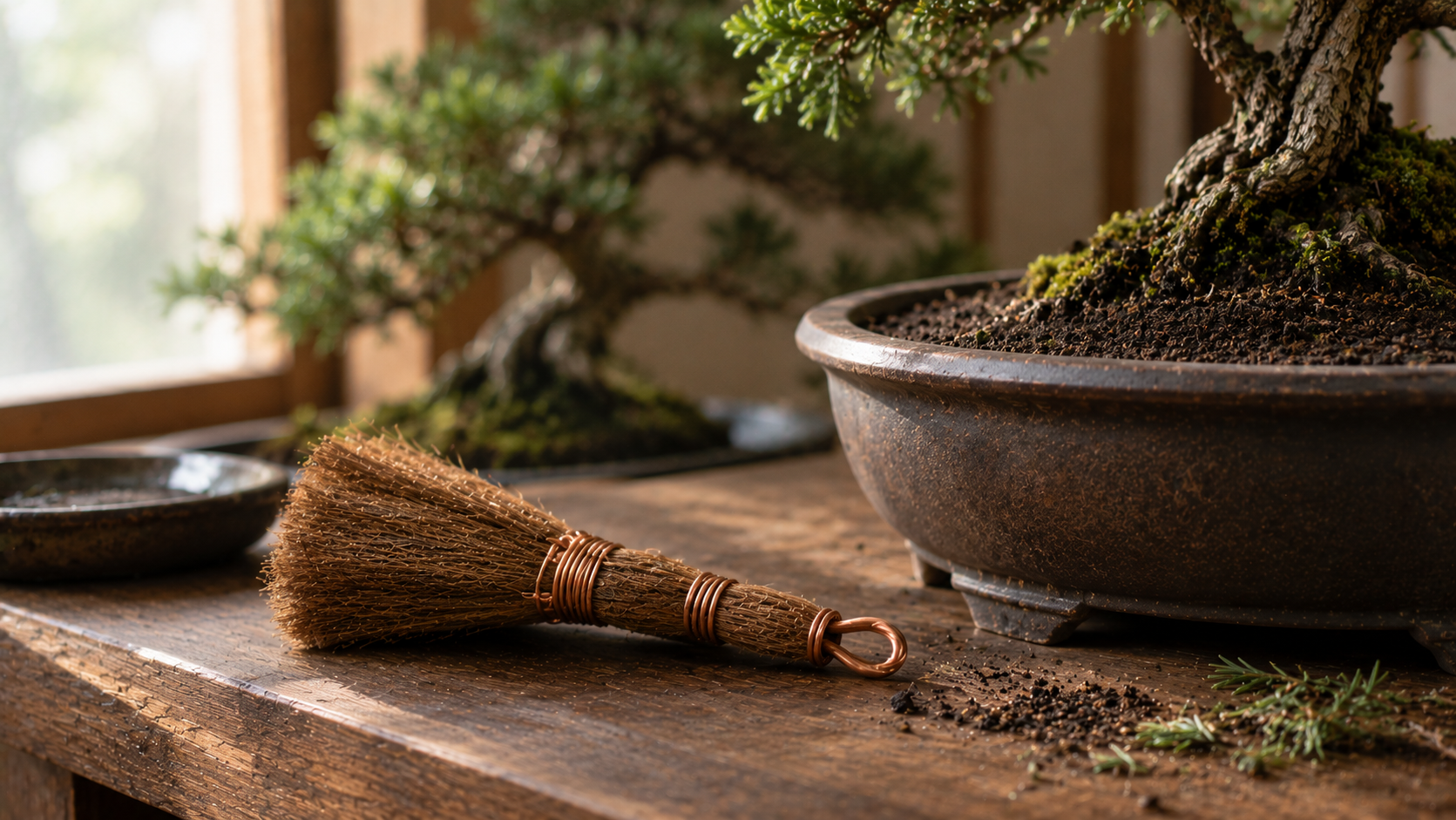
    That’s where a bonsai brush comes in. It might seem like the least important tool in the kit, but it’s the one that turns a messy work session into a tree you’d actually want to display. A soft palm-fiber broom tidies the soil surface without disturbing moss. A small nylon brush cleans trunks and branches. And a stiff brass brush brings out the texture of deadwood.

    Japanese bonsai growers have used natural-fiber brushes for generations. Shuro, the fiber of the hemp palm, is especially valued: tough, springy and gentle enough not to scratch. You’ll still find handmade shuro brushes from Japanese craftsmen today.

    The confusing part is that “bonsai brush” can mean very different tools, from a soft broom for soil to a stiff wire brush for deadwood. Use the wrong one in the wrong place and you can damage living bark.

    In my experience, most growers only need two brushes: one soft broom for soil and benches, and one bark brush for trunks or deadwood. This guide explains the difference, then compares six Japanese brushes, from shuro palm brooms to Kaneshin’s brass deadwood brushes.


    Who this bonsai brush guide is NOT for

    It’s not about paintbrushes for lime sulfur. Applying deadwood treatments uses small artist’s brushes. Our lime sulfur for bonsai guide covers that.

    It’s not about cleaning tools. Rust erasers and cleaning blocks for blades are covered in our bonsai tool maintenance guide.

    It’s not for carving. Brushes clean and finish deadwood; they don’t shape it.

    Still with us? Let’s go.


    How we picked these (3 things that actually matter)

    1. Soft broom or bark brush

    There are two families of bonsai brushes.

    • Soft brooms (hemp, shuro palm, coir) are for soil surfaces, pot rims, moss and work benches. They sweep without digging into the soil or tearing moss.
    • Bark brushes (nylon, brass, wire) are for trunks, branches and deadwood. They remove dirt, loose bark, algae and old debris.

    2. Bristle stiffness

    For bark brushes, stiffness is everything.

    • Soft nylon is safe for living bark, including delicate trunks like azaleas and deciduous trees.
    • Brass is stiffer and best for deadwood. Herons warns its brass brush should not be used on live bark.
    • Stiff wire or stainless steel is the most aggressive, for heavy deadwood cleaning and tight spots.

    Using a stiff brush on living bark can damage it, so always match the brush to the job.

    3. Material and craftsmanship

    Natural shuro (hemp palm) fiber brushes are a traditional Japanese craft. Some are handmade in regions known for hemp palm products, such as Wakayama. They’re durable, flexible and don’t scratch.

    Kaneshin, the well-known Japanese bonsai tool maker, also makes a range of bark brushes in nylon, brass and stainless steel.

    A few brushing habits that matter more than the brush

    None of these cost anything.

    • Brush when soil is dry. Wet soil smears instead of sweeping.
    • Sweep away from the trunk. Move debris outward toward the pot edge.
    • Go gently on moss. Light strokes tidy it; hard strokes tear it. Our bonsai moss guide covers moss care.
    • Test bark brushes on a small area first.
    • Brush along the grain of deadwood, not across it.
    • Keep brushes clean and dry. Shake out soil and let natural fibers dry after use.

    Bonsai brush comparison table

    BrushTypeMaterialBest forOriginApprox. price
    Wigert’s Japanese Hemp Bonsai BrushSoft broomHempSoil and bench cleanupJapan~$14
    Niwaki Shuro BrushSoft broomShuro palm fiber, copper wireSoil, moss, pot surfacesJapan~£12 (UK)
    Shokunin Store Premium Shuro BrushSoft broomShuro palm fiber, copper wireHandmade qualityWakayama, Japan~$21
    Kaneshin Nylon Curved Brush (156B)Bark brushSoft nylonLiving bark, cleaning toolsJapan~$8
    Kaneshin Japanese Brushes (brass/wire)Bark brushBrass, wire, stainlessDeadwood, jin and shariJapan~$12–15
    Herons Brass Deadwood Cleaning BrushBark brushBrassDeadwood (UK)Not stated~£15 (UK)

    Prices are approximate and vary by retailer. Always check the current price before buying.


    The 6 best bonsai brushes, reviewed

    1. Wigert’s Japanese Hemp Bonsai Brush – the best everyday broom

    If you want one soft brush for cleaning up after work, this is an easy, affordable choice.

    Wigert’s Bonsai sells a premium-quality hemp brush made in Japan. It’s 5½ inches long, a comfortable size for sweeping soil off pot rims and clearing the work area after repotting. Wigert’s lists it at around $14 and notes it has many uses.

    It’s small enough to get around the base of a tree and soft enough not to disturb the soil surface.

    Pros

    • Made in Japan
    • Compact and easy to handle
    • Great for soil and bench cleanup
    • Affordable

    Cons

    • Not for cleaning bark or deadwood
    • Small for very large benches

    Best for: everyday cleanup after pruning and repotting.

    Check the Japanese Hemp Bonsai Brush at Wigert’s


    2. Niwaki Shuro Brush – the classic shuro palm broom

    Shuro brushes are a Japanese classic, and Niwaki’s version is a popular one in the UK and Europe.

    It’s made in Japan from natural palm fibers of Trachycarpus fortunei, the hemp palm, bound with copper wire. At 170 × 90 mm, it has an angled shape that allows both broad sweeps and precise strokes. Made In Japan UK lists it at around £12, though it was sold out when we checked.

    The retailer suggests it for gentle sweeping of bonsai, potted plants and delicate moss-like ground covers.

    Pros

    • Traditional shuro palm fiber
    • Made in Japan
    • Angled shape for precision
    • Gentle on moss

    Cons

    • Stock varies
    • Mainly sold in the UK and Europe

    Best for: growers who want a traditional Japanese broom for soil and moss.

    Check the Niwaki Shuro Brush at Made In Japan UK


    3. Shokunin Store Premium Shuro Brush – best handmade option

    If you appreciate craftsmanship, this is the shuro brush to choose.

    The Shokunin Store’s premium brush is made in Wakayama, south of Osaka, a region known for hemp palm products, by skilled local craftsmen. It’s made from hemp palm fiber bound with copper wire, measures 11 × 22 × 3 cm and weighs about 0.1 kg. It’s designed to brush bark, twigs and soil from the base of bonsai trees, and costs around $21.

    It’s a lovely example of a traditional Japanese craft, and a thoughtful gift for a bonsai grower.

    Pros

    • Handmade in Wakayama, Japan
    • Traditional shuro palm fiber
    • Larger size for broader sweeping
    • Makes a nice gift

    Cons

    • More expensive than basic brooms
    • Too large for very tight spaces

    Best for: growers who value traditional Japanese craftsmanship.

    Check the Premium Shuro Brush at Shokunin Store


    4. Kaneshin Nylon Curved Brush (156B) – best for living bark

    For cleaning trunks and branches on living trees, you need a soft brush, and Kaneshin’s curved nylon brush is an inexpensive, reliable option.

    It’s made in Japan by Kaneshin, 10 inches long, with soft nylon bristles. Bonsai Tonight lists uses including brushing azalea trunks and branches, brushing deciduous trunks and branches, cleaning deadwood, and removing sap and debris from tweezers. It costs around $8.

    Nylon is the softest of the bark brush materials, so it’s the safest choice for living bark.

    Pros

    • Soft enough for living bark
    • Made in Japan by Kaneshin
    • Very affordable
    • Useful for cleaning tools too

    Cons

    • Too soft for heavy deadwood cleaning

    Best for: azaleas, deciduous trees and gentle trunk cleaning.

    Check the Kaneshin Nylon Curved Brush at Bonsai Tonight


    5. Kaneshin Japanese Brushes (brass, wire, stainless) – best for deadwood

    For jin and shari, a stiffer brush brings out texture and removes loose fibers and old debris.

    Wigert’s sells a range of Kaneshin brushes imported from Japan, at about $12–15 each:

    • Soft Nylon for live areas on the trunk and branches.
    • Single Stiff Brass for deadwood.
    • Double Stiff Brass, a very stiff brush for jin and shari.
    • Soft Wire for both deadwood and living areas.
    • Triangle Wire, made of stainless steel, for tight spots.

    This range lets you match the stiffness exactly to the job. After carving, a brass brush is a good way to clean up surfaces before treating deadwood. Our bonsai carving tools guide covers the carving stage.

    Pros

    • Made in Japan by Kaneshin
    • Several stiffness levels
    • Triangle brush for tight spots
    • Affordable

    Cons

    • Stiff brushes can damage living bark
    • Individual sizes not listed

    Best for: deadwood cleaning on junipers and pines.

    Check Kaneshin brushes at Wigert’s Bonsai


    6. Herons Brass Deadwood Cleaning Brush – the UK option for deadwood

    For UK growers, Herons Bonsai sells a brass cleaning brush for around £15.

    Herons describes it as a stronger style of cleaning brush with brass bristles, designed for effective cleaning of deadwood and jins, and warns that it should not be used on live bark. The listing doesn’t give dimensions or origin.

    It’s a simple, practical choice if you’re in the UK and want a dedicated deadwood brush. Herons also sells a nylon cleaning brush for softer work.

    Pros

    • Strong brass bristles for deadwood
    • Clear guidance on use
    • Easy to buy in the UK

    Cons

    • Not for live bark
    • Origin and size not stated

    Best for: UK growers cleaning jin and shari.

    Check the Brass Cleaning Brush at Herons


    Which bonsai brush should you buy? (By job)

    Cleaning soil and the bench after repotting: Wigert’s Japanese Hemp Brush.

    Tidying moss and the soil surface for display: Niwaki Shuro Brush.

    You want a handmade traditional brush, or a gift: Shokunin Store Premium Shuro Brush.

    Cleaning living bark on azaleas or deciduous trees: Kaneshin Nylon Curved Brush.

    Cleaning jin and shari: Kaneshin brass brushes, or Herons Brass Brush in the UK.

    Reaching into tight spots on deadwood: Kaneshin Triangle Wire brush.

    A simple two-brush kit

    For most growers, two brushes cover nearly everything: a soft shuro or hemp broom for soil, moss and benches, and a Kaneshin nylon brush for trunks and tools. Add a brass brush only if you work on deadwood. If you’re putting together a repotting kit, our bonsai repotting supplies guide covers the rest.


    What is shuro, and why do Japanese growers like it?

    Shuro is the Japanese name for the hemp palm, Trachycarpus fortunei, and for the brown fiber that grows around its trunk. For a long time, this fiber has been used in Japan to make brooms, scrubbing brushes and rope, because it’s strong, springy and naturally resistant to water.

    For bonsai, those qualities are ideal. A shuro brush is stiff enough to sweep soil and debris efficiently, but soft and flexible enough not to scratch pots or tear moss. It doesn’t shed plastic bristles, and with basic care it lasts a long time.

    Many shuro brushes are still made by hand, with the fibers bundled and bound tightly with copper wire. The Shokunin Store notes that its brush is made in Wakayama, a region known for hemp palm products. If you enjoy using traditional Japanese tools alongside your Kaneshin or Masakuni cutters, a shuro bonsai brush fits right in.


    Brushes for indoor bonsai

    Indoor trees need cleaning too, often more than outdoor ones, because dust settles on leaves and the soil surface.

    A soft shuro or hemp broom is perfect for tidying the soil and the tray around an indoor tree without making a mess. For dusty leaves on trees like ficus, a soft nylon brush or gentle rinse in the sink usually works better than a stiff brush. Avoid brass and wire brushes on indoor tropical trees, since their bark is usually living and easily marked.


    How to clean a bonsai before display

    1. Remove fallen leaves and debris by hand or with tweezers.
    2. Sweep the soil surface gently with a soft broom, away from the trunk.
    3. Clean the pot rim and sides with the broom or a damp cloth.
    4. Brush the trunk with a soft nylon brush to remove dust and algae.
    5. Clean deadwood with a brass brush, along the grain.
    6. Tidy moss with light strokes.
    7. Wipe the pot for a final finish.

    How to care for bonsai brushes

    • Shake out soil and debris after each use.
    • Let natural-fiber brushes dry in the air before storing.
    • Keep brass and wire brushes dry to prevent corrosion.
    • Store brushes separately from cutting tools so bristles don’t get crushed.
    • Replace worn brushes. Bent bristles brush unevenly and can scratch.

    Common bonsai brush mistakes

    Using a brass or wire brush on living bark. It can damage the tree.

    Sweeping wet soil. It smears and compacts the surface.

    Brushing moss too hard. It tears moss away from the soil.

    Brushing across deadwood grain. It can leave unnatural scratches.

    Using one brush for everything. Soil, bark and deadwood each need a different brush.


    Conclusion: two simple brushes, a much tidier tree

    A bonsai brush is a small, inexpensive tool that makes a big difference to how your trees look. A soft Japanese hemp or shuro broom keeps soil, moss and benches tidy, and a Kaneshin nylon brush cleans living bark gently. If you work on deadwood, a brass brush adds the finishing touch.

    For most growers, Wigert’s hemp brush and Kaneshin’s nylon brush are the perfect starting pair. For craftsmanship or a gift, a handmade Wakayama shuro brush is hard to beat.

    Brush gently, match the brush to the job, and your trees will always be ready for display. It’s a small habit, but a clean pot, tidy moss and well-kept bark are often what separate a good-looking bonsai from a truly finished one.

    Ready to tidy up? Check the Japanese Hemp Bonsai Brush at Wigert’s, or check Kaneshin brushes.

  • Best Bonsai Humidity Tray: 6 Options, Plus What Actually Raises Humidity for Indoor Trees

    Best Bonsai Humidity Tray: 6 Options, Plus What Actually Raises Humidity for Indoor Trees

    Affiliate disclosure: Some links on this page are affiliate links. If you buy through them, Aribonsai may earn a small commission at no extra cost to you. It doesn’t change what we recommend or how we rank anything.


    The tray under almost every indoor bonsai

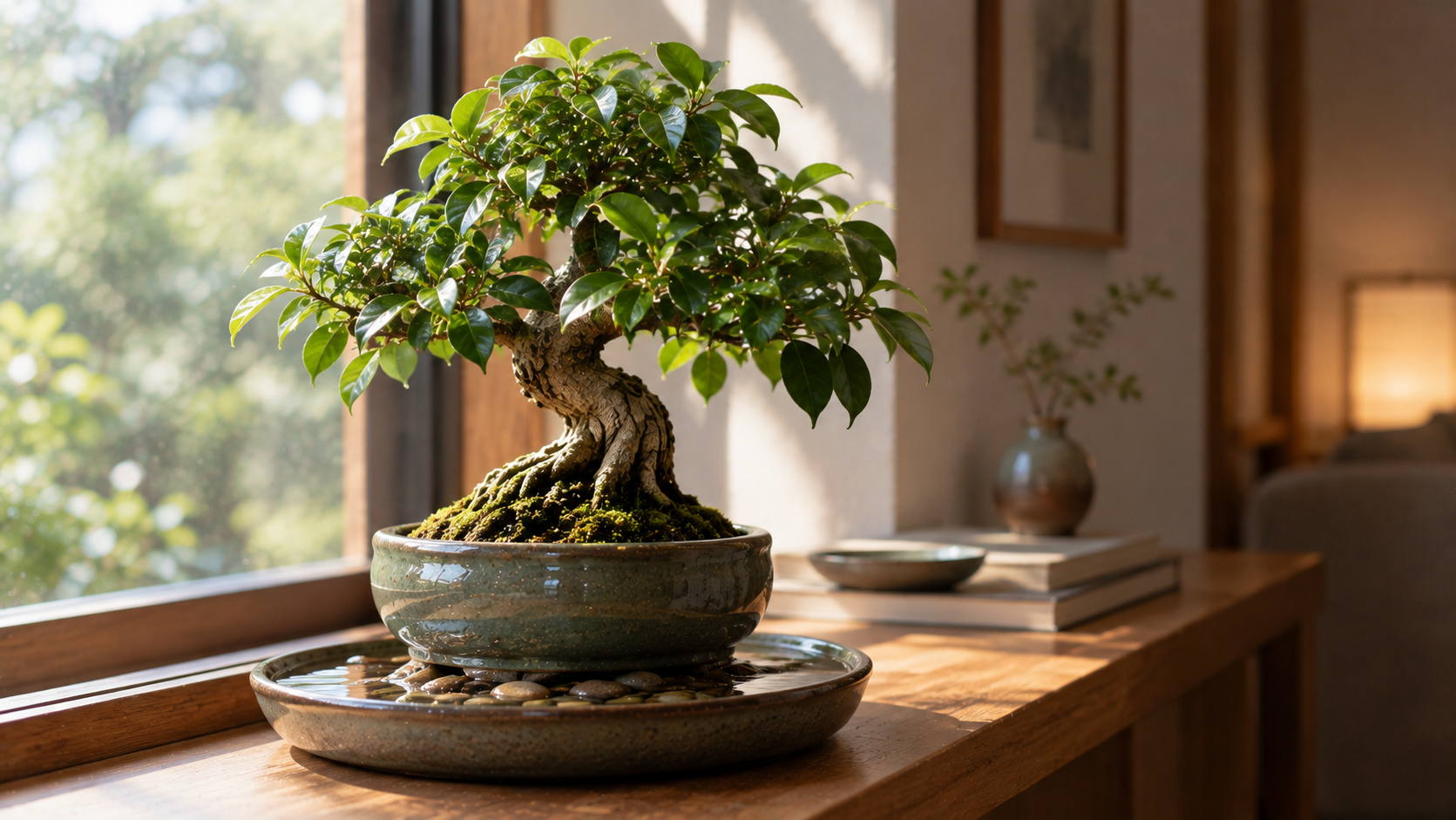
    Buy an indoor bonsai and there’s a good chance it comes sitting on a shallow plastic tray filled with pebbles. That’s a bonsai humidity tray, and for years it’s been sold as an essential part of indoor bonsai care.

    The idea makes sense. Indoor air, especially with heating or air conditioning running, is often dry. Tropical trees like ficus and serissa come from humid places. So a tray of water under the pot should add moisture to the air around the tree.

    Here’s the honest part, though: experienced growers are divided on how much a humidity tray actually raises humidity. On bonsai forums, several long-time growers argue the effect is small, and one member cites a small study showing almost no increase just a few centimeters above the tray. Others still find trays useful, mainly for catching runoff and keeping tables clean, and for very small trees.

    In my experience, a humidity tray is a good, cheap accessory, but it works best when you understand what it does well and what it doesn’t. This guide explains both, then compares six options: classic humidity trays, a matching pot-and-tray set, a DIY version, and the tools that actually make a measurable difference to indoor humidity.


    Who this bonsai humidity tray guide is NOT for

    It’s not for outdoor bonsai. Trees living outside get their humidity from the weather. Trays aren’t needed.

    It’s not a substitute for light. Light is usually the biggest problem for indoor bonsai. Our grow light for bonsai guide covers that first.

    It’s not about watering. A tray doesn’t replace regular watering of the soil.

    Still with us? Let’s go.


    How we picked these (3 things that actually matter)

    1. What the tray is really for

    A humidity tray does a few jobs:

    • Catches runoff, so you can water properly without damaging furniture.
    • Raises the pot above standing water, using pebbles or a grid.
    • Adds a little moisture to the air right around the tree, though how much is debated.
    • Improves display, since a neat tray looks better than a saucer.

    If you mainly want higher humidity, a room humidifier is the more effective tool. If you want clean, tidy watering indoors, a tray is ideal.

    2. Keeping the pot out of the water

    This is the most important rule. The pot must sit on pebbles or a grid, above the water, never in it. On bonsai forums, one grower warns that beginners often set pots directly in the water, which can rot roots, and suggests this may have killed more trees than trays have helped. Bonsai soil is designed to drain freely; standing water defeats that.

    3. Size and style

    Choose a tray a little larger than the pot, so runoff lands in it. Plastic trays are cheap and practical. Ceramic trays look more refined and can match the pot.

    A few indoor humidity habits that matter more than the tray

    None of these cost anything.

    • Keep trees away from heaters and air conditioning vents. Dry, moving air is hard on leaves.
    • Group plants together. Several plants close together can share a slightly more humid microclimate.
    • Rinse the tray regularly. One indoor bonsai guide recommends rinsing pebble trays weekly to keep them fresh.
    • Keep the water level below the pot.
    • Water the soil properly. A tray doesn’t replace watering.
    • Measure, don’t guess. A cheap hygrometer tells you real indoor humidity.

    Bonsai humidity tray comparison table

    ProductTypeWhat it’s best atSizeApprox. price
    Brussel’s Humidity TrayPlastic tray with decorative rocksCatching runoff, beginner setups8″ to 25″~$10–60
    Bonsai Direct pot with matching trayGlazed ceramic pot + tray setDisplay and tidy watering21 cm and other sizes~£40 (UK)
    DIY tray with gridPlastic tray + egg crate gridSeveral trees, low costAnyLow
    Japanese suiban-style trayShallow ceramic water trayDisplay, suiseki, small treesVariesVaries
    Room humidifierApplianceActually raising humidityRoomVaries
    Digital hygrometerMonitorMeasuring humiditySmallLow

    Prices are approximate and vary by retailer. Always check current prices before buying.


    The 6 best bonsai humidity tray options, reviewed

    1. Brussel’s Humidity Tray – the classic, easy option

    Brussel’s Bonsai, a large US bonsai nursery, sells humidity trays in several sizes: 8 inches (about $10), 11 inches (about $15), 13 inches (about $18) and 25 inches (about $60). The trays come with decorative rocks, which form the layer the pot sits on. Reviewers describe them as sturdy and solid. Brussel’s also sells starter kits that include an 8-inch or 13-inch tray.

    It’s a simple, practical choice: the rocks raise the pot, the tray catches runoff, and it looks neat on a table or windowsill.

    Pros

    • Several sizes, including a large 25-inch tray
    • Decorative rocks included
    • Described as sturdy
    • Affordable

    Cons

    • Some sizes may be out of stock
    • Material not described on the listing

    Best for: beginners with one or two indoor trees.

    Check humidity trays at Brussel’s Bonsai


    2. Bonsai Direct Pot with Matching Tray – best for display

    If your indoor bonsai is on display in a living room, a matching ceramic pot and tray looks much more refined than a plastic tray with pebbles.

    UK retailer Bonsai Direct sells handmade, glazed ceramic pots with matching humidity trays. A 21 cm oval teal pot and tray, for example, costs around £39.99 and comes with bonsai soil, mesh, anchor wire, a chopstick and a repotting guide. The retailer describes the tray as catching excess water and helping regulate moisture, and the pots as suitable for indoor and outdoor use.

    It’s more of a display set than a humidity solution, but it’s a lovely way to present an indoor tree. Our Japanese bonsai pots guide covers higher-end Japanese pots if you want to go further.

    Pros

    • Matching pot and tray look polished
    • Handmade glazed ceramic
    • Includes repotting supplies

    Cons

    • Mainly available in the UK
    • Means repotting into the new pot
    • Not a major humidity boost

    Best for: display trees in a home setting.

    Check the pot and tray set at Bonsai Direct


    3. DIY humidity tray with a grid – best for several trees

    If you have a shelf full of indoor trees, small individual trays get fiddly. Many growers build their own.

    On bonsai forums, a popular approach is a large plastic tray topped with a grid to lift pots above the water. Ideas include egg crate light diffuser panels (sold for ceiling lights) cut to size and set on small risers, upside-down plastic nursery flats, or small bathroom tiles under each pot. One grower notes that egg crate panels can be awkward to cut, and suggests snapping the rows apart with pliers.

    It’s cheap, flexible and catches runoff from many trees at once.

    Pros

    • Very low cost
    • Works for many trees
    • Fully customizable size

    Cons

    • Takes some DIY effort
    • Less attractive than bought trays
    • Egg crate can be awkward to cut

    Best for: indoor collections on shelves or under grow lights.

    Search egg crate light diffuser panels on Amazon


    4. Japanese suiban-style tray – the elegant dual-purpose option

    A suiban is a shallow, undrilled ceramic tray from the Japanese display tradition, often used for suiseki (viewing stones). On bonsai forums, one grower points out that a humidity tray filled with water or sand can double as a small suiban for displaying stones.

    The idea also works in reverse. A suiban-style tray, with a layer of fine gravel and the pot raised above the water, makes a refined base for a small indoor bonsai, and can later be used for a stone display. Choose one a little larger than the pot.

    Pros

    • Elegant, traditional look
    • Can also display suiseki
    • Suits small trees

    Cons

    • Usually more expensive than plastic
    • Needs gravel or a riser for the pot
    • Limited sizes

    Best for: small display trees and growers interested in Japanese display.

    Search ceramic suiban trays on Amazon


    5. Room humidifier – the option that actually raises humidity

    If your goal is higher humidity, this is what makes a measurable difference.

    On bonsai forums, several experienced growers recommend a room humidifier over humidity trays for indoor tropicals. One grower who measured humidity with gauges found trays didn’t make a measurable difference, so switched to a room humidifier. Others suggest humidifying a small enclosed space, such as a grow cabinet or closet, which is easier than humidifying a whole room.

    Humidifiers range from small, inexpensive models to larger ones for whole rooms. Choose one sized for your space, and clean it regularly.

    Pros

    • Measurably raises humidity
    • Helps all plants in the room
    • Many sizes and prices

    Cons

    • Needs refilling and cleaning
    • Uses electricity
    • Too much humidity can encourage mold

    Best for: anyone serious about humidity for tropical indoor trees.

    Search room humidifiers on Amazon


    6. Digital hygrometer – know your actual humidity

    You can’t manage humidity without measuring it. A small digital hygrometer shows the humidity (and usually temperature) near your trees.

    It’s one of the cheapest and most useful tools for indoor bonsai. It tells you whether your room is genuinely dry, whether a humidifier is working, and whether your tray is making any difference at all.

    Pros

    • Very inexpensive
    • Shows real conditions
    • Helps you decide if you need a humidifier

    Cons

    • Doesn’t change humidity by itself

    Best for: every indoor grower.

    Search digital hygrometers on Amazon


    Which bonsai humidity tray should you buy? (By situation)

    You have one indoor tree and want tidy watering: a Brussel’s humidity tray.

    Your tree is a living-room display piece: a matching ceramic pot and tray, or a suiban-style tray.

    You have a shelf of indoor trees: a DIY tray with an egg crate grid.

    Your air is genuinely dry: a room humidifier, plus a hygrometer to check it.

    You’re not sure if humidity is a problem: start with a hygrometer.

    A simple indoor setup

    For most indoor bonsai, a good setup is: a bright spot or grow light, a humidity tray to catch runoff, the pot raised above the water, a hygrometer nearby, and a humidifier if readings stay low. Display it on a small bonsai display stand for a finished look.


    Which indoor bonsai benefit most from extra humidity?

    Not every indoor tree is equally fussy. Species that come from humid tropical and subtropical regions tend to appreciate more moisture in the air, especially in winter when heating dries out the room. Common examples include ficus, serissa, Fukien tea and other trees often sold as indoor bonsai.

    Signs that the air may be too dry include leaf tips that turn brown and crispy, leaves that drop for no obvious reason, and new growth that dries out before it opens. But these symptoms can also come from low light, under-watering or over-watering, so check those first. A hygrometer helps you tell whether humidity is really the cause.

    Trees that are more forgiving of dry air, such as jade, are less likely to need any special humidity measures beyond normal care.


    Does misting help?

    Misting is another common piece of advice for indoor bonsai. One indoor bonsai care guide recommends frequent misting of the foliage during the day as part of a humid microclimate, along with a pebble tray and placing the tree away from heating and cooling vents.

    The catch is that misting only raises humidity briefly. Water on the leaves evaporates quickly in a dry, heated room, so the effect fades fast. Many growers see misting as a pleasant extra rather than a solution, and rely on a humidifier when the air is consistently dry.

    If you do mist, do it earlier in the day so leaves can dry, and avoid misting trees that are prone to fungal problems.


    The honest verdict on bonsai humidity trays

    So, are humidity trays worth buying? Yes, but for the right reasons.

    A bonsai humidity tray is excellent for catching runoff, protecting furniture, keeping pots raised above standing water and making an indoor tree look tidy. Those benefits alone justify a tray for most indoor growers.

    Where trays fall short is as a cure for genuinely dry indoor air. If your hygrometer shows low humidity for weeks at a time, a room humidifier will do far more than any tray. Many experienced growers use both: a tray for practical watering, and a humidifier for real moisture in the air.


    How to set up a bonsai humidity tray

    1. Choose a tray slightly larger than the pot.
    2. Add pebbles, gravel or a grid.
    3. Add water to just below the top of the pebbles.
    4. Place the pot on top, so it sits above the water.
    5. Water the tree as usual. Excess water drains into the tray. A gentle bonsai watering can helps.
    6. Empty or rinse the tray regularly to keep it fresh.

    Common bonsai humidity tray mistakes

    Letting the pot sit in water. This can rot roots.

    Expecting a tray to fix very dry air. Use a humidifier for that.

    Never cleaning the tray. Standing water can become stale.

    Choosing a tray that’s too small. Runoff spills over the edge.

    Ignoring light. Low light is usually a bigger problem than humidity.


    Conclusion: a useful tray, with realistic expectations

    A bonsai humidity tray is a cheap, useful accessory for indoor trees. It catches runoff, keeps your furniture safe, and makes a tree look tidy. Just don’t rely on it alone to solve dry air.

    For most beginners, a simple tray from a bonsai nursery is perfect. For display, a matching ceramic tray or a suiban-style tray looks lovely. And if humidity is genuinely low, a room humidifier and a hygrometer will make the real difference.

    Keep the pot above the water, keep the tray clean, and focus on light first. Get those basics right, and your indoor bonsai will have a far better chance of staying green, compact and healthy through the dry months of the year.

    Ready to set up? Check humidity trays at Brussel’s Bonsai, or search digital hygrometers on Amazon.

  • Best Bonsai Seed Kit: 5 Kits Compared, Plus the Honest Truth About Growing Bonsai From Seed

    Best Bonsai Seed Kit: 5 Kits Compared, Plus the Honest Truth About Growing Bonsai From Seed

    Affiliate disclosure: Some links on this page are affiliate links. If you buy through them, Aribonsai may earn a small commission at no extra cost to you. It doesn’t change what we recommend or how we rank anything.


    A tiny tree from a tiny seed. How hard can it be?

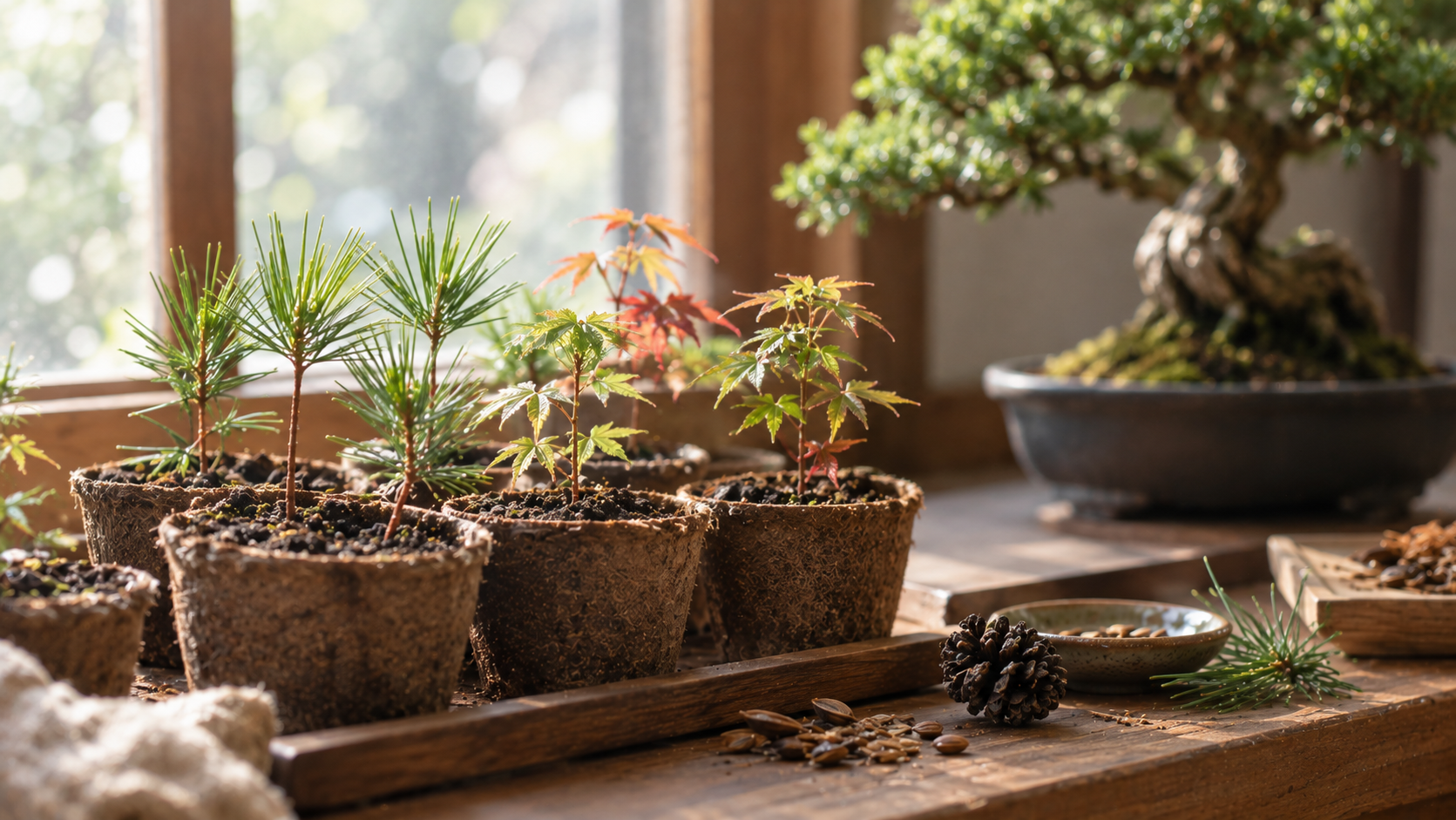
    A bonsai seed kit is one of the most popular bonsai gifts out there. The box promises everything you need to “grow your own bonsai”: seeds, little pots, soil discs, sometimes a pair of clippers. It looks like a fun weekend project.

    And it can be. Watching a seed sprout into a tiny tree is genuinely rewarding, and it teaches patience in a way no shop-bought bonsai can.

    But it’s worth being honest about what’s in the box. There’s no such thing as a special “bonsai seed.” Any tree can become a bonsai, and the seeds in most kits are ordinary tree seeds. Some kits include species that aren’t great for bonsai at all. And the timeline is long: Bonsai Empire estimates roughly two to three years before a seedling is ready for training, and three to five years or more before it has enough trunk to shape into a bonsai.

    In my experience, people who enjoy seed kits are the ones who go in expecting a long, slow experiment, not a finished bonsai by next summer. This guide explains what to look for, then compares five bonsai seed kits, and suggests a faster alternative for anyone who wants to start styling sooner.


    Who this bonsai seed kit guide is NOT for

    It’s not for people who want a bonsai to style this year. If you want to start pruning and wiring soon, a young nursery tree (pre-bonsai) is a much better choice. We cover that at the end.

    It’s not a species care guide. Each tree in a kit has different needs. Always look up care for the specific species you’re growing.

    It’s not for impatient gift recipients. If the person wants quick results, a living tree is usually a better gift.

    Still with us? Let’s go.


    How we picked these (3 things that actually matter)

    1. Species that actually make good bonsai

    This is the biggest difference between kits.

    Some kits include classic bonsai species like Japanese black pine, Japanese maple or Japanese flowering cherry. Others are filled with spruces, jacarandas or flame trees, which can be grown but are less commonly used for traditional bonsai. Bonsai Empire warns that some kit species are poorly suited to bonsai, so check the list before buying.

    2. Seed treatment and instructions

    Many temperate species need stratification: a cold, moist period that mimics winter before the seed will germinate. Bonsai Empire explains that seeds from a different climate, seeds planted out of season and purchased seeds often need it, while tropical species generally don’t.

    Some kits advertise “no stratification needed,” which usually means they’ve chosen species that germinate easily. That’s convenient, but it can limit which trees you grow. Good instructions explain soaking, stratification and planting depth clearly.

    3. What’s actually in the box

    Most kits include seeds, small biodegradable pots and compressed soil discs. Some add clippers, plant markers, a wooden planter box or a mini-greenhouse. Clippers in kits are usually basic. They’re fine for trimming seedlings, but not a substitute for real bonsai tools later on.

    A few seed-growing habits that matter more than the kit

    None of these cost anything.

    • Read up on each species first. Especially whether it needs stratification.
    • Don’t plant too deep. Bonsai Empire suggests around 1–2 cm.
    • Keep soil moist, not waterlogged.
    • Don’t overcrowd seedlings. Give each one space.
    • Move seedlings carefully. Keep roots and soil intact when transplanting.
    • Don’t style too early. Let trunks thicken for a few years first.
    • Give them light. Seedlings grown indoors often need extra light; our grow light for bonsai guide explains the options.

    Bonsai seed kit comparison table

    KitSpeciesExtrasStratificationApprox. price
    Morikami Bonsai Seed KitJapanese black pine, Japanese maple or Japanese flowering cherry (choose one)Growing medium, mini-greenhouseFollow included instructions~$14
    Grow Buddha Bonsai Tree KitJapanese red maple, wisteria, Japanese black pine, Judas treeClippers, bonsai pot, manual and e-bookCheck instructionsCheck price
    Nature’s Blossom Bonsai Tree KitColorado blue spruce, black spruce, Rocky Mountain juniper, Austrian pineBiodegradable pots, grower’s manualNot required (per review)Check price
    Planters’ Choice Bonsai Starter KitNorway spruce, Royal poinciana, blue jacaranda, Rocky Mountain pineClippers, burlap potsNot required (per seller)~$33
    Garden Republic Bonsai Tree KitBrazilian rosewood, Colorado blue spruce, flame tree, black spruceShears, wooden box planterCheck instructionsCheck price

    Prices are approximate and vary by retailer. Always check current prices and species lists before buying.


    The 5 best bonsai seed kits, reviewed

    1. Morikami Bonsai Seed Kit – best for classic Japanese species

    If you want to grow a traditional Japanese bonsai species from seed, this is the kit we’d choose first.

    It’s sold by the Morikami Museum and Japanese Gardens in Delray Beach, Florida. You choose one species: Japanese black pine, Japanese maple or Japanese flowering cherry. Each kit includes seeds, growing medium, a mini-greenhouse, and detailed instructions covering the whole process from seed onward. It costs around $14.

    Focusing on a single, genuinely classic bonsai species is a real advantage. Japanese black pine and Japanese maple are two of the most iconic bonsai trees there are.

    Pros

    • Classic Japanese bonsai species
    • Mini-greenhouse included
    • Very affordable
    • Sold by a respected Japanese garden museum

    Cons

    • One species per kit
    • No tools included

    Best for: anyone who wants to grow a traditional Japanese species from the start.

    Check Morikami Bonsai Seed Kits


    2. Grow Buddha Bonsai Tree Kit – best all-round kit with Japanese species

    Garden Gate magazine named this its “Best Overall” bonsai kit, and its species list is one of the strongest we’ve seen.

    It includes Japanese red maple, wisteria, Japanese black pine and Judas tree. The kit comes with four biodegradable pots, four expandable soil discs, plant labels, a pair of clippers, a larger bonsai pot, a paperback manual and an e-book. Garden Gate notes that the seed batches are tested for quality.

    The main downside is that it includes only one larger pot for all four species.

    Pros

    • Strong species list, including Japanese black pine and maple
    • Clippers and a bonsai pot included
    • Manual plus e-book
    • Seed batches tested for quality

    Cons

    • Only one larger pot
    • Several species may need stratification

    Best for: beginners who want a complete kit with good bonsai species.

    Search Grow Buddha bonsai kit on Amazon


    3. Nature’s Blossom Bonsai Tree Kit – easiest to germinate

    Garden Gate named Nature’s Blossom its “Best for Beginners” pick, mainly because it’s easy to get started.

    The kit includes Colorado blue spruce, black spruce, Rocky Mountain juniper and Austrian pine, with biodegradable pots, compressed soil discs, non-GMO seeds, plant markers and a grower’s manual. The review notes a germination rate of over 85% and seeds that need no stratification. Biodegradable pots can go directly into larger containers or the ground.

    The trade-off is species choice. Juniper and pine are good bonsai trees, but spruces are less common in classic bonsai. Some users also find the sprouts fragile.

    Pros

    • Easy germination, no stratification
    • Good instructions
    • Juniper and pine included

    Cons

    • Spruces are less typical bonsai species
    • Fragile sprouts
    • No clippers

    Best for: first-time growers and families who want quick success with germination.

    Search Nature’s Blossom bonsai kit on Amazon


    4. Planters’ Choice Bonsai Starter Kit – best value gift kit

    Planters’ Choice is one of the most widely sold bonsai kits, often seen in gift shops.

    One retailer lists it at around $33. It includes seeds for Norway spruce, Royal poinciana, blue jacaranda and Rocky Mountain pine, with four burlap growing pots, an expanding soil disc, bamboo plant markers, a bonsai clipper and an instruction booklet covering each tree’s history and care. The seller says it can be used indoors or outdoors and doesn’t require stratification. Garden Gate notes that the seeds need soaking in hot water a day before planting.

    It’s a nicely packaged gift. Just know that Royal poinciana and jacaranda are tropical trees, so they need warmth, and spruce and pine have very different needs.

    Pros

    • Nicely packaged, popular gift
    • Clipper included
    • No stratification needed

    Cons

    • Mixed species with very different needs
    • Not classic Japanese bonsai species

    Best for: gifts, especially for children or casual hobbyists.

    Search Planters’ Choice bonsai kit on Amazon


    5. Garden Republic Bonsai Tree Kit – most variety

    Garden Gate called Garden Republic its “Most Variety” pick.

    It includes Brazilian rosewood, Colorado blue spruce, flame tree and black spruce, with soil discs, burlap grow bags, bamboo markers, bonsai shears, and a wooden box that doubles as a planter, plus detailed instructions.

    Variety is fun, but the mix of tropical and cold-climate trees means they’ll need different conditions, and the reviewer notes they grow at different rates.

    Pros

    • Four very different species
    • Wooden box planter
    • Shears included

    Cons

    • Species have very different needs
    • Few classic bonsai species

    Best for: curious growers who enjoy experimenting with different trees.

    Search Garden Republic bonsai kit on Amazon


    Which bonsai seed kit should you buy? (By situation)

    You want a classic Japanese species: Morikami Bonsai Seed Kit.

    You want a complete kit with good bonsai species: Grow Buddha Bonsai Tree Kit.

    You want the easiest germination: Nature’s Blossom Bonsai Tree Kit.

    You’re buying a gift for a child or casual hobbyist: Planters’ Choice Bonsai Starter Kit.

    You want variety: Garden Republic Bonsai Tree Kit.

    You want to start styling a bonsai this year: skip seeds and buy a pre-bonsai.


    Which species are best for growing bonsai from seed?

    If you’d rather buy loose seeds than a kit, or want to know which kit species are worth the effort, it helps to know which trees are popular with bonsai growers.

    Japanese black pine is one of the classic bonsai species and is often grown from seed by enthusiasts. It’s slow, but the result is a tree with real bonsai heritage.

    Japanese maple and trident maple are popular deciduous choices. Maples typically need stratification, and Bonsai Empire gives about 30 days of cold, moist treatment as an example for maples.

    Japanese flowering cherry and wisteria are attractive flowering options, though they take years to flower.

    Junipers and pines in general suit bonsai well, which is why kits that include them are more useful than those filled with tropical shade trees.

    Species like jacaranda, flame tree and Royal poinciana are beautiful trees, but they’re tropical, grow large, and are less commonly seen in traditional bonsai collections. They can still be a fun experiment, especially indoors in a warm, bright spot.

    Whatever you grow, look up the needs of that specific species before you sow.


    Are bonsai seed kits good gifts?

    They can be, with the right recipient.

    A bonsai seed kit makes a lovely gift for children, curious beginners, or anyone who enjoys a long, slow project. It’s affordable, fun to unbox, and teaches patience.

    It’s a less ideal gift for someone who wants a bonsai to display now, or for an experienced grower, who will usually prefer quality tools or a young tree. If you’re buying for that kind of person, consider pairing a seed kit with something more immediate, like a small pre-bonsai or a pair of Japanese tweezers.


    The faster alternative: pre-bonsai

    Bonsai Empire isn’t a fan of seed kits. Its main argument is simple: if you want to learn bonsai, a young nursery tree, sometimes called pre-bonsai, lets you start much sooner. It gives an example of a four- to five-year-old nursery tree costing around $20.

    That’s a real point to consider. A pre-bonsai already has a few years of trunk growth, so you can start pruning, wiring and repotting right away. Many growers do both: grow a few seeds as a long-term side project, and learn techniques on a pre-bonsai in the meantime.

    Our where to buy bonsai trees online guide covers nurseries that sell pre-bonsai, and our bonsai tools for beginners guide explains the first tools you’ll need.


    How to grow bonsai from a seed kit (the basics)

    1. Check each species and whether it needs soaking or stratification.
    2. Soak seeds if the instructions say so.
    3. Stratify where needed, usually in the fridge for a set period, depending on species.
    4. Sow seeds about 1–2 cm deep in moist, free-draining soil.
    5. Keep them moist and bright, but not waterlogged.
    6. Thin and transplant carefully once seedlings are established, keeping roots intact.
    7. Move them into better soil when they outgrow the kit pots. A free-draining bonsai mix with akadama works well later on.
    8. Let them grow for a few years before styling.

    What you’ll need besides the kit

    Most kits cover the first few weeks. After that, seedlings need a little more.

    • Larger pots or a seed tray once seedlings outgrow the kit pots.
    • Free-draining soil for transplanting, rather than dense potting compost.
    • A spray bottle or gentle watering can so you don’t wash seeds out.
    • A bright spot or grow light for anything grown indoors.
    • Labels, because seedlings of different species can look alike for months.
    • Patience, which no kit includes.

    None of these are expensive, but having them ready makes the move from kit to real growing much smoother.


    Common bonsai seed kit mistakes

    Expecting a bonsai in a year. It takes several years.

    Skipping stratification. Some seeds simply won’t sprout without it.

    Overwatering. Waterlogged soil rots seeds and roots.

    Keeping all species together. Tropical and temperate trees need different conditions.

    Pruning too early. Let trunks thicken first.


    Conclusion: a fun long-term project, not a shortcut

    A bonsai seed kit can be a wonderful, slow project and a lovely gift, as long as everyone knows what to expect. For classic Japanese species, the Morikami kit is our first choice. The Grow Buddha kit is a strong all-round option, and Nature’s Blossom is the easiest to get sprouting.

    If you want to learn bonsai techniques sooner, pair a seed kit with a pre-bonsai. The seeds grow in the background while you learn on a tree that’s ready now.

    Ready to start growing? Check the Morikami Bonsai Seed Kits, or search the Grow Buddha kit on Amazon.

  • Best Bonsai Gifts: 6 Ideas for Beginners, Growers and Collectors, From $10 to Special Pieces

    Best Bonsai Gifts: 6 Ideas for Beginners, Growers and Collectors, From $10 to Special Pieces

    Affiliate disclosure: Some links on this page are affiliate links. If you buy through them, Aribonsai may earn a small commission at no extra cost to you. It doesn’t change what we recommend or how we rank anything.


    Buying for a bonsai person is harder than it looks

    Shopping for someone who loves bonsai seems easy at first. They love trees, so buy them a tree. Or a tool. Or something “bonsai-themed.”

    Then you start looking. There are hundreds of tools with confusing names. Pots in every size and style. Trees from $30 to several hundred dollars. And a nagging worry: what if they already have it? What if it’s the wrong size, the wrong kind, the wrong quality?

    The most common gift mistakes are predictable. A cheap 12-piece tool kit that a serious grower would never use. A tree that needs conditions the recipient can’t provide. Or a decorative item that ends up in a drawer.

    The good news is that the best bonsai gifts aren’t necessarily expensive. A few well-chosen Japanese tools or accessories are useful at every level, and almost every grower appreciates them.

    In my experience, the safest bonsai gifts are things that get used up, things people rarely buy for themselves, or a quality upgrade of something they already use every week. This guide sorts gift ideas by who you’re buying for, then compares six bonsai gifts from a $10 stocking stuffer to a special piece for a collector.


    Who this bonsai gifts guide is NOT for

    It’s not for buying a valuable specimen tree as a surprise. Serious growers usually want to choose trees themselves. If you want to buy a special tree, consider a gift card from a good nursery instead.

    It’s not for gag gifts. Novelty “bonsai” items rarely get used by real growers.

    It’s not a full tool guide. We link to our detailed guides if you want to compare more options.

    Still with us? Let’s go.


    How we picked these (3 things that actually matter)

    1. Who you’re buying for

    This matters more than anything else.

    • Someone who doesn’t grow bonsai yet: a healthy beginner tree, ideally with a simple kit.
    • A beginner: basic Japanese tools they’ll use every week.
    • An experienced grower: quality accessories or upgrades they’re unlikely to buy for themselves.
    • A collector: something special, like a beautiful stand, pot or premium tool case.

    2. Usefulness over decoration

    The best bonsai gifts get used. Tools, tool storage, watering cans and display pieces all earn their place. If you’re unsure, choose something that works with any tree, rather than something specific to a species or size.

    3. Low risk of duplicates or wrong sizes

    Some gifts are easy to get wrong. Pots need to match a specific tree. Wire comes in many gauges. Cutters come in sizes. Safer gifts include tweezers, tool rolls, watering cans, small stands and gift cards, which work regardless of what the person already owns.

    A few gift-buying habits that matter more than the price

    None of these cost anything.

    • Ask what they grow. Indoor or outdoor, small or large trees.
    • Look at their tools. If they already own a brand, a matching piece is a thoughtful touch.
    • Avoid giant cheap kits. One good tool beats ten poor ones.
    • Think about delivery timing. Live trees don’t like freezing or extreme heat in transit.
    • Include a gift receipt. Especially for tools and pots.
    • When in doubt, choose accessories. They’re useful for every grower.

    Bonsai gifts comparison table

    GiftBest forWhy it worksApprox. price
    Kaneshin No.61A TweezersAnyone who grows bonsaiUsed constantly, cheap, Japanese-made~$10
    Wazakura 3PCS Starter KitBeginnersScissors, tweezers and broom in one box~$70
    A beginner gift treeSomeone new to bonsaiA living start, with care basics~$37 and up
    Kaneshin Bonsai Tool PouchGrowers who travel to workshopsProtects favorite tools, made in Japan~$64
    Small Japanese display standAnyone with a tree indoorsMakes any tree look finished~$15 and up
    Japanese copper watering canExperienced growers and collectorsA beautiful tool few buy for themselves~$179 and up

    Prices are approximate and vary by retailer. Always check current prices before buying.


    The 6 best bonsai gifts, reviewed

    1. Kaneshin No.61A Bent Nose Tweezers – the best gift under $15

    If you need a small gift, a stocking stuffer, or something to add to a bigger present, this is it.

    The Kaneshin No.61A is handcrafted in Japan from stainless steel, with bent tips on one end and a spatula on the other. Bonsai Tonight lists it at around $10. It’s used for removing dead leaves and flowers, weeding, tidying soil and placing moss, so almost every grower will use it every week.

    Even someone who already owns tweezers will appreciate a quality spare, especially from a respected Japanese maker.

    Pros

    • Very affordable
    • Made in Japan by Kaneshin
    • Useful for every grower
    • Almost no risk of a “wrong” gift

    Cons

    • Small gift on its own
    • They may already own a pair

    Best for: stocking stuffers and add-on gifts.

    Check the Kaneshin No.61A at Bonsai Tonight


    2. Wazakura 3PCS Starter Kit – best gift for a beginner

    If the person has just started bonsai, a small set of real Japanese tools is one of the most useful gifts you can give.

    Wazakura’s 3-piece starter kit includes satsuki bonsai scissors in black carbon steel, stainless steel tweezers with a rake end, and a bonsai broom for cleaning the soil surface. It’s made in Sanjo, Niigata, and costs around $70. In our bonsai starter tool set guide, we call it the lightest commitment and a sensible first purchase.

    It doesn’t include a concave cutter or wire cutter, but that’s fine for a first year of trimming and tidying.

    Pros

    • Real Japanese tools at a gift-friendly price
    • Covers everyday tasks
    • Made in Sanjo, Japan

    Cons

    • No cutters for structural pruning
    • Experienced growers may already have these tools

    Best for: beginners in their first year or two.

    Shop Wazakura bonsai starter kit

    *Tip: Use code **ARIBONSAI** at checkout for 10% off at Wazakura.*


    3. A beginner gift tree – best for someone new to bonsai

    For someone who doesn’t grow bonsai yet, a living tree is the classic gift. It’s also the riskiest, so choose carefully.

    Large bonsai nurseries offer trees aimed at beginners and gifts. Brussel’s Bonsai, for example, has a Beginner category of starter trees and gifts, plus pre-assembled gift kits, with listed examples such as a Green Mound Juniper from around $37. Gift-focused shops like Bonsai Boy of New York sell ready-to-give trees in decorative pots.

    Match the tree to where it will live. Junipers and other temperate trees belong outdoors. If the recipient lives in an apartment, an indoor tropical species like a ficus is a much better choice. Our where to buy bonsai trees online guide compares sellers in more detail.

    Pros

    • A memorable, living gift
    • Beginner and gift options at many price points
    • Can spark a lifelong hobby

    Cons

    • Needs the right conditions to thrive
    • Shipping in extreme weather is risky
    • Gift trees are often young starter material

    Best for: someone who has shown interest in bonsai but doesn’t grow yet.

    Visit Brussel’s Bonsai


    4. Kaneshin Bonsai Tool Pouch – best gift for an active grower

    Experienced growers often have good tools but carry them around loose in a bag. A quality tool case is something many never get around to buying for themselves.

    The Kaneshin Bonsai Tool Pouch is made in Japan from tough, water-resistant synthetic leather with a soft felt lining. The small size is about 10 × 5.4 inches and costs around $64 at Niwaki. It’s ideal for carrying core tools to workshops and club meetings.

    If you’d like a larger or more luxurious option, our bonsai tool roll guide compares canvas rolls, a 12-pocket Japanese roll and a leather folio.

    Pros

    • Made in Japan
    • Protects tools from knocks
    • Useful at any level
    • Something people rarely buy themselves

    Cons

    • Compact, holds only a few tools
    • Larger size discontinued

    Best for: growers who attend workshops, clubs or classes.

    Check the Kaneshin Bonsai Tool Pouch at Niwaki


    5. A small Japanese display stand – best gift for indoor display

    A display stand makes any bonsai look finished, and it’s a gift that works for almost any tree.

    Small stands start at very affordable prices. Wazakura sells a small wooden stand made in Japan, about 12.8 × 12.8 cm, for around $15, which suits mame and desk-sized trees. Larger tables and handcrafted Japanese boards cost more. Our bonsai display stand guide explains how to choose the right size and style.

    Size matters: a stand should be a little larger than the pot. If you don’t know the pot size, a small stand is the safer choice, since it suits many smaller trees.

    Pros

    • Affordable small options
    • Makes any tree look more refined
    • Works for indoor display

    Cons

    • Needs to match the pot size
    • Collectors may be particular about style

    Best for: anyone who displays a tree indoors.

    Shop Wazakura small bonsai stand

    *Tip: Use code **ARIBONSAI** at checkout for 10% off at Wazakura.*


    6. Japanese copper watering can – the special gift for a serious grower

    If you want to give something truly special, a Japanese copper watering can is a beautiful choice. Few growers buy one for themselves, but many dream of owning one.

    Japanese copper cans have fine roses that give a soft, gentle spray, ideal for bonsai soil. In our bonsai watering can guide, a Japanese-made 0.9-liter copper can from Eastern Leaf costs around $179, while long-reach versions and Masakuni’s traditional copper can cost considerably more.

    Copper develops a natural patina over time, so the can becomes more beautiful with use.

    Pros

    • Beautiful, traditional Japanese craftsmanship
    • Gentle spray suited to bonsai
    • Lasts for many years
    • A true “treat” gift

    Cons

    • Expensive
    • Smaller cans hold limited water

    Best for: serious growers and collectors, or a milestone gift.

    Search Japanese copper watering cans on Amazon


    Which bonsai gift should you buy? (By recipient and budget)

    Under $20: Kaneshin No.61A tweezers, or a small Japanese display stand.

    Under $75: Wazakura 3PCS Starter Kit, or the Kaneshin Bonsai Tool Pouch.

    For someone new to bonsai: a beginner gift tree, ideally with the Wazakura starter kit.

    For an active grower: Kaneshin tool pouch or a quality tool roll.

    For a collector: a Japanese copper watering can, or a handcrafted display stand.

    When you’re not sure: tweezers plus a gift card from a bonsai nursery.

    A simple gift bundle idea

    For a beginner, a lovely bundle is: a healthy starter tree suited to their home, the Wazakura starter kit, and a small display stand. It gives them everything they need to start and to show off their first tree.


    Other bonsai gifts worth considering

    The six gifts above are our main picks, but a few other ideas are well worth considering, especially for growers who seem to have everything.

    A workshop or class. Many bonsai nurseries and clubs run hands-on workshops. An experience gift like this is memorable, and the recipient learns from an expert while working on a real tree.

    A bonsai club membership. Local clubs usually charge modest annual fees and offer meetings, demonstrations, plant sales and friendly advice. It’s a lovely gift for someone just getting serious.

    A bag of quality Japanese soil. Growers go through soil every repotting season, and good akadama or kanuma isn’t cheap. It’s a practical, consumable gift that never goes to waste.

    Tool care products. Camellia oil, a rust eraser or a small sharpening stone are inexpensive, useful and often overlooked.

    A gift card from a bonsai nursery. It isn’t the most exciting present, but it lets the recipient choose exactly the tree, pot or tool they want. For experienced growers, it’s often the most appreciated option.

    A bonsai book. A well-chosen book on styling or species care can be a good companion gift alongside a tree or tool.


    How to find out what they need without spoiling the surprise

    If you’re buying for a bonsai grower, a little quiet research makes the gift much better.

    • Look at their tool collection. Notice which brand they use, and whether tools are stored loose or in a roll.
    • Notice what they complain about. Growers often mention things like “my tweezers are bent” or “I need a better watering can.”
    • Check their trees. Indoor or outdoor? Small shohin or larger trees? That tells you which gifts will fit.
    • Ask a friend from their club. Fellow growers often know exactly what someone wants.
    • Check their wish lists. Many people keep online wish lists for hobby items.

    Even a few minutes of observation can turn a generic present into the kind of bonsai gift they’ll actually use for years.


    Gift timing and delivery tips

    • Order early in the holiday season. Popular items and tools sell out.
    • Be careful with live trees in winter. Many nurseries limit tree shipping in cold weather. Consider giving a gift card or a “promise” of a spring tree.
    • Check shipping regions. Some sellers only ship within their own country.
    • Keep receipts. Tools and pots are easier to exchange than trees.

    Common bonsai gift mistakes

    Buying a big cheap tool kit. Many pieces go unused, and quality is often poor.

    Choosing a tree that doesn’t suit their home. Outdoor trees struggle indoors.

    Guessing pot sizes. Pots need to match a specific tree.

    Shipping trees in freezing weather. Trees can be damaged in transit.

    Buying decorations instead of tools. Most growers prefer things they’ll use.


    Conclusion: practical, quality, and suited to their level

    The best bonsai gifts are practical things the person will use, in better quality than they might buy for themselves. For a small gift, Japanese tweezers are hard to beat. For beginners, a small Japanese starter kit is ideal. Active growers will appreciate a quality tool pouch, and collectors will treasure a Japanese copper watering can.

    If you’re buying a tree, choose one that suits the recipient’s home and avoid shipping in extreme weather. And when in doubt, a quality accessory or a nursery gift card is always welcome. The thought that goes into choosing something they’ll really use is what makes a bonsai gift special.

    Ready to shop? Check the Kaneshin No.61A tweezers, or shop Wazakura starter kit*Tip: Use code **ARIBONSAI** at checkout for 10% off at Wazakura.*

  • Bonsai Winter Protection: 6 Products and Methods to Keep Your Trees Alive Until Spring

    Bonsai Winter Protection: 6 Products and Methods to Keep Your Trees Alive Until Spring

    Affiliate disclosure: Some links on this page are affiliate links. If you buy through them, Aribonsai may earn a small commission at no extra cost to you. It doesn’t change what we recommend or how we rank anything.


    Winter kills more bonsai than any pest

    Every autumn, bonsai forums fill up with the same question: what do I do with my trees this winter?

    It’s a good question to ask early. Winter is when many bonsai are lost, and often not for the reason people expect. A juniper growing in the ground can handle hard frost easily, because the soil insulates its roots. The same juniper in a shallow bonsai pot is a different story. Its roots sit in a few centimeters of soil, exposed on every side, and they’re far less cold-hardy than the branches above them.

    Then there’s the opposite mistake. Many beginners bring hardy outdoor trees into a warm living room to “protect” them. That can be just as harmful, because temperate trees need a cold, dormant rest to stay healthy.

    Good bonsai winter protection sits between those two extremes: keep the roots from freezing too hard, keep the tree cold enough to stay dormant, and shield it from drying winds and endless winter rain.

    In my experience, the people who lose trees in winter usually either did nothing at all, or did far too much. This guide explains what your trees actually need, then compares six winter protection products and methods, from free techniques to cold frames and small greenhouses.


    Who this bonsai winter protection guide is NOT for

    It’s not for indoor tropical bonsai. Ficus, carmona, jade and other tropical species stay indoors all winter in a bright spot. Our grow light for bonsai guide covers the light they need.

    It’s not for very mild climates. If your winters rarely freeze, many temperate trees need little or no protection beyond shelter from wind.

    It’s not a species-by-species guide. Cold tolerance varies by species and even by individual tree. Always check what your specific trees need.

    Still with us? Let’s go.


    How we picked these (3 things that actually matter)

    1. How cold your winters get

    This decides almost everything.

    Evergreen Gardenworks, a long-established bonsai nursery, says most temperate woody plants in containers need no protection until temperatures fall below about 15°F (-10°C). Bonsai Empire gives a similar guideline: where lows often drop below about 15°F (-10°C), a cold frame or greenhouse is recommended. In milder areas, around 25°F (-4°C) at night, trees can often stay outside on the ground, sheltered from wind, with pots covered or insulated.

    2. How hardy your trees are

    Bonsai Empire groups trees roughly like this:

    • Very hardy: pines, larch, spruce, fir, yew. Tolerate strong frost but still need root protection in pots.
    • Cold hardy: junipers, Japanese maple, Chinese elm, hornbeam, zelkova. Can stay outdoors with some protection.
    • Moderately hardy: azalea, beech, olive, camellia. Roots are frost-sensitive, so a cold frame or insulated shelter helps.
    • Frost tender and tropical: serissa, bougainvillea, ficus, jade and others. Keep indoors or in a heated space.

    3. Protecting roots, not just branches

    Most winter protection is really about the roots. Evergreen Gardenworks explains that container roots lack the insulation of surrounding soil, which is why potted trees need protection that trees in the ground don’t. Covering the pot, burying it, or keeping it in a sheltered structure all help.

    A few winter habits that matter more than any product

    None of these cost anything.

    • Let trees feel the first frosts. Evergreen Gardenworks recommends letting plants experience early freezes so they harden off, then starting protection as lows approach about 20°F (-7°C).
    • Don’t bring temperate trees into a warm house. Warmth can break dormancy.
    • Keep the tree cold but not frozen solid. Evergreen Gardenworks suggests keeping a cold frame above about 15°F and below about 40°F (4°C).
    • Watch watering. Dormant trees need little water, but they mustn’t dry out. Check soil during warm spells.
    • Shelter from wind. Cold, drying winds damage evergreens.
    • Clean up before winter. Remove fallen leaves and debris, where pests and fungus overwinter. Our bonsai pest control guide covers dormant-season clean-up.
    • Watch for early spring growth. Once buds open, protect trees from late frosts.

    Bonsai winter protection comparison table

    Product / methodTypeBest forClimateApprox. price
    Heeling in (burying pots)Free methodHardy trees, snowy areasColdFree
    Foam insulation around potsDIY insulationRoot protection on the benchMild to moderate coldLow
    DeWitt N-Sulate frost clothFrost fabricCovering trees on cold nightsMild to moderate coldVaries by size
    Min-max thermometerMonitoringAny protected spaceAnyLow
    Palram Canopia Plant Inn cold frameCold frameSmall collectionsCold~£344 (UK)
    Unheated garage or shed (+ thermostat outlet)ShelterMany trees in very cold areasVery coldLow to moderate

    Prices are approximate and vary by size, retailer and region. Always check the current price before buying.


    The 6 best bonsai winter protection options, reviewed

    1. Heeling in (burying pots in the ground) – the best free method

    This is the oldest bonsai winter protection trick, and it costs nothing.

    Missouri Botanical Garden describes it simply: bury the pots in a sheltered spot outdoors, cover the soil lightly with mulch, and place gravel in the trench for drainage. The ground keeps the soil cool and evens out temperature swings. Evergreen Gardenworks adds that in heavy-snow areas, heeling pots in, mulching the pot tops and lower stems with bark, and letting snow insulate them works well.

    It does take garden space and some digging. And trees in the ground aren’t as easy to check, so keep an eye on watering during dry, mild spells.

    Pros

    • Free
    • Uses the ground’s natural insulation
    • Smooths out temperature swings

    Cons

    • Needs garden space
    • More work in autumn and spring
    • Harder to check trees

    Best for: hardy trees in gardens with space, especially in snowy areas.


    2. Foam insulation around pots – the easiest bench protection

    If you can’t bury your pots, insulating them is the next best thing.

    Bonsai Empire suggests placing styrofoam covers around pots to insulate the roots. You can use foam insulation boards, polystyrene boxes, or even foam cooler boxes. Set pots close together on the ground, surround them with foam, and fill gaps with mulch or bark.

    It’s cheap, quick and works well in moderate cold. In very cold climates, it’s usually combined with a cold frame or sheltered structure.

    Pros

    • Cheap and easy
    • Protects roots without moving trees far
    • Reusable every winter

    Cons

    • Less effective in severe cold
    • Can look untidy
    • Make sure water can still drain

    Best for: growers in moderate climates who keep trees on a bench or patio.

    Search foam insulation board on Amazon


    3. DeWitt N-Sulate frost cloth – best for cold nights

    Frost cloth is a lightweight, breathable fabric you drape over plants to trap ground warmth on cold nights. Evergreen Gardenworks describes a similar minimal approach: drape a cover over plants overnight and remove it during the day.

    DeWitt’s N-Sulate fabric is a popular choice, at 1.5 oz per square yard and 11.5 mil thick, UV-treated and permeable. Gemplers describes it as protecting plants from severe cold and spring or fall frosts. It’s sold in large 12-foot-wide rolls, from about $213 for 12 × 250 feet at one retailer, and smaller 10 × 12-foot pieces are also available elsewhere.

    For most hobbyists, a small piece is plenty. Drape it over trees and pots on cold nights, and secure the edges so wind can’t lift it.

    Pros

    • Breathable and light
    • Easy to put on and take off
    • Useful for unexpected spring frosts

    Cons

    • Limited protection in severe cold
    • Big rolls are more than most hobbyists need
    • Needs securing in wind

    Best for: mild to moderate climates, and late frosts after buds open.

    Search DeWitt N-Sulate frost cloth on Amazon


    4. Min-max thermometer – the small tool that prevents big mistakes

    You can’t protect trees properly if you don’t know how cold it gets, or how warm a cold frame becomes on a sunny afternoon.

    Evergreen Gardenworks recommends using a min-max thermometer in a cold frame. It records the lowest and highest temperatures since you last reset it, so you can see whether your trees dipped below safe levels overnight or overheated during the day.

    It’s cheap, and it turns guessing into knowing.

    Pros

    • Very inexpensive
    • Shows overnight lows and daytime highs
    • Useful in any shelter

    Cons

    • Needs checking and resetting

    Best for: anyone using a cold frame, greenhouse, garage or shed.

    Search min-max thermometers on Amazon


    5. Palram Canopia Plant Inn Cold Frame – best cold frame for a small collection

    A cold frame is a small, low greenhouse that shelters trees from wind, frost and excess rain. Bonsai Empire recommends a cold frame or greenhouse where winter lows often fall below about 15°F (-10°C).

    The Palram Canopia Plant Inn 4×4 Raised Cold Frame is about 1.18 × 1.18 m, with a rust-resistant aluminium frame and clear polycarbonate glazing. It has a hinged lid with five positions for ventilation and a storage compartment underneath. A UK retailer lists it at around £344.

    Ventilation is critical. Missouri Botanical Garden and Evergreen Gardenworks both warn that cold frames can overheat on sunny days, which can break dormancy. Open the lid on mild days, and use a min-max thermometer.

    Pros

    • Shelters trees from frost, wind and rain
    • Adjustable lid for ventilation
    • Durable aluminium and polycarbonate

    Cons

    • Expensive for a cold frame
    • Can overheat if not vented
    • Mainly sold in the UK

    Best for: small collections in cold climates.

    Search Palram Canopia cold frames on Amazon


    6. Unheated garage or shed with a thermostat outlet – best for very cold climates

    In very cold climates, many growers move trees into an unheated garage, shed or porch for the coldest part of winter.

    Evergreen Gardenworks describes using an unheated structure with a low-set thermostat and a space heater that turns on below about 20°F (-7°C), while avoiding long periods above about 40°F (4°C). Plug-in thermostat outlets can switch a heater on only when it gets very cold. Missouri Botanical Garden adds two cautions: prevent overheating on mild days, and check soil moisture often, because the trees won’t get rain or snow.

    Evergreen Gardenworks notes that dormant deciduous trees need no light, and dormant evergreens can stay in the dark as long as temperatures stay near or below freezing.

    Pros

    • Protects many trees at once
    • Low cost if you already have the space
    • Works in severe cold

    Cons

    • Trees need regular watering checks
    • Risk of warmth breaking dormancy
    • Heaters need safe setup

    Best for: large collections in very cold winters.

    Search plug-in thermostat outlets on Amazon


    Which bonsai winter protection should you use? (By situation)

    Your winters are mild (rarely below 25°F / -4°C): keep trees on the ground, sheltered from wind, with pots insulated or covered on cold nights.

    Your winters are moderate: foam insulation around pots, plus frost cloth on the coldest nights.

    Your winters are cold (often below 15°F / -10°C): a cold frame, or heeling pots into the ground.

    Your winters are very cold: an unheated garage or shed, ideally with a thermostat-controlled heater for extreme nights.

    You grow tropical bonsai: keep them indoors, with a grow light if needed.

    You grow a mix: hardy trees outside or in a cold frame, tender trees indoors.

    A simple starter setup

    For most hobbyists in moderate climates, a good first winter setup is: pots grouped on the ground in a sheltered spot, foam insulation around them, a piece of frost cloth for the coldest nights, and a min-max thermometer.


    Extra care for shohin, mame and good pots

    Small trees need more bonsai winter protection than large ones. A shohin or mame pot holds very little soil, so it freezes faster and more completely than a large pot. Many growers group small trees together and bury or insulate them more carefully than their bigger trees, or move them into a cold frame first.

    Pots deserve attention too. Wet soil expands when it freezes, and repeated freeze-thaw cycles can stress ceramic pots. Many growers protect valuable pots by grouping them in a sheltered spot, insulating them, or keeping them out of standing water in winter. Making sure pots drain well, and not leaving them sitting in saucers of water, also helps.

    In Japan, growers in colder regions have long used sheltered winter storage areas for their trees, sometimes called a muro. The idea is the same as a cold frame or unheated shed: keep the trees cold and dormant, but out of the harshest frost and wind. Whatever you call it, the principles are the same everywhere: protect the roots, keep the tree dormant, and check it regularly.


    Winter watering and care

    Dormant trees need much less water, but they still need some. Check pots during mild or windy spells, and water when the soil is starting to dry. Make sure water reaches the root ball, since mulch can shed water. A gentle bonsai watering can helps avoid washing away mulch or soil.

    Avoid fertilizing during dormancy, and save any repotting for late winter or early spring, depending on species.


    Common bonsai winter protection mistakes

    Bringing hardy trees indoors. Warmth can break dormancy.

    Doing nothing in a cold climate. Pot roots freeze far more easily than tree roots in the ground.

    Letting cold frames overheat. Ventilate on sunny days.

    Forgetting to water. Sheltered trees don’t get rain.

    Removing protection too early. Late frosts can damage new buds.


    Conclusion: keep roots safe, keep trees dormant

    Good bonsai winter protection isn’t complicated. It’s about protecting the roots from hard freezes, keeping trees cold enough to stay dormant, and shielding them from drying wind and endless rain.

    In mild areas, simple insulation and frost cloth are often enough. In colder areas, heeling pots in or using a cold frame makes a real difference. And in very cold climates, an unheated garage with careful temperature control can protect a whole collection.

    Know your climate, know your trees, and check on them regularly through the winter. A little preparation in autumn means healthy buds and strong growth when spring finally arrives.

    Ready for winter? Search DeWitt frost cloth, or compare cold frames on Amazon.

  • Best Grow Light for Bonsai: 6 LED Picks for Indoor Trees, From Clip-On Bulbs to Full Panels

    Best Grow Light for Bonsai: 6 LED Picks for Indoor Trees, From Clip-On Bulbs to Full Panels

    Affiliate disclosure: Some links on this page are affiliate links. If you buy through them, Aribonsai may earn a small commission at no extra cost to you. It doesn’t change what we recommend or how we rank anything.


    Why your indoor bonsai keeps dropping leaves

    It’s one of the most common stories in bonsai. Someone buys a beautiful ficus or serissa, puts it on a shelf in the living room, and for a few weeks it looks great. Then the leaves start yellowing and falling. New growth comes in long, pale and weak. Pests show up out of nowhere.

    Most of the time, the problem is light.

    A room that feels bright to us is often dim for a tree. Even a spot near a window can get far less light than a tree would get outdoors, especially in winter, on cloudy days, or if the window faces north. Bonsai Empire notes that tropical and subtropical species kept indoors usually need extra light, and that low light leads to leaf loss, pests, and weak, pale growth.

    A grow light fixes that. Modern LED grow lights are efficient, run cool, and can turn a dim corner into a spot where an indoor bonsai actually thrives.

    The tricky part is choosing one. Grow lights range from a single clip-on bulb to large panels designed for indoor gardens, and the marketing is full of watts, lumens and “full spectrum” claims that are hard to compare.

    In my experience, most people either buy a light that’s too weak, or hang a good light too far from the tree. This guide explains what matters, then compares six grow lights for bonsai, from simple bulbs for one tree to panels for a whole indoor collection.


    Who this grow light for bonsai guide is NOT for

    It’s not for outdoor temperate trees. Junipers, pines, maples and most temperate species belong outside. Bonsai Empire notes that temperate trees generally don’t need extra light, and deciduous trees need none while leafless.

    It’s not about growing trees indoors permanently that should live outside. A grow light can’t replace the seasonal cycle many trees need.

    It’s not a technical lighting guide. We’ll keep the numbers practical.

    Still with us? Let’s go.


    How we picked these (3 things that actually matter)

    1. LED, full spectrum

    Bonsai Empire recommends good-quality LED plant lights as offering the best balance of plant-friendly light and energy efficiency. Full-spectrum fluorescent tubes also work and run cool, but use more energy and don’t last as long. Incandescent bulbs aren’t suitable: too much heat and the wrong kind of light.

    “Full spectrum” white light is also nicer to live with than the purple light of some older grow lights. Your tree looks natural, and so does your room.

    2. Strength and distance

    A weak light hung far away does very little. Bonsai Empire suggests hanging LED lights about 30–40 cm above the plant, and fluorescent tubes a little closer, around 20–30 cm. The higher the light, the less intense it is at the tree.

    Match the light to the space. One bulb can cover a single small tree. A shelf of shohin needs several strips. A whole collection over winter needs a panel.

    3. Timer and daily hours

    Plants need a consistent day-night rhythm. Bonsai Empire recommends about 12–15 hours of total light (natural plus artificial) for tropical and subtropical species, using a timer, and not lighting plants overnight. If a tree sits near a sunny window, a few extra hours morning and evening may be enough.

    A built-in timer, or a simple plug-in timer, makes this easy and consistent.

    A few indoor light habits that matter more than the brand

    None of these cost anything.

    • Put the tree near the brightest window first. A grow light works best as a supplement.
    • Hang the light close enough. Most problems come from lights too high above the tree.
    • Use a timer. Consistency matters more than intensity.
    • Turn the tree regularly so all sides get light. A bonsai turntable makes this easy.
    • Don’t light it 24 hours a day. Trees need darkness too.
    • Watch the leaves. Pale, stretched growth means too little light. Scorched or bleached leaves mean too much, or too close.
    • Increase watering as growth improves. A well-lit tree uses more water.

    Grow light for bonsai comparison table

    LightTypePowerBest forApprox. price
    Sansi 40W Clip-On Grow Light BulbLED bulb with clip and timer40 W (other sizes available)One tree~$54 (40 W), from ~$26
    Barrina T5 Grow Light Strips (6-pack)LED strips10 W eachShelves of small trees~$52
    Spider Farmer SF600LED panel74 WLong shelf or benchCheck price
    Spider Farmer SF1000Dimmable LED panel~100 WOverwintering a collection~$109
    Soltech AspectDesigner LED pendantNot listedLiving room displayCheck price
    Plug-in outlet timerTimern/aAny light without a timerLow

    Prices are approximate and vary by retailer. Always check the current price before buying.


    The 6 best grow lights for bonsai, reviewed

    1. Sansi 40W Clip-On Grow Light Bulb – best for a single tree

    If you have one indoor bonsai on a desk or table, a clip-on grow light bulb is the simplest solution.

    Sansi’s 40W full-spectrum LED grow bulb comes in a clip-on lamp with a built-in timer that offers 4, 8 or 12-hour cycles on a 24-hour schedule. The listing describes 4,000 lumens, a 4000K color temperature and a high color rendering index of 97, so your tree looks natural. It costs about $54 for the 40W version, with smaller 10W, 20W and 30W options from around $26.

    One listing detail is inconsistent: it also mentions a maximum safe rating of 10W per head, so check the details before buying.

    Pros

    • Simple clip-on setup
    • Built-in timer
    • Natural-looking white light
    • Several power options

    Cons

    • Covers a small area
    • Some listing details are inconsistent

    Best for: one indoor bonsai on a desk, table or shelf.

    Search Sansi clip-on grow lights on Amazon


    2. Barrina T5 Grow Light Strips – best for shelves of small trees

    If you have several small trees on a shelf or rack, thin LED strips are more practical than bulbs.

    Barrina’s T5 grow light pack includes six 2 ft strips at 10W each, with full-spectrum 5000K white light. The strips are linkable, up to 16 lamps in series, and the kit includes cords, connectors, clips, tape and cable ties. The 6-pack lists at around $52, though it was sold out on Barrina’s site when we checked.

    Strips are easy to mount under a shelf, so each level of a rack can have its own light. That makes them popular for shohin and mame collections indoors.

    Pros

    • Even light across a whole shelf
    • Linkable for larger setups
    • Easy under-shelf mounting
    • Good value for several trees

    Cons

    • Each strip is low power, so mount them close
    • More cables to manage

    Best for: shelves and racks of small indoor bonsai.

    Search Barrina T5 grow lights on Amazon


    3. Spider Farmer SF600 – best for a long bench or shelf

    Spider Farmer is a popular grow-light brand, and the SF600 is its smaller LED panel.

    It draws 74W and is rated for a 2 × 4 ft area. In a detailed review, Pepper Geek recommends about 1 × 3 ft at a 12-inch hanging height for even coverage. The reviewer praises its efficiency, quiet running and cool operation, but notes it has no dimmer, isn’t water resistant, can’t be daisy-chained and feels a little flimsy.

    Its long, narrow light footprint suits a row of trees on a bench or a long shelf.

    Pros

    • Efficient, cool and quiet
    • Long, narrow coverage
    • Stronger than strips or bulbs

    Cons

    • No dimmer
    • Not water resistant
    • Feels lighter-built than the SF1000

    Best for: a row of indoor trees on a bench or long shelf.

    Search Spider Farmer SF600 on Amazon


    4. Spider Farmer SF1000 – best for overwintering a collection

    If you bring several tropical trees indoors every winter, a stronger panel makes a real difference.

    The SF1000 draws about 100W and provides full-spectrum light for a 2 × 2 ft core area, with a listed maximum of 3 × 3 ft. It has a dimming knob from 0–100%, can be daisy-chained, and includes timer settings. One retailer lists it at around $109.

    Pepper Geek’s review praises the quality components, dimming, water-resistant coating and easy height adjustment, plus a 5-year warranty. The main downside is price compared with other 100W lights.

    The dimmer is especially useful for bonsai. You can start lower and increase intensity gradually as trees adjust.

    Pros

    • Strong, even light for several trees
    • Dimmable
    • Water-resistant coating
    • 5-year warranty

    Cons

    • More expensive than similar-wattage lights
    • Industrial look in a living space

    Best for: overwintering a group of tropical bonsai indoors.

    Search Spider Farmer SF1000 on Amazon


    5. Soltech Aspect – best-looking grow light for a living room

    If your bonsai lives in your living room, you may not want a grow-room panel hanging above it. Soltech’s Aspect is designed to look like a modern pendant lamp.

    Soltech describes the Aspect Gen 2 as suited to medium to large plants that need overhead coverage. It comes in white and black finishes, with accessories including an adjustable pendant stand, wall mounts and an angle kit to direct the light. Soltech’s page doesn’t list wattage, distance or price, so check the retailer before buying.

    It’s more expensive than a panel for the same coverage, but it’s the option most likely to stay in a room that’s also a home.

    Pros

    • Designed to look good in a living space
    • Multiple mounting options
    • Suited to overhead lighting of a single tree

    Cons

    • Specs not listed on the brand’s page
    • Higher price for the coverage

    Best for: a display bonsai in a living room.

    Search Soltech Aspect grow light on Amazon


    6. A plug-in outlet timer – the cheapest essential

    If your grow light doesn’t have a built-in timer, a plug-in outlet timer is the most important accessory you can buy.

    Bonsai Empire stresses a consistent day-night rhythm, and recommends using a timer for supplementary light. A simple mechanical or digital timer turns the light on and off at the same time every day, so you don’t have to remember.

    It costs very little, and it prevents both of the common mistakes: forgetting to turn the light on, and leaving it on all night.

    Pros

    • Very cheap
    • Consistent daily schedule
    • Works with any plug-in light

    Cons

    • One more plug
    • Mechanical timers can be noisy

    Best for: anyone whose grow light doesn’t have a built-in timer.

    Search plug-in outlet timers on Amazon


    Which grow light for bonsai should you buy? (By situation)

    You have one indoor bonsai: Sansi clip-on grow light bulb.

    You have a shelf of small trees: Barrina T5 strips under each shelf.

    You have a row of trees on a bench: Spider Farmer SF600.

    You overwinter several tropical trees: Spider Farmer SF1000.

    Your bonsai is a living room centerpiece: Soltech Aspect.

    Your light has no timer: add a plug-in outlet timer.

    A simple indoor setup

    For most indoor growers, the easiest setup is: the brightest window you have, a grow light 30–40 cm above the tree, a timer set for 12–15 hours of total light per day, and a tree you turn every week or two. Display it on a simple bonsai display stand and it looks good while it grows well.


    Watts, lumens and “full spectrum”: what the numbers mean

    Grow light listings are full of numbers. Here’s a quick, practical way to read them when choosing a grow light for bonsai.

    Watts tell you how much electricity the light uses, not exactly how much light the tree gets. Within LED lights, though, higher wattage usually means more light. A 10W strip suits a small shelf; a 100W panel suits a group of trees.

    Lumens measure brightness as human eyes see it. They’re a rough guide, but plants respond to light differently from our eyes, so lumens aren’t a perfect measure for growing.

    Color temperature (K) describes how warm or cool the white light looks. Around 4000–5000K looks like clear daylight and is pleasant in a living space.

    “Full spectrum” usually means white light that covers a broad range of colors, rather than only red and blue. It makes trees look natural and works well for foliage plants.

    Coverage tells you the area a light is designed for. It’s the most useful number of all: match it to the space your trees occupy.


    Which bonsai species benefit from grow lights?

    Grow lights are mainly for tropical and subtropical trees kept indoors. Common examples include ficus, serissa, Fukien tea, jade, Chinese elm kept indoors, and other species sold as indoor bonsai.

    Bonsai Empire notes that supplementary light is generally needed when daylight falls below about 12 hours, roughly September to March in the northern hemisphere.

    Temperate trees like junipers, maples and pines are different. They belong outdoors, and most need a cold winter rest. A grow light won’t make them happy indoors.


    How to set up a grow light for bonsai

    1. Choose the spot. Near a window if possible, away from heat sources.
    2. Mount the light above the tree, about 30–40 cm for most LEDs.
    3. Set the timer for 12–15 hours of total daily light.
    4. Watch the tree for two weeks. Look for new, compact growth.
    5. Adjust height or intensity. Raise or dim if leaves bleach; lower if growth stays long and pale.
    6. Adjust watering. Better light means more growth and more water use. A gentle bonsai watering can helps indoors.

    Common grow light mistakes

    Hanging the light too high. Light weakens quickly with distance.

    Using a regular household bulb. Most aren’t strong enough for plants, and incandescent bulbs get too hot.

    Leaving the light on all night. Trees need darkness.

    Keeping temperate trees indoors. No light replaces their natural seasons.

    Expecting instant results. Improvement shows in new growth over weeks.


    Conclusion: the right light, close enough, on a timer

    The best grow light for bonsai isn’t the most powerful one. It’s the one that fits your space, hangs close enough to your tree, and runs on a consistent schedule.

    For a single tree, a clip-on bulb like the Sansi is simple and effective. For shelves of small trees, Barrina’s T5 strips work well. For a winter collection of tropicals, the Spider Farmer SF1000 gives strong, adjustable light. And if looks matter, the Soltech Aspect fits a living room.

    Put the tree near a window, hang the light 30–40 cm above it, set a timer for 12–15 hours, and watch the new growth.

    Ready to brighten things up? Search Sansi clip-on grow lights, or compare Spider Farmer panels on Amazon.

  • Best Bonsai Pest Control Products: 6 Gentle-to-Strong Options for Insects and Fungus

    Best Bonsai Pest Control Products: 6 Gentle-to-Strong Options for Insects and Fungus

    Affiliate disclosure: Some links on this page are affiliate links. If you buy through them, Aribonsai may earn a small commission at no extra cost to you. It doesn’t change what we recommend or how we rank anything.


    Small trees, small problems that grow fast

    Bonsai pest control is one of those topics nobody thinks about until something goes wrong.

    You notice a sticky shine on the leaves of your ficus. A cluster of tiny green insects on new shoots. A pale, speckled look on a juniper that turns out to be spider mites. White fluff in the branch crotches. Or spots and powdery patches on a maple’s leaves.

    On a big garden tree, a few pests rarely matter. On a bonsai, they can. A small tree has far fewer leaves to lose, and pests spread quickly when trees sit close together on a bench or a windowsill.

    The trouble is that the garden-center shelf is overwhelming. Insecticides, fungicides, oils, soaps, systemic granules, ready-to-use sprays and concentrates. Some are gentle enough for regular use, others are much stronger. And some, used in the wrong conditions, can damage the very tree you’re trying to protect.

    In my experience, most bonsai pest problems are solved with the gentlest tools first: a strong rinse, a cotton swab, insecticidal soap or neem oil. Stronger products are a last resort. This guide explains how to choose, then compares six bonsai pest control options, from simple household fixes to copper fungicide.


    Who this bonsai pest control guide is NOT for

    It’s not a diagnosis guide. If you’re not sure what’s wrong with your tree, identify the problem first. Overwatering, underwatering, poor light and nutrient problems can all look like pests or disease.

    It’s not a replacement for the label. Every product here has its own dilution rates, timing and safety instructions. Always read and follow the label.

    It’s not for every country. Pesticide availability and rules vary by country and state. Some products here can’t be shipped to certain US states, and some aren’t sold in Canada.

    Still with us? Let’s go.


    How we picked these (3 things that actually matter)

    1. Gentle first, strong last

    Bonsai Learning Center recommends a sensible order for dealing with pests: physical removal first, then good growing practices, then organic controls like neem oil, insecticidal soap and horticultural oil, and only then targeted chemicals such as copper fungicides or systemic insecticides.

    That’s the order we follow here. Gentle options are safer for your trees, for beneficial insects, and for you.

    2. Matching the product to the problem

    Different products work on different problems.

    • Soft-bodied insects (aphids, whiteflies, mealybugs, spider mites): insecticidal soap or neem oil.
    • Scale and overwintering eggs: horticultural oil, or a cotton swab with rubbing alcohol for small outbreaks.
    • Fungal diseases (powdery mildew, black spot, rust, leaf spots): neem oil for mild cases, copper fungicide for more serious ones.

    Using the wrong product wastes time and can stress the tree.

    3. Plant safety and conditions

    Many sprays can damage leaves if used in the wrong conditions. For example, Bonide’s horticultural oil label says not to apply above 90°F or to dry plants, and not to use it together with sulfur sprays or when sulfur is on the foliage. Always test any spray on a small part of the tree first, especially on sensitive species and newly repotted trees.

    A few pest prevention habits that matter more than any product

    None of these cost anything.

    • Inspect your trees often. Check while you water, especially in spring and summer.
    • Quarantine new trees. Keep new arrivals apart for several weeks before they join your collection.
    • Improve airflow. Space trees out so leaves dry quickly.
    • Water the soil, not the foliage, when fungus is a problem. A gentle bonsai watering can helps.
    • Keep the bench clean. Remove fallen leaves and debris, where pests and fungus overwinter.
    • Pick off pests by hand. Fine bonsai tweezers are perfect for caterpillars and small clusters.
    • Rinse with water. A firm spray knocks off aphids and spider mites surprisingly well.

    Common bonsai pests at a glance

    Knowing what you’re looking at is half of bonsai pest control. These are the pests growers report most often.

    • Aphids: small green, black or brown insects clustered on soft new shoots. Leaves may curl or feel sticky.
    • Spider mites: tiny and hard to see. Look for fine pale speckling on leaves or needles, and sometimes fine webbing. Junipers are a common target.
    • Scale insects: small, hard or waxy bumps on bark and leaves that don’t look like insects at first.
    • Mealybugs: white, cotton-like clumps, often in branch crotches and leaf joints, especially on indoor trees.
    • Caterpillars: chewed leaves and small droppings. Usually easiest to remove by hand.
    • Fungus gnats: small flies around the soil of indoor trees, often a sign the soil is staying too wet.

    If you’re unsure, take a clear photo and ask at a local bonsai club or nursery before spraying anything.


    Bonsai pest control comparison table

    ProductTypeTargetsStrengthApprox. price
    Rubbing alcohol + cotton swabHouseholdScale, mealybugsVery gentle, spot useVery low
    Safer Brand Insect Killing SoapInsecticidal soapAphids, mites, whiteflies, mealybugsGentle~$15 (16 oz concentrate)
    Bonide Captain Jack’s Neem OilNeem oilInsects, mites, mildew, rustGentle to moderateVaries
    Bonide All Seasons Spray OilHorticultural oilScale, mites, eggsModerate~$30 (32 oz)
    Bonide Liquid Copper FungicideCopper fungicideLeaf spots, blights, mildewStronger~$28 (16 oz concentrate)
    Lime sulfur (dormant spray)Dormant treatmentOverwintering fungus and pestsStrong, dormant season onlyVaries

    Prices are approximate and vary by retailer. Always check the current price and local rules before buying.


    The 6 best bonsai pest control options, reviewed

    1. Rubbing alcohol and a cotton swab – the first thing to try

    Before you buy anything, check your bathroom cabinet.

    Bonsai Learning Center recommends dabbing scale insects and mealybugs with a cotton swab dipped in rubbing alcohol. It’s precise, cheap and very effective for small outbreaks, because you treat only the pests, not the whole tree. Pair it with a firm water rinse for aphids and spider mites.

    It isn’t practical for large infestations, but for a few scale insects on a juniper or mealybugs in a ficus’s branch crotches, it’s often all you need.

    Pros

    • Almost free
    • Precise, treats only the pest
    • No spray drift onto other trees

    Cons

    • Slow on large infestations
    • Doesn’t prevent new pests

    Best for: small outbreaks of scale and mealybugs.

    Search cotton swabs and isopropyl alcohol on Amazon


    2. Safer Brand Insect Killing Soap – the best gentle spray

    Insecticidal soap is the classic first spray for soft-bodied pests. Safer Brand’s concentrate uses potassium salts of fatty acids, which break down the waxy coating of insects and cause them to dehydrate. It works on contact and doesn’t persist in the environment.

    The label lists aphids, mealybugs, spider mites, whiteflies, leafhoppers, soft scales and more. You mix 1 part concentrate with 50 parts water, and a 16 oz bottle makes up to 6 gallons. It’s OMRI listed for organic use and costs about $15. One retailer notes it isn’t available for sale in Canada.

    Because it only works on contact, you need to spray the insects directly, including the undersides of leaves, and repeat while pests are present.

    Pros

    • Gentle and OMRI listed
    • Works on many common bonsai pests
    • Concentrate makes a lot of spray
    • Doesn’t persist in the environment

    Cons

    • Contact only, so coverage matters
    • Needs repeat applications
    • Not sold in Canada

    Best for: aphids, spider mites, whiteflies and mealybugs on indoor and outdoor bonsai.

    Search Safer Brand insecticidal soap on Amazon


    3. Bonide Captain Jack’s Neem Oil – best all-rounder for insects and fungus

    Neem oil is popular with bonsai growers because it does two jobs: it controls insects and mites, and it helps with some fungal diseases.

    Bonide’s Captain Jack’s Neem Oil is a ready-to-use spray derived from neem seed. Bonide says it kills all stages of insects, including eggs, larvae and adults, and targets mites, aphids and whiteflies. It also controls black spot, powdery mildew and rust, and can be used as a dormant spray. Bonide describes it as approved for organic gardening.

    In Europe, bonsai shops also sell small bottles of neem oil concentrate. Maillot, for example, sells a 60 ml bottle for around €6.40 and suggests monthly preventive use on outdoor bonsai from May to September.

    Pros

    • Works on insects, mites and some fungal diseases
    • Approved for organic gardening
    • Ready-to-use convenience
    • Bonsai-sized concentrates available in Europe

    Cons

    • Strong smell
    • Test on sensitive trees first
    • Check temperature guidance on the label

    Best for: growers who want one spray for common insects and mild fungal problems.

    Search Bonide neem oil on Amazon


    4. Bonide All Seasons Horticultural & Dormant Spray Oil – best for scale and overwintering pests

    Horticultural oil is the tool for scale insects, mites and overwintering eggs, which can be hard to reach with soap.

    Bonide’s All Seasons oil is a refined mineral oil that coats and smothers insects and eggs. The label lists scale insects, spider mites, aphids, whitefly, mealybugs and more, plus some diseases like powdery mildew and rust. It can be used during dormancy or the growing season. A 32 oz ready-to-spray bottle costs about $30.

    Read the cautions carefully. The label says not to apply above 90°F or to dry plants, not to use it with sulfur sprays or when sulfur is on the foliage, and not to use the hose-end sprayer on houseplants or in greenhouses. It’s also toxic to fish.

    Pros

    • Effective on scale and overwintering eggs
    • Usable in dormant and growing seasons
    • Covers many common pests

    Cons

    • Can damage leaves in heat or on dry plants
    • Not compatible with sulfur sprays
    • Hose-end version not for houseplants

    Best for: outdoor bonsai with scale or persistent mite problems.

    Search Bonide All Seasons spray oil on Amazon


    5. Bonide Liquid Copper Fungicide – best for stubborn fungal disease

    When fungal disease goes beyond a few spots, copper fungicide is a common next step. Bonsai Learning Center mentions copper-based fungicides as a targeted option for certain fungal diseases.

    Bonide Liquid Copper Fungicide lists a wide range of diseases on its label, including anthracnose, bacterial leaf spot, black spot, botrytis, downy mildew, fire blight, powdery mildew and scab. A 16 oz concentrate costs about $28. One retailer notes it isn’t OMRI certified, and that it can’t be shipped to Alaska, California or Washington, D.C.

    It’s stronger than neem oil, so use it when you’ve identified a specific disease, follow the label closely, and avoid overuse.

    Pros

    • Covers many fungal and bacterial diseases
    • Long shelf life
    • Widely available in the US

    Cons

    • Not OMRI certified
    • Shipping restrictions in some states
    • Toxic to fish

    Best for: identified fungal problems that gentler sprays haven’t solved.

    Search Bonide Liquid Copper Fungicide on Amazon


    6. Lime sulfur as a dormant spray – the winter clean-up

    Many bonsai growers know lime sulfur as a deadwood treatment, but it’s also used in some places as a dormant spray against overwintering fungus and pests.

    It’s strong, smells of sulfur, and is mainly applied when deciduous trees are dormant. Rules on its horticultural use vary by country and state, and it shouldn’t be combined with oil sprays; Bonide’s oil label warns against using oil where sulfur is on the foliage. Our lime sulfur for bonsai guide covers products, safety and where to buy.

    Pros

    • Useful dormant-season clean-up
    • Also used for deadwood treatment
    • A little goes a long way

    Cons

    • Strong and unpleasant to handle
    • Restricted in some areas
    • Not compatible with oil sprays

    Best for: experienced growers doing a dormant-season clean-up on outdoor trees.

    Check our lime sulfur guide


    Which bonsai pest control product should you use? (By problem)

    Aphids on new shoots: rinse with water, then insecticidal soap.

    Spider mites on junipers: rinse, then insecticidal soap or neem oil, repeated.

    Scale insects: cotton swab with rubbing alcohol for small outbreaks; horticultural oil for larger ones.

    Mealybugs on indoor trees: rubbing alcohol on a swab, then insecticidal soap.

    Powdery mildew or rust: improve airflow, then neem oil; copper fungicide if it persists.

    Leaf spots and blights: remove affected leaves, then copper fungicide.

    Winter clean-up on outdoor trees: dormant oil or lime sulfur, never together.

    A simple starter kit

    Most hobbyists can handle the majority of pest problems with just three things: a spray bottle, a bottle of insecticidal soap and a bottle of neem oil. Add horticultural oil or copper fungicide only if you face scale or stubborn fungal disease.


    What about systemic insecticides?

    Systemic insecticides are absorbed by the plant and kill sap-sucking insects that feed on it. Bonsai Learning Center lists them as a last-resort option for persistent sap-sucking pests.

    They can work well, but they’re stronger, can affect beneficial insects and pollinators, and are restricted in some countries. If you consider one, read the label carefully, avoid flowering trees that attract pollinators, and check local rules first.


    How to spray bonsai safely

    1. Identify the pest or disease before treating.
    2. Read the label, including temperature limits and plant warnings.
    3. Test on a small area and wait a day or two.
    4. Spray in cool conditions, such as early morning or evening.
    5. Cover both sides of the leaves, plus branch crotches and bark.
    6. Keep sprays off the soil where possible, especially on newly repotted trees.
    7. Repeat as the label directs. Most pests need more than one treatment.
    8. Wear gloves and eye protection, and keep pets and children away until it dries.

    Common bonsai pest control mistakes

    Spraying without identifying the problem. Watering issues often look like pests.

    Using strong chemicals first. Start gentle and step up only if needed.

    Spraying in hot sun. Many sprays burn leaves in heat.

    Mixing oil and sulfur. It can damage foliage.

    Treating once and stopping. Eggs hatch later. Follow up.

    Bringing home untreated new trees. Quarantine first.


    Conclusion: gentle, early and consistent

    Good bonsai pest control isn’t about having the strongest spray. It’s about spotting problems early, starting with the gentlest fix, and following up.

    For most growers, a cotton swab with rubbing alcohol, insecticidal soap and neem oil will handle the majority of problems. Horticultural oil is the next step for scale and overwintering pests, and copper fungicide is there for stubborn fungal disease. Whatever you use, read the label, test first, and spray in cool conditions.

    Ready to protect your trees? Search Safer Brand insecticidal soap, or search Bonide neem oil on Amazon.

  • Where to Buy Bonsai Trees Online: 6 Nurseries and Sources Compared, Plus the Truth About Buying From Japan

    Where to Buy Bonsai Trees Online: 6 Nurseries and Sources Compared, Plus the Truth About Buying From Japan

    Affiliate disclosure: Some links on this page are affiliate links. If you buy through them, Aribonsai may earn a small commission at no extra cost to you. It doesn’t change what we recommend or how we rank anything.


    The tree in the photo isn’t always the tree in the box

    Buying a bonsai online sounds simple. You find a tree you like, click “add to cart,” and wait.

    Then the box arrives. Sometimes the tree is exactly what you hoped for. Sometimes it’s smaller than it looked. Sometimes it’s a young, straight seedling in a decorative pot, sold as a “bonsai.” And sometimes, after a few days in a cold truck or a hot warehouse, it arrives stressed, dropping leaves, or worse.

    Live trees are one of the hardest things to buy online. They’re living plants that have to survive shipping, and two trees sold under the same name can differ enormously in age, trunk, branch structure and health.

    There’s also a question many readers ask us: can I just buy a bonsai directly from Japan? The short answer is that for most people outside Japan, it isn’t practical, and we’ll explain why below.

    In my experience, the best online bonsai purchases come from nurseries that specialize in bonsai, show clear photos of the actual tree or a realistic sample, and have honest guarantees. This guide explains where to buy bonsai trees online, compares six sources from beginner-friendly shops to specialist nurseries, and explains what to check before you order.


    Who this “where to buy bonsai trees online” guide is NOT for

    It’s not about tools, pots or soil. Those are covered in our other guides. If you’re just starting, our bonsai tools for beginners guide explains what you’ll need alongside your first tree.

    It’s not a species guide. We’ll mention which trees suit beginners, but choosing a species for your climate deserves its own research.

    It’s not legal advice. Plant import rules are complex and change often. Always check with your country’s plant health authority before importing any plant.

    Still with us? Let’s go.


    How we compared these (3 things that actually matter)

    1. Specialist vs general retailer

    Bonsai specialists grow, import and style trees themselves. General online stores and marketplaces often resell young plants with little information about age or care. On bonsai forums, experienced growers repeatedly advise buying from sources others vouch for, and asking about scars and damage before buying.

    2. Honest photos and descriptions

    The best sellers either photograph the exact tree you’ll receive, or clearly state that you’ll get a similar tree. Look for size measurements, the tree’s age if known, and clear photos of the trunk and branches, not just the foliage.

    3. Shipping and guarantees

    Live trees are sensitive to temperature. Good nurseries explain when they ship, how they pack, and what happens if a tree arrives damaged. Read the guarantee and return policy before you buy, especially the time limit for reporting problems.

    A few buying habits that matter more than the shop

    None of these cost anything.

    • Start inexpensive. Many experienced growers advise beginners to start with affordable material before spending heavily.
    • Choose a species that suits your climate. An outdoor juniper and an indoor ficus need very different conditions.
    • Order in the right season. Shipping in extreme heat or cold is risky. Many nurseries limit shipping in winter.
    • Inspect the tree on arrival. Photograph it straight away, so you have a record if there’s a problem.
    • Don’t repot immediately. Let a newly shipped tree settle before major work.
    • Ask your local club. Members often know which sellers are reliable, and some sell trees themselves.
    • See trees in person when you can. Bonsai shows and local nurseries let you choose the exact tree.

    Where to buy bonsai trees online: comparison table

    SourceBased inBest forRangeExample pricesShips to
    Brussel’s BonsaiMississippi, USBeginners to collectorsBeginner, hobbyist and specimen trees~$37–95 for listed examplesUS
    Wigert’s BonsaiFlorida, USTropical and specimen treesPre-bonsai to specimenVariesUS
    Eastern LeafCalifornia, USWide catalog, suppliesIndoor and outdoor trees, suppliesVariesUS
    Bonsai Boy of New YorkNew York, USGifts and starter treesStarter and gift treesVariesUS
    Herons BonsaiSurrey, UKUK buyers, Japanese specimensStarter to imported specimensVariesUK
    Local nurseries and clubsYour areaChoosing the exact treeEverythingVariesCollect in person

    Prices and shipping areas are approximate and change often. Always check the seller’s current listings and policies.


    The 6 best places to buy bonsai trees online, reviewed

    1. Brussel’s Bonsai – best all-round US nursery

    Brussel’s Bonsai, based in Olive Branch, Mississippi, describes itself as the largest dedicated nursery of bonsai trees in the United States.

    Its range is organized by skill level: Beginner (starter trees and gifts), Hobbyist (higher-quality trees) and Master (specimen trees, described as rare and hand-shaped). It sells both indoor trees like ficus and jade, and outdoor trees like junipers, azaleas and maples. Listed examples include a Green Mound Juniper from about $37, Satsuki Azalea from about $37 to $95, and Trident Maple around $58. Shipping is free on orders of $49 or more.

    On bonsai forums, one buyer described Brussel’s prices as reasonable for what they received, while another felt some material was expensive. That’s a fair summary of most large nurseries: good options at every level, but compare carefully.

    Pros

    • Large, dedicated bonsai nursery
    • Clear skill-level categories
    • Indoor and outdoor trees
    • Free shipping over $49

    Cons

    • Some material can feel pricey
    • Specimen trees aren’t described as Japanese imports

    Best for: US buyers at any level, especially beginners choosing a first outdoor tree.

    Visit Brussel’s Bonsai


    2. Wigert’s Bonsai – best for tropical and specimen trees

    Wigert’s Bonsai is based on an 8-acre property in North Fort Myers, Florida. It started in 2003 as a hobby and now describes itself as one of the country’s largest full-service bonsai nurseries, and one of its largest wholesale producers of tropical pre-bonsai.

    That makes it a strong choice for tropical species like ficus and buttonwood, which suit indoor growers in cold climates. Wigert’s also says it offers collected and imported trees, as well as nursery-grown material, and lists a range of one-of-a-kind specimen trees. It’s certified to ship bonsai anywhere in the United States.

    Pros

    • Tropical bonsai specialist
    • Specimen and one-of-a-kind trees
    • Pre-bonsai for growers who want to style their own
    • Ships across the US

    Cons

    • Focus on tropicals may not suit cold-climate outdoor growers
    • Prices vary widely by tree

    Best for: indoor growers and anyone interested in tropical bonsai or pre-bonsai material.

    Visit Wigert’s Bonsai


    3. Eastern Leaf – best for a wide catalog in one place

    Eastern Leaf, based in Chino, California, sells live bonsai trees alongside a large range of bonsai supplies, including Japanese tools, soils, wire and pots. Its tree range includes Chinese elm, juniper and Fukien tea, among others.

    Being able to order a tree, a pot, soil and tools in one place is convenient. But it’s worth being honest about live-tree reviews. On Trustpilot, Eastern Leaf has a low score from a relatively small number of reviews, with complaints focusing on trees arriving in poor condition, trees smaller than pictured, and difficulties with refunds. Trustpilot notes the company didn’t invite those reviews, so they may not be representative.

    If you order a tree, read the size description carefully, avoid extreme-weather shipping, and photograph the tree when it arrives.

    Pros

    • Very wide catalog of trees and supplies
    • Convenient one-stop shop
    • Strong range of Japanese tools and soils

    Cons

    • Mixed reviews on live-tree shipping
    • Read size descriptions carefully

    Best for: buyers who want supplies and a tree from one store, and who check details carefully.

    Search Eastern Leaf bonsai trees on Amazon


    4. Bonsai Boy of New York – best for gift trees

    Bonsai Boy of New York is an online bonsai shop focused on ready-to-give trees, often sold in decorative pots and gift sets. It’s a popular choice for birthdays and holidays.

    The main thing to understand is what you’re buying. On bonsai forums, one member described many of its trees as young, straight seedlings that are expensive for what they are. Its Trustpilot profile has only a handful of reviews, split between happy buyers and complaints about plants arriving in poor condition or difficult support.

    That doesn’t mean it’s a bad choice for a gift. But if you’re buying for yourself and want a tree with real trunk character, a specialist nursery is usually better value.

    Pros

    • Easy, gift-ready trees
    • Wide range of popular indoor and outdoor species
    • Simple ordering

    Cons

    • Many trees are young starter material
    • Mixed, limited reviews

    Best for: gifts and first-time owners who want something ready to display.

    Search Bonsai Boy of New York trees on Amazon


    5. Herons Bonsai – best UK nursery, with real Japanese specimens

    For readers in the UK, Herons Bonsai in Surrey is one of the best-known nurseries. Its site is a seven-and-a-half-acre nursery, and founder Peter Chan has been traveling to Japan since the early 1980s to select rare bonsai material himself. The nursery has won many gold medals at the Chelsea Flower Show.

    Herons says most of its stock is grown on site, while some of its very ancient specimens are imported from Japan and then grown on and refined at the nursery. Its range runs from inexpensive starter trees to major specimens, and it’s particularly known for maples, alongside junipers, pines and satsuki azaleas.

    Pros

    • Long-established UK specialist
    • Some Japanese-imported specimen trees
    • Starter trees through to collector pieces
    • Strong reputation for maples

    Cons

    • Mainly serves UK buyers
    • Top specimens are expensive

    Best for: UK buyers, from beginners to collectors looking for Japanese specimens.

    Visit Herons Bonsai


    6. Local nurseries, clubs and specialist sellers – best for choosing the exact tree

    The most reliable way to get a great tree is often not a big online store at all.

    Local bonsai nurseries and clubs let you see the tree before you buy, check the trunk and roots, and ask about its history. Clubs often hold sales and auctions where members sell well-developed trees at fair prices. Many smaller specialist sellers also sell online, sometimes sharing individual photos and videos of each tree.

    On bonsai forums, experienced growers recommend buying from sources others vouch for, contacting sellers with a price range, and asking about scars or old damage before paying. Reviews of smaller sellers can be mixed, so personal recommendations matter.

    Pros

    • See the exact tree before buying
    • Advice from experienced growers
    • Often better value for developed trees

    Cons

    • Depends on where you live
    • Less convenient than online ordering

    Best for: anyone who wants a tree with real character, and anyone ready to join a club.

    Search bonsai clubs and societies near you


    Can you buy bonsai directly from Japan?

    This is one of the most common questions we get, and the honest answer is: for most hobbyists outside Japan, not easily.

    In the United States, importing plants is regulated by USDA APHIS. Bonsai forum members who have looked into importing describe requirements such as growing in registered export nurseries and periods of post-entry quarantine, with rules that vary by species and state and change over time. The consistent advice is to contact APHIS directly before trying to import anything.

    In the UK and EU, rules are also strict. For example, a 2020 regulation allowed certain dwarfed Japanese white pines and junipers from Japan into Great Britain only under tight conditions: at least two years in officially registered Japanese nurseries, regular inspections for listed pests, traceability, phytosanitary certificates, and a period of detention after arrival. That derogation ran only until the end of 2023, which shows how limited and specific these permissions are.

    The practical takeaway: if you want a Japanese tree, buy from a nursery in your own country that imports legally and handles quarantine. Herons in the UK is one example of a nursery that imports some specimens from Japan.


    Which source should you buy from? (By situation)

    You’re a US beginner looking for your first outdoor tree: Brussel’s Bonsai.

    You want an indoor tropical tree or pre-bonsai: Wigert’s Bonsai.

    You want a tree plus supplies in one order: Eastern Leaf, with careful checks on size and shipping timing.

    You’re buying a gift: Bonsai Boy of New York or a beginner tree from Brussel’s.

    You’re in the UK: Herons Bonsai.

    You want a tree with real character: a local nursery, club sale or recommended specialist.

    You want a Japanese specimen: a domestic nursery that imports legally.


    What to do when your tree arrives

    1. Open the box straight away and check the tree.
    2. Photograph it from several sides, including the trunk and soil.
    3. Water if the soil is dry.
    4. Put it in suitable light, but avoid harsh sun for the first few days.
    5. Don’t repot or prune heavily until it has settled.
    6. Contact the seller quickly if there’s a problem. Many guarantees have short time limits.

    Once it’s settled, a good pot makes a big difference. Our Japanese bonsai pots guide covers Tokoname makers, and our akadama guide covers soil for the first repot.


    Common mistakes when buying bonsai online

    Buying on looks alone. A pretty pot doesn’t make a good tree. Look at the trunk.

    Choosing the wrong species for your climate. Indoor and outdoor trees aren’t interchangeable.

    Ordering in extreme weather. Heat and frost in transit cause many problems.

    Ignoring the guarantee terms. Know the deadline for reporting issues.

    Expecting a specimen at a starter price. Real age and character take years, and that’s reflected in price.


    Conclusion: buy from specialists, and see trees when you can

    Knowing where to buy bonsai trees online makes a big difference to what arrives at your door. Specialist nurseries like Brussel’s and Wigert’s in the US, and Herons in the UK, offer the best mix of choice and reliability. Gift-focused shops are fine for presents, but usually sell younger material. And buying directly from Japan is rarely practical for hobbyists, so a domestic nursery that imports legally is the way to get a Japanese tree.

    Whenever you can, see trees in person, ask your local club, and start with something affordable while you learn.

    Once your tree arrives, display it well. Our bonsai display stand guide shows how to finish the look.

    Ready to choose? Browse Brussel’s Bonsai, or explore Wigert’s specimen and tropical trees.