Author: arino

  • Best Bonsai Knob Cutters in 2026: 6 Japanese Picks for Clean, Flush Cuts

    Best Bonsai Knob Cutters in 2026: 6 Japanese Picks for Clean, Flush Cuts

    Affiliate disclosure: Some links on this page are affiliate links. If you buy through them, Aribonsai may earn a small commission at no extra cost to you. It doesn’t change what we recommend or how we rank anything.


    The stub that won’t go away

    Here’s a situation a lot of growers know too well.

    You remove a branch. You use a decent concave cutter, you get in close, and it looks fine. Then a year later there’s a little swelling right there. Maybe it’s a stub you didn’t quite get. Maybe it’s an old knob from years of pruning in the same spot. Either way, it’s sitting on the trunk line you’ve been working on for a long time, and it’s not going anywhere on its own.

    That’s the job a knob cutter is for.

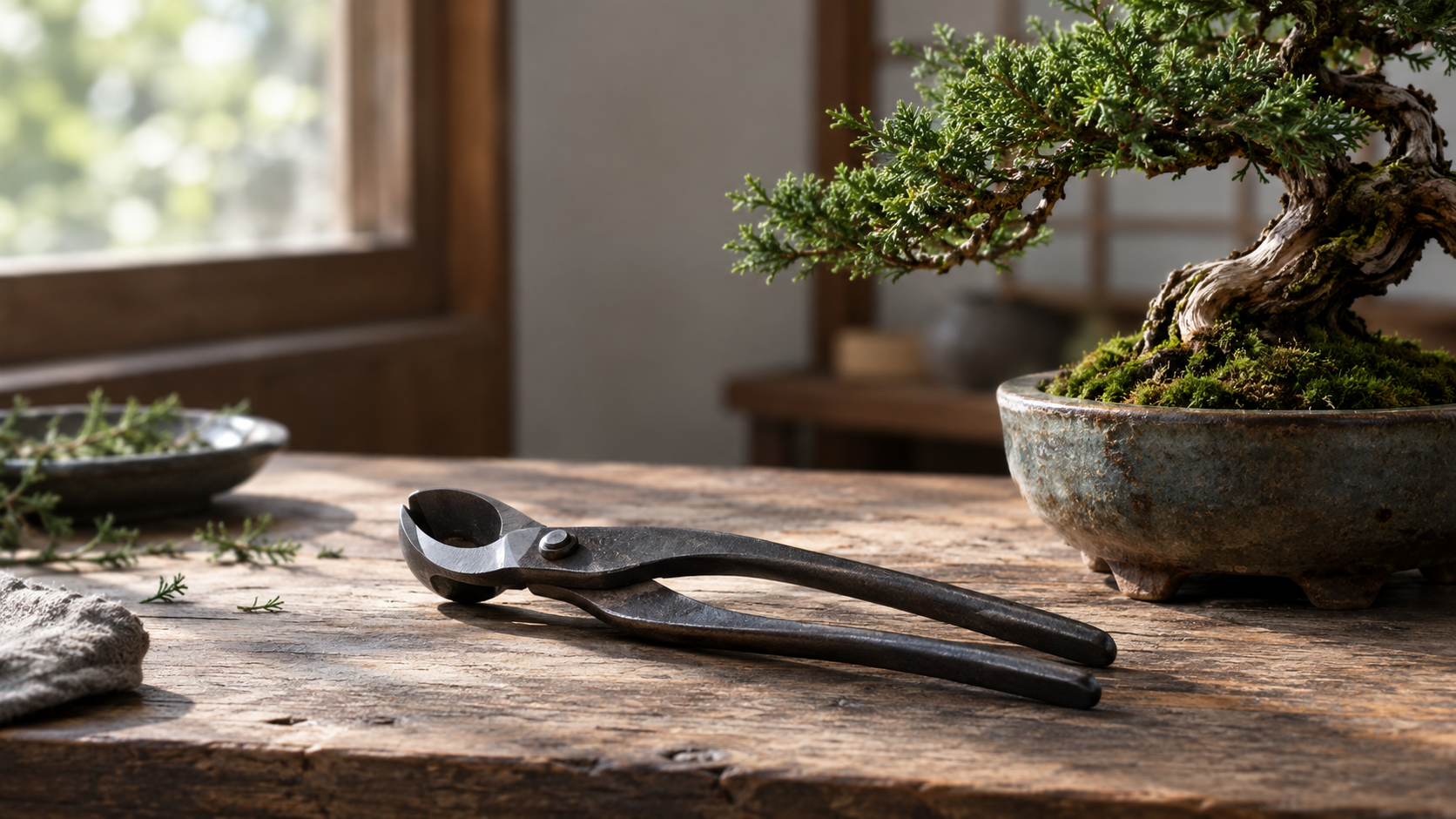
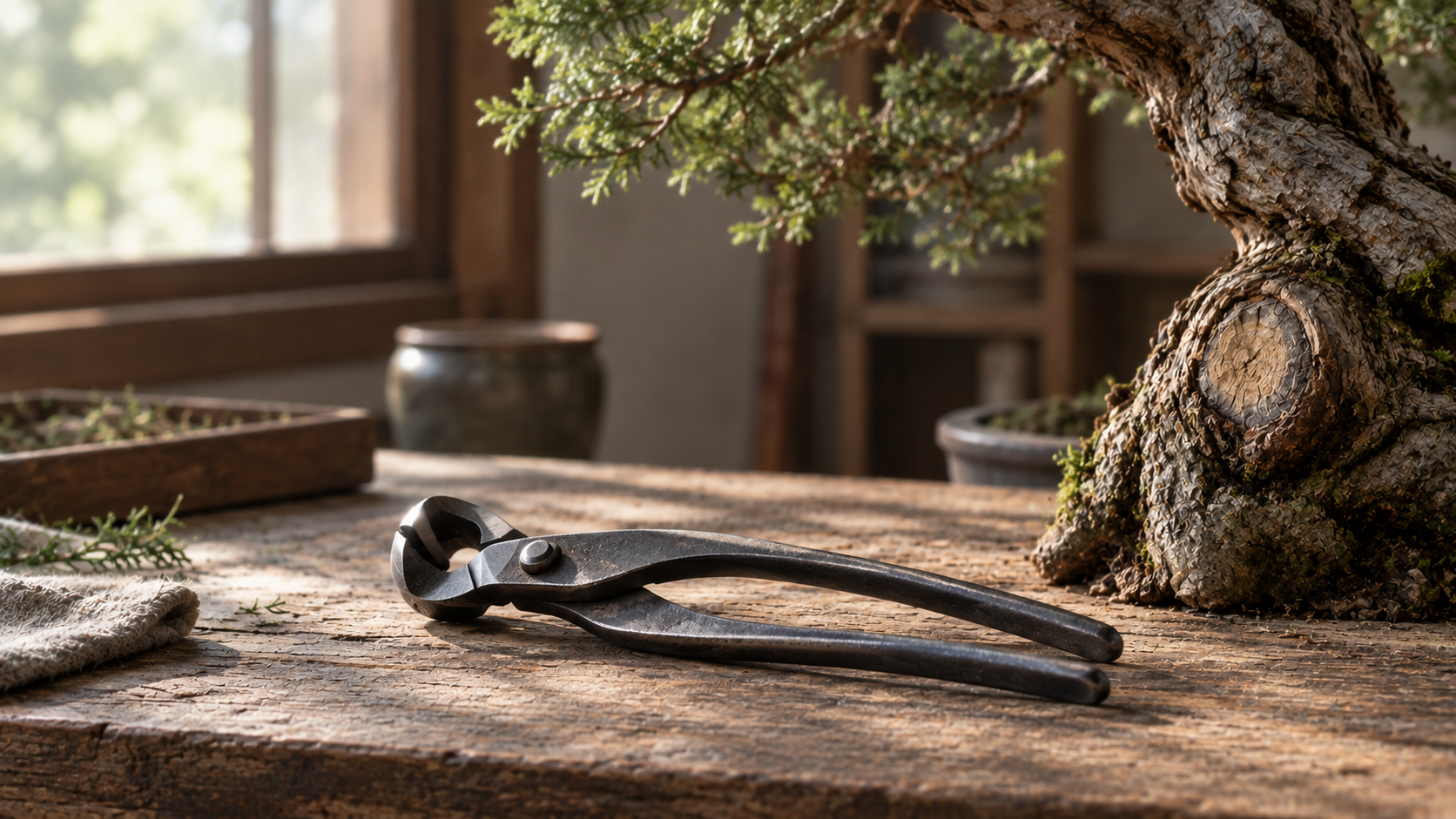
    It isn’t a fancier concave cutter. The jaws are rounder, almost like a ball, and they bite deeper into the wood. You can take out a knob, clean up an old stub, or hollow a spot slightly below the bark so it heals flat instead of bulging.

    Knob cutter vs concave cutter, quickly

    People mix these two up all the time, so here’s the plain version.

    A concave cutter has straight or slightly curved jaws that meet at an angle. It’s built to take a branch off flush with the trunk and leave a shallow hollow. It’s the tool you’ll use most.

    A knob cutter has rounded jaws that close in a cupped shape. It takes a smaller, deeper bite. Because of that shape, you can nibble away at something bit by bit: a knob, a stub, a swollen old wound. You can also use it on roots, which a lot of people don’t realise at first.

    So they’re partners, not replacements. Most growers who do any structural work end up with both. The concave cutter does the first cut. The knob cutter cleans up what’s left.

    The trouble is picking one. Kaneshin alone sells around ten knob cutters in different sizes and blade widths. Masakuni has straight, spherical, long-handle and tilted versions. Prices go from about $60 to well over $120 before shipping.

    In my experience, the mistake people make most often here isn’t choosing the “wrong brand.” It’s choosing the wrong size for their trees. So size gets a lot of attention in this guide.


    Who this article is NOT for

    A quick filter before you read the whole thing.

    It’s not for you if you don’t own a concave cutter yet. For most people, a concave cutter is the first serious cutting tool, and the knob cutter comes after. If you’re still deciding on that one, start with our guide to the best bonsai concave cutters and come back here later.

    It’s not for you if you want a budget tool. Everything below is made in Japan. There are cheaper knob cutters out there, and some of them work. They’re just not what this article covers.

    It’s not for you if you only keep small indoor trees and never do structural work. A knob cutter earns its keep on trunks, thick branches and roots. If your pruning is mostly twigs and leaves, you probably won’t reach for it much.

    Still with us? Let’s go.


    How we picked these (3 things that actually matter)

    1. Size, matched to your trees

    This matters more with knob cutters than with almost any other bonsai tool.

    A small cutter (around 145–150mm) gets into tight spaces on shohin and mame trees. A medium one (around 175–180mm) is the most flexible. A large one (210mm and up) gives you the leverage for thick branches and big trunks, but it’s awkward on small work.

    If most of your trees are under about 30cm (12 in), go small or medium. If you work on larger trees or collected material, you’ll want something in the 210mm range, and plenty of growers end up owning two sizes.

    2. Steel: carbon, stainless, or coated

    Same story as with other cutters.

    Carbon steel is sharper, cuts cleaner, and costs less. It also rusts if you don’t wipe and oil it. Stainless steel handles humidity and the occasional lazy day much better, but it usually costs about twice as much. A few makers also sell carbon steel with a black coating that helps a bit with rust, without changing the edge.

    Knob cutters often get used near soil, on roots, or on wet wood during repotting. That’s worth thinking about if you tend to put tools away dirty.

    3. Jaw shape: standard or spherical

    A standard knob cutter has rounded jaws that leave a hollow wound. It’s the general-purpose version.

    A spherical knob cutter has jaws that are more fully rounded, closer to a half-ball. It takes a deeper, rounder bite. That’s useful for large knobs and for work near deadwood, but it’s more than most people need on small trees.

    Some makers also sell long-handle and angled (“tilt”) versions. These are specialist tools for reaching into the middle of a dense tree or cutting at an awkward angle. Nice to have. Rarely your first knob cutter.

    Prices below are approximate and were checked in September 2026. Yen prices are from Japanese stores before international shipping. Always check the final total at checkout.


    Comparison table

    Knob cutterSteelJaw typeLengthApprox. priceBest for
    Wazakura Hand Forged Knob CutterS55C carbon (black coated)Standard210mm~$60First Japanese knob cutter
    Kaneshin Knob Cutter No.9 / No.10 / No.11CarbonStandard150 / 175 / 210mm~¥10,600 each (about $70)Matching size to your trees
    Kaneshin Stainless Knob Cutter No.810StainlessStandard210mm~¥21,200 (about $135)Low maintenance, larger trees
    Yagimitsu Stainless Knob CutterStainlessStandard180mm~£125 (UK retail)Shohin and small trees in stainless
    Masakuni Knob Cutter No.0035CarbonStandard180mm~¥12,800 (about $85)A lightweight premium everyday tool
    Masakuni Spherical Knob Cutter No.0335CarbonSpherical210mm~¥17,800 (about $115)Advanced work on big knobs and trunks

    Individual reviews

    1. Wazakura Hand Forged Knob Bonsai Branch Cutter (210mm)

    Wazakura’s knob cutter comes from the same town as its concave cutter: Sanjo in Niigata, which has a long metalworking history.

    The specs are simple. S55C carbon steel with a black coating, 210mm long, 15mm blade, 230g. It’s $59.99 on Wazakura’s own store, with free shipping to the US, Canada, the UK, the EU and some other regions. Import tax may still apply depending on where you live.

    There’s also a version with an asymmetrical handle at the same price. Wazakura says it gives a more balanced grip and less hand fatigue on detailed work.

    Pros

    • Lowest price on this list for a Japanese-made knob cutter
    • Free shipping to a lot of countries from their own store
    • 210mm length gives good leverage on thicker wood
    • Asymmetrical handle option if grip comfort matters to you

    Cons

    • Only one size, and 210mm is on the large side for shohin
    • Less long-term feedback in forums than Kaneshin or Masakuni
    • Carbon steel, so it still needs oiling

    Who it’s for: Someone who already has a concave cutter, mostly works on medium to large trees, and wants a real Japanese knob cutter without spending $100+.


    2. Kaneshin Knob Cutter (carbon steel) — No.9, No.10, No.11

    If you want to match the tool to your trees, Kaneshin makes it easy.

    The carbon knob cutters come in a spread of sizes. On a Japanese store, No.9 is 150mm, No.10 is 175mm and No.11 is 210mm, all at about ¥10,600. There are also “B” versions (like No.9B and No.10B) with a thinner blade for tighter spots, at around ¥12,500. At the very top, the No.12 is a 300mm, 750g tool for really heavy work.

    Eastern Leaf in the US sells a Kaneshin carbon knob cutter for $79 and lists it as an advanced-level tool.

    In my experience, the Kaneshin line is where the size question gets answered most cleanly. You’re not stuck picking one length and hoping it fits.

    Pros

    • Wide range of sizes, so you can buy exactly what your trees need
    • Thin-blade “B” versions for dense or refined trees
    • Solid reputation built over a long time
    • Good value for a well-known Japanese brand

    Cons

    • The model numbering can be confusing across different shops
    • Carbon steel, so drying and oiling are part of the deal
    • Prices and available sizes vary a lot between retailers

    Who it’s for: Pretty much anyone who knows their typical tree size. Small trees: No.9 or 9B. Mixed collection: No.10. Larger trees: No.11.


    3. Kaneshin Stainless Knob Cutter No.810 (210mm)

    This is the stainless version of Kaneshin’s large knob cutter.

    It’s 210mm and around 345g, which is noticeably heavier than the carbon No.11 at around 250g. On a Japanese store it’s about ¥21,200, so roughly double the carbon price. There’s also a smaller stainless model, No.808, at 180mm for the same price.

    Why pay double? Mostly rust. Knob cutters tend to see dirty, wet work: roots during repotting, damp wood, soil. Stainless deals with that a lot better.

    Pros

    • Much more forgiving if you don’t clean tools right away
    • Good for root work during repotting
    • Extra weight helps on thick material
    • A 180mm version (No.808) exists if you want stainless in a medium size

    Cons

    • Roughly twice the price of the carbon model
    • Heavier, which you’ll feel on long sessions
    • Stainless is harder to resharpen well at home

    Who it’s for: Growers in humid climates, people who do a lot of root work, or anyone who’s honest that their tool care is hit and miss.


    4. Yagimitsu Stainless Steel Knob Cutter (180mm)

    Yagimitsu shows up more often at UK and European retailers than in the US.

    The 180mm stainless knob cutter sells for around £125 at UK bonsai shops. One retailer describes it as aimed at smaller shohin and mame trees, with clean cuts that help healing.

    So this is the stainless option for people with smaller trees. Kaneshin’s stainless range starts at 180mm too, so the two are close. Where you live and which shops you trust may decide it.

    Pros

    • Stainless steel in a size that suits smaller trees
    • Easy to find in UK and European shops
    • Premium build from a respected Japanese maker

    Cons

    • Less information available online in English than the big two brands
    • Similar price to Kaneshin stainless, without the wide size range
    • Harder to find in the US

    Who it’s for: Shohin growers, especially in the UK or Europe, who want stainless and a smaller cutter.


    5. Masakuni Knob Cutter No.0035 (180mm)

    Masakuni’s standard knob cutter is lighter than you might expect.

    No.0035 is 180mm and 150g. There’s a small version, No.0036, at 145mm and just 80g. Both list at about ¥12,800 on a Japanese export store. That’s not far above Kaneshin, which surprises people who assume every Masakuni tool is expensive.

    In my experience, low weight is one of the more underrated things in a knob cutter. You often hold it at odd angles, inside the tree, for a while. A lighter tool makes that easier.

    Pros

    • Very light for its size, comfortable for long or fiddly work
    • Price is closer to Kaneshin than most people expect
    • Masakuni’s reputation among professionals and collectors
    • Small version (No.0036) for mame and shohin

    Cons

    • Carbon steel, so it needs the usual care
    • Harder to buy locally outside Japan, and prices overseas vary
    • Lighter build may feel less planted on very thick wood

    Who it’s for: Intermediate and advanced growers who want a premium, lightweight everyday knob cutter.


    6. Masakuni Spherical Knob Cutter No.0335 (210mm)

    This is the specialist pick on the list.

    No.0335 is a spherical knob cutter, 210mm and 210g, at about ¥17,800 on a Japanese store. There’s a smaller No.0336 at 170mm for the same price. The fully rounded jaws take a deeper, rounder bite than a standard knob cutter.

    Masakuni also sells a long-handle version (No.0135, 230mm) and a tilted one (No.0235, 230mm) for reaching into the middle of a tree or cutting at an angle. If you already know you need one of those, you probably don’t need this guide.

    Pros

    • Deep, round cuts for large knobs and old wounds
    • Useful for trunk work and cleaning up near deadwood
    • Fairly light for a 210mm spherical cutter
    • Small version available

    Cons

    • The most expensive knob cutter here
    • The deep bite is too much for a lot of everyday cuts
    • Probably not the right only knob cutter for most people

    Who it’s for: Advanced growers who already own a standard knob cutter and regularly work on thick trunks, collected trees or big old knobs.


    Recommendation by use case

    “I’ve got a concave cutter. Now I want my first knob cutter, without overspending.” Wazakura Hand Forged Knob Cutter if your trees are medium to large. At 210mm it’s a bit big for shohin, though.

    “I want the right size for my trees, and I don’t mind looking after carbon steel.” Kaneshin carbon. No.9 for small trees, No.10 for a mixed collection, No.11 for larger ones.

    “I live somewhere humid, or I do a lot of root work.” Kaneshin No.810 stainless for larger trees. Kaneshin No.808 or Yagimitsu 180mm for smaller ones.

    “I mostly grow shohin and mame.” Kaneshin No.9B (thin blade) or Masakuni No.0036 if you’re happy with carbon steel. Yagimitsu 180mm if you want stainless.

    “I want a premium tool I’ll reach for every week.” Masakuni No.0035. Light, well made, and not as expensive as you’d guess.

    “I work on big collected trees and old knobs.” Masakuni Spherical No.0335, ideally alongside a standard knob cutter.


    Conclusion: pick the size first, then the brand

    Here’s the short version.

    Get the size right before anything else. A great 210mm knob cutter is still the wrong tool for a mame juniper, and a small one will struggle on a thick trunk.

    Then think about how you’ll actually use it. If it’s mostly cleaning up after the concave cutter, a standard knob cutter is plenty. If you’re working on old, lumpy trunks, that’s when a spherical one starts to make sense.

    After that, it’s the same choice as with any bonsai cutter. Carbon if you’ll look after it. Stainless if you won’t, or if your tools see a lot of wet soil and roots.

    And if you haven’t picked a concave cutter yet, do that first. Our concave cutter comparison covers the options.

    Ready to choose?

  • Best Bonsai Concave Cutters in 2026: 6 Japanese Picks, From First Serious Tool to Lifetime Kit

    Best Bonsai Concave Cutters in 2026: 6 Japanese Picks, From First Serious Tool to Lifetime Kit

    Affiliate disclosure: Some links on this page are affiliate links. If you buy through them, Aribonsai may earn a small commission at no extra cost to you. It doesn’t change what we recommend or how we rank anything.


    You know the cutter matters. You just don’t know which one.

    If you’ve been doing bonsai for more than a season or two, you’ve probably hit this moment.

    You make a cut with a cheap cutter. The branch comes off, sure. But the wound looks chewed. Or the jaws twist a little at the end of the cut. Or, a few months later, there’s a bump right where you wanted the trunk line to stay clean.

    So you start looking at “real” Japanese concave cutters. And that’s where it gets confusing fast.

    Kaneshin, Masakuni, Yagimitsu, Wazakura. Carbon or stainless. Straight edge or spherical. $60 or $190. Every forum thread seems to have one person saying “just buy Masakuni and be done with it” and another saying “Masakuni is overpriced, Kaneshin is 90% of it.”

    In my experience, most of the confusion comes from people comparing tools that were never meant for the same job. A $60 hand-forged cutter and a $140 master-grade stainless one aren’t really competing. They’re for different people at different stages.

    So that’s how this guide is set up. Six Japanese-made concave cutters, what each one is actually good at, and who should skip it.


    Who this article is NOT for

    Let’s save you some time.

    This isn’t for you if you want the cheapest cutter that works. There are plenty of $15–20 concave cutters on Amazon. Some are fine for a few cuts on a nursery juniper. None of them are covered here. Everything below is made in Japan and priced accordingly.

    It’s not for you if you won’t do any tool care. Several of these are carbon steel. They need to be wiped, dried, and oiled. If your tools usually live in a bucket on the patio, skip ahead to the stainless options, or honestly, stick with what you have for now.

    It’s not a full tool kit guide. This is just about the concave cutter. Knob cutters, wire cutters, and shears deserve their own articles, and we’ll get to those.

    Still here? Good. Let’s get into it.


    How we picked these (3 things that actually matter)

    There’s a lot of marketing noise around bonsai tools. “Samurai sword steel.” “Used by masters.” Some of it is true, some of it is just a nice story. Here’s what we actually looked at.

    1. Steel type and how much care it needs

    This is the big one.

    Carbon steel takes and holds a sharper edge and generally cuts cleaner. The trade-off is rust. You have to dry it after use and oil it regularly. Stainless steel is far more forgiving, especially if you live somewhere humid, but it’s harder to get the same edge quality, and good stainless is expensive to make properly.

    There’s also a middle option: carbon steel with a rust-resistant coating, which is what Masakuni does with its silver 8000 series.

    None of these is “best.” It depends on how you work.

    2. Blade shape and size

    A standard straight-edge concave cutter is the everyday workhorse. It removes a branch flush to the trunk and leaves a slightly hollow wound that heals over flatter.

    A spherical (round-edge) cutter has a more rounded jaw. It tends to feel stronger through the cut and leaves a rounder, deeper hollow, which some growers prefer on thicker branches or when working around deadwood.

    Size matters too. Most general-purpose cutters are in the 200–210mm (about 8 inch) range. Smaller ones are easier in dense, refined trees. Bigger ones handle thicker material but feel clumsy on small work.

    3. Real-world price, including shipping from Japan

    A cutter that’s “$65” on a Japanese store can end up closer to $90–100 by the time it reaches you. Some stores ship free to the US, UK, and Canada. Others don’t. We’ve listed approximate prices, but check the final checkout total before you commit.

    Prices below are approximate and were checked in September 2026. They change often, especially with exchange rates.


    Comparison table

    CutterSteelBlade shapeLengthApprox. priceBest for
    Wazakura Hand Forged Concave CutterS55C carbon (black coated)Straight200mm~$60First serious Japanese cutter
    Kaneshin Concave Cutter (carbon)CarbonStraight170–205mm~$65–90Best value long-term tool
    Kaneshin Spherical Concave CutterCarbonSpherical~8 in~$99Advanced cuts, thicker branches
    Kaneshin Master Grade Stainless No.802StainlessStraight205mm~$120–137Low-maintenance, humid climates
    Yagimitsu Stainless Concave CutterStainlessStraight (spherical version available)~8 in~$139–149Stainless users who want a premium feel
    Masakuni Concave Cutter (8000 series)High-carbon, anti-rust coatingStraight220mm~¥18,800 in Japan (roughly $125–190 overseas)Serious hobbyists, “buy once” people

    Individual reviews

    1. Wazakura Hand Forged Concave Branch Cutter 8″ (200mm)

    Wazakura is a Japan-based store that sells tools made by smaller workshops. This cutter is hand-forged in Sanjo, Niigata, a town that’s been known for metalwork for centuries.

    Specs are straightforward. S55C carbon steel with a black coating, 25mm blades, 190g, and a stated cutting range of about 8–13mm (5/16″ to 1/2″).

    At around $60 with free shipping to the US, Canada, and the UK on their own store, it’s the most accessible entry point on this list. It’s also on Amazon, which some people prefer for returns.

    Pros

    • Genuinely made in Japan at a price close to good mid-range import tools
    • Light at 190g, easy to handle for long pruning sessions
    • Free shipping to the US, CA, and UK from their own store
    • Also available in 2-piece sets with scissors, which is handy for gifts

    Cons

    • Smaller brand, so there’s less long-term track record in forums compared to Kaneshin or Masakuni
    • The 8–13mm range is fine for most work but a bit limiting on thick branches
    • Carbon steel, so it still needs regular oiling

    Who it’s for: Someone upgrading from a cheap cutter who wants real Japanese steel without jumping to $100+.


    2. Kaneshin Concave Cutter (carbon steel)

    If you ask ten experienced growers what they’d buy for a solid all-round cutter, a good number of them will say Kaneshin.

    Kaneshin has been making cutlery for over 100 years and uses Yasuki steel for many of its tools. The carbon concave cutters come in several sizes. On Japanese stores, the 170mm and 205mm straight-edge versions sit around ¥9,600–10,400 (roughly $65–70 before shipping). Eastern Leaf in the US lists its Kaneshin carbon concave cutter at $89.

    In my experience, this is the cutter that comes up most when people talk about “value” in the serious-tool range. Not the flashiest. Just very good for the money.

    Pros

    • Strong reputation built over decades, easy to find reviews and user opinions
    • Multiple sizes available, so you can match it to your tree sizes
    • Carbon steel edge holds up well with basic maintenance
    • Sold through several Western retailers, not just Japan-based shops

    Cons

    • Model numbers and sizes can be confusing across different stores (No.1S, 3S, 1A, 3A, and so on)
    • Needs drying and oiling after use
    • Price varies a lot depending on where you buy

    Who it’s for: Pretty much anyone past the beginner stage who wants one cutter they’ll use for years.


    3. Kaneshin Spherical Concave Branch Cutter

    This is where it starts getting more specialized.

    The spherical version has a rounded jaw instead of a straight one. Retailers describe it as giving extra strength during the cut and making it easier to leave rounded edges, which is useful when you’re working near jins or cleaning up deadwood transitions.

    Eastern Leaf lists it at $99 and labels it as an advanced-level tool. That’s fair. It’s not harder to use, exactly. It’s just that a lot of beginners won’t need what it does yet.

    Pros

    • Stronger feel through thicker cuts
    • Leaves a rounder, cleaner hollow
    • Useful for deadwood and jin work
    • Same Kaneshin build quality as the straight version

    Cons

    • Not the best choice as your only cutter if most of your trees are small
    • Round wounds are deeper, which isn’t always what you want on refined trees
    • Carbon steel, so the usual care applies

    Who it’s for: Intermediate to advanced growers who already own a straight concave cutter and are doing more structural or deadwood work.


    4. Kaneshin Master Grade Stainless Concave Cutter No.802 (205mm)

    Same brand, very different use case.

    The No.802 is Kaneshin’s stainless straight-edge cutter, 205mm long with a 25mm blade. Japanese stores list it around ¥19,200 (about $120), and US retailers have it around $137. That’s roughly double the carbon version.

    So why pay more? Rust. If you live somewhere humid, garden near the coast, or just know you’re not going to oil your tools every time, stainless saves you a lot of frustration.

    In my experience, people who switch to stainless usually do it for one reason: they’ve already lost a carbon tool to rust once. Nobody wants to go through that twice.

    Pros

    • Very low maintenance compared to carbon steel
    • Well-suited to medium and larger trees
    • Kaneshin quality and fit
    • Good choice for humid climates

    Cons

    • Significantly more expensive than the carbon version
    • Some experienced growers still prefer the edge of carbon steel on refined trees
    • Stainless is harder to resharpen well

    Who it’s for: Anyone who knows tool care isn’t going to happen consistently, or who works in a damp climate.


    5. Yagimitsu Stainless Steel Concave Branch Cutter

    Yagimitsu is less talked about than Kaneshin or Masakuni, which is a bit surprising given the price point.

    Eastern Leaf carries both a straight stainless concave cutter (around $139) and a spherical stainless version (around $149). So you get the stainless convenience plus the option of a rounded jaw, which isn’t that common in stainless.

    Pros

    • Stainless, so it handles humidity and occasional neglect
    • Spherical option available in stainless, which is harder to find
    • Priced in the same range as Kaneshin’s stainless line

    Cons

    • Less forum discussion and user feedback than the bigger brands
    • Not much cheaper than Kaneshin stainless, so brand familiarity may decide it for a lot of people
    • Fewer retailers carry it outside the US

    Who it’s for: Stainless users who specifically want a spherical cutter, or who like having something a little outside the usual brands.


    6. Masakuni Concave Branch Cutter (8000 series)

    Masakuni is the name that comes up whenever someone asks, “What would you buy if money didn’t matter?”

    The 8000 series (silver) tools are high-carbon steel with an anti-rust coating on top. The idea is to keep the carbon steel edge while making the tool easier to clean and less prone to rust. The concave branch cutter in this line is 220mm and 220g. A Japanese export store lists it at ¥18,800. Overseas, depending on the retailer, you’ll usually see it somewhere between $125 and $190.

    Is it worth it over Kaneshin? That’s the honest question. The general consensus among experienced growers is that Masakuni is excellent, but the performance gap over Kaneshin is smaller than the price gap.

    In my experience, the people who end up happiest with Masakuni aren’t the ones chasing the “best” tool. They’re the ones who already know how they work, what sizes they need, and want one very good cutter that’ll outlast most of their trees.

    Pros

    • Top-tier reputation among professionals and long-time collectors
    • Anti-rust coating on high-carbon steel is a nice balance of edge and convenience
    • Slightly longer at 220mm, good leverage on thicker branches
    • Holds value well on the second-hand market

    Cons

    • Expensive, and the value over Kaneshin is debatable
    • 220mm may feel large on very small or shohin trees
    • Counterfeit and grey-market listings exist, so buy from reputable sellers

    Who it’s for: Advanced hobbyists and collectors who want the benchmark tool and are sure about their size preference.


    Recommendation by use case

    “I’m moving up from cheap cutters and want my first real Japanese one.” Go with the Wazakura Hand Forged Concave Cutter. It’s around $60, made in Japan, and ships free to the US, UK, and Canada from their store. Easy decision.

    “I want one cutter I’ll still be using in ten years, without overpaying.” Kaneshin carbon concave cutter. Pick the size that matches most of your trees. The 205mm is a safe general choice.

    “I live somewhere humid and I’m honest about my tool care.” Kaneshin No.802 stainless. You’ll pay more, but you won’t be scrubbing rust off it next spring.

    “I already have a straight cutter. I’m doing more deadwood and structural work.” Kaneshin Spherical if you’re fine with carbon steel. Yagimitsu Spherical Stainless if you’re not.

    “I’m experienced, I know what I need, and I want the benchmark.” Masakuni 8000 series. Just make sure the 220mm size suits your trees, and buy from a seller you trust.

    “I’m buying a gift for a bonsai friend.” A Wazakura 2-piece set (concave cutter plus scissors) is a nice choice. It comes boxed and doesn’t require you to know what sizes they already own.


    Conclusion: buy for the work you actually do

    Here’s the short version.

    If you’re new to Japanese tools, don’t start with the most expensive cutter on the list. Start with a solid one like Wazakura or Kaneshin, learn how you actually use it, and upgrade later if you feel the need.

    If you’ve been at this for years, the choice mostly comes down to steel. Carbon if you’ll look after it. Stainless if you won’t, or can’t.

    And whatever you buy, a clean, oiled, sharp mid-range cutter will do better work than a rusty premium one. Tool care matters more than the name on the handle.

    Ready to pick one?