Affiliate disclosure: Some links on this page are affiliate links. If you buy through them, Aribonsai may earn a small commission at no extra cost to you. It doesn’t change what we recommend or how we rank anything.
A tiny tree from a tiny seed. How hard can it be?
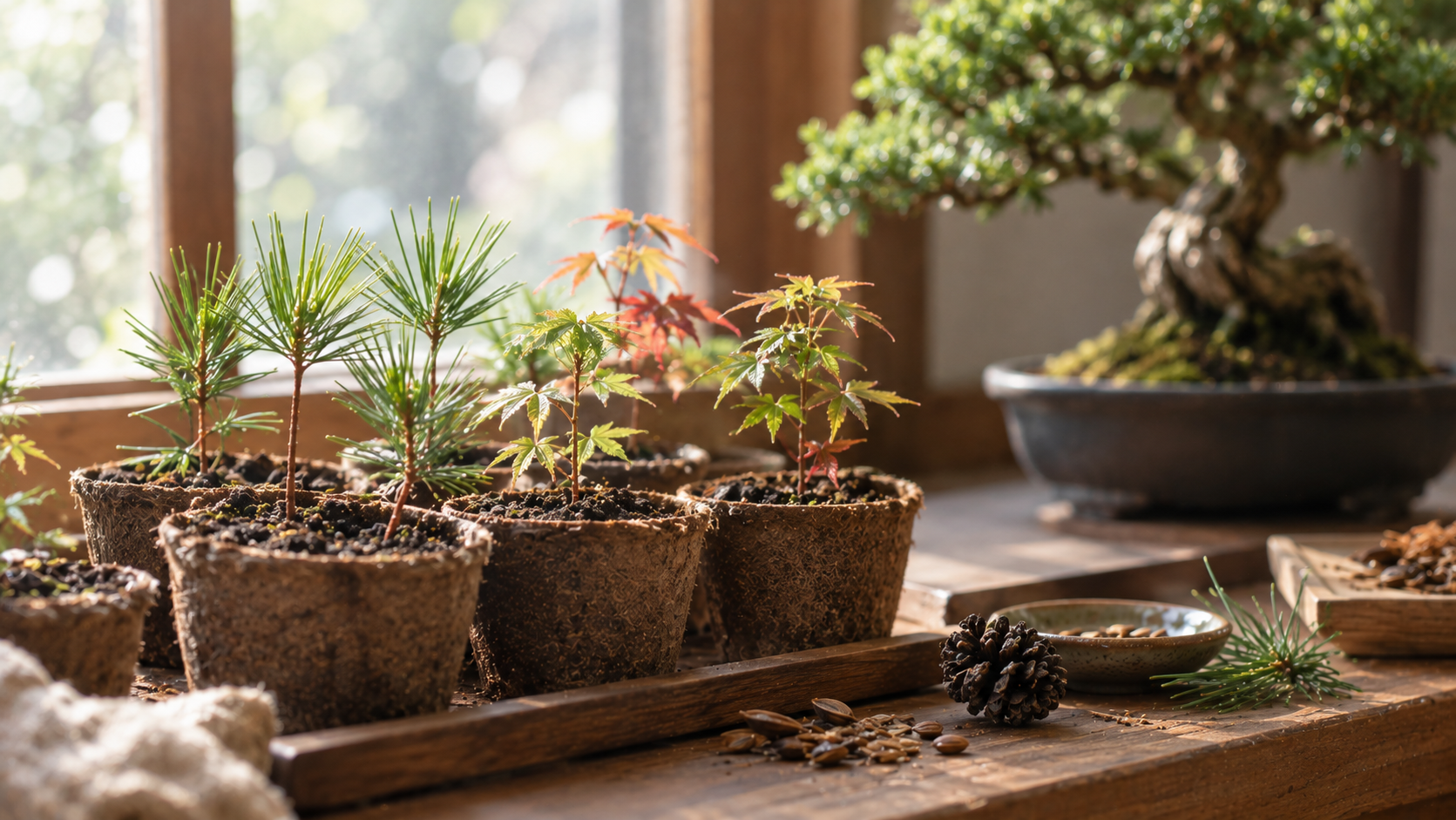
A bonsai seed kit is one of the most popular bonsai gifts out there. The box promises everything you need to “grow your own bonsai”: seeds, little pots, soil discs, sometimes a pair of clippers. It looks like a fun weekend project.
And it can be. Watching a seed sprout into a tiny tree is genuinely rewarding, and it teaches patience in a way no shop-bought bonsai can.
But it’s worth being honest about what’s in the box. There’s no such thing as a special “bonsai seed.” Any tree can become a bonsai, and the seeds in most kits are ordinary tree seeds. Some kits include species that aren’t great for bonsai at all. And the timeline is long: Bonsai Empire estimates roughly two to three years before a seedling is ready for training, and three to five years or more before it has enough trunk to shape into a bonsai.
In my experience, people who enjoy seed kits are the ones who go in expecting a long, slow experiment, not a finished bonsai by next summer. This guide explains what to look for, then compares five bonsai seed kits, and suggests a faster alternative for anyone who wants to start styling sooner.
Who this bonsai seed kit guide is NOT for
It’s not for people who want a bonsai to style this year. If you want to start pruning and wiring soon, a young nursery tree (pre-bonsai) is a much better choice. We cover that at the end.
It’s not a species care guide. Each tree in a kit has different needs. Always look up care for the specific species you’re growing.
It’s not for impatient gift recipients. If the person wants quick results, a living tree is usually a better gift.
Still with us? Let’s go.
How we picked these (3 things that actually matter)
1. Species that actually make good bonsai
This is the biggest difference between kits.
Some kits include classic bonsai species like Japanese black pine, Japanese maple or Japanese flowering cherry. Others are filled with spruces, jacarandas or flame trees, which can be grown but are less commonly used for traditional bonsai. Bonsai Empire warns that some kit species are poorly suited to bonsai, so check the list before buying.
2. Seed treatment and instructions
Many temperate species need stratification: a cold, moist period that mimics winter before the seed will germinate. Bonsai Empire explains that seeds from a different climate, seeds planted out of season and purchased seeds often need it, while tropical species generally don’t.
Some kits advertise “no stratification needed,” which usually means they’ve chosen species that germinate easily. That’s convenient, but it can limit which trees you grow. Good instructions explain soaking, stratification and planting depth clearly.
3. What’s actually in the box
Most kits include seeds, small biodegradable pots and compressed soil discs. Some add clippers, plant markers, a wooden planter box or a mini-greenhouse. Clippers in kits are usually basic. They’re fine for trimming seedlings, but not a substitute for real bonsai tools later on.
A few seed-growing habits that matter more than the kit
None of these cost anything.
- Read up on each species first. Especially whether it needs stratification.
- Don’t plant too deep. Bonsai Empire suggests around 1–2 cm.
- Keep soil moist, not waterlogged.
- Don’t overcrowd seedlings. Give each one space.
- Move seedlings carefully. Keep roots and soil intact when transplanting.
- Don’t style too early. Let trunks thicken for a few years first.
- Give them light. Seedlings grown indoors often need extra light; our grow light for bonsai guide explains the options.
Bonsai seed kit comparison table
| Kit | Species | Extras | Stratification | Approx. price |
|---|---|---|---|---|
| Morikami Bonsai Seed Kit | Japanese black pine, Japanese maple or Japanese flowering cherry (choose one) | Growing medium, mini-greenhouse | Follow included instructions | ~$14 |
| Grow Buddha Bonsai Tree Kit | Japanese red maple, wisteria, Japanese black pine, Judas tree | Clippers, bonsai pot, manual and e-book | Check instructions | Check price |
| Nature’s Blossom Bonsai Tree Kit | Colorado blue spruce, black spruce, Rocky Mountain juniper, Austrian pine | Biodegradable pots, grower’s manual | Not required (per review) | Check price |
| Planters’ Choice Bonsai Starter Kit | Norway spruce, Royal poinciana, blue jacaranda, Rocky Mountain pine | Clippers, burlap pots | Not required (per seller) | ~$33 |
| Garden Republic Bonsai Tree Kit | Brazilian rosewood, Colorado blue spruce, flame tree, black spruce | Shears, wooden box planter | Check instructions | Check price |
Prices are approximate and vary by retailer. Always check current prices and species lists before buying.
The 5 best bonsai seed kits, reviewed
1. Morikami Bonsai Seed Kit – best for classic Japanese species
If you want to grow a traditional Japanese bonsai species from seed, this is the kit we’d choose first.
It’s sold by the Morikami Museum and Japanese Gardens in Delray Beach, Florida. You choose one species: Japanese black pine, Japanese maple or Japanese flowering cherry. Each kit includes seeds, growing medium, a mini-greenhouse, and detailed instructions covering the whole process from seed onward. It costs around $14.
Focusing on a single, genuinely classic bonsai species is a real advantage. Japanese black pine and Japanese maple are two of the most iconic bonsai trees there are.
Pros
- Classic Japanese bonsai species
- Mini-greenhouse included
- Very affordable
- Sold by a respected Japanese garden museum
Cons
- One species per kit
- No tools included
Best for: anyone who wants to grow a traditional Japanese species from the start.
Check Morikami Bonsai Seed Kits
2. Grow Buddha Bonsai Tree Kit – best all-round kit with Japanese species
Garden Gate magazine named this its “Best Overall” bonsai kit, and its species list is one of the strongest we’ve seen.
It includes Japanese red maple, wisteria, Japanese black pine and Judas tree. The kit comes with four biodegradable pots, four expandable soil discs, plant labels, a pair of clippers, a larger bonsai pot, a paperback manual and an e-book. Garden Gate notes that the seed batches are tested for quality.
The main downside is that it includes only one larger pot for all four species.
Pros
- Strong species list, including Japanese black pine and maple
- Clippers and a bonsai pot included
- Manual plus e-book
- Seed batches tested for quality
Cons
- Only one larger pot
- Several species may need stratification
Best for: beginners who want a complete kit with good bonsai species.
Search Grow Buddha bonsai kit on Amazon
3. Nature’s Blossom Bonsai Tree Kit – easiest to germinate
Garden Gate named Nature’s Blossom its “Best for Beginners” pick, mainly because it’s easy to get started.
The kit includes Colorado blue spruce, black spruce, Rocky Mountain juniper and Austrian pine, with biodegradable pots, compressed soil discs, non-GMO seeds, plant markers and a grower’s manual. The review notes a germination rate of over 85% and seeds that need no stratification. Biodegradable pots can go directly into larger containers or the ground.
The trade-off is species choice. Juniper and pine are good bonsai trees, but spruces are less common in classic bonsai. Some users also find the sprouts fragile.
Pros
- Easy germination, no stratification
- Good instructions
- Juniper and pine included
Cons
- Spruces are less typical bonsai species
- Fragile sprouts
- No clippers
Best for: first-time growers and families who want quick success with germination.
Search Nature’s Blossom bonsai kit on Amazon
4. Planters’ Choice Bonsai Starter Kit – best value gift kit
Planters’ Choice is one of the most widely sold bonsai kits, often seen in gift shops.
One retailer lists it at around $33. It includes seeds for Norway spruce, Royal poinciana, blue jacaranda and Rocky Mountain pine, with four burlap growing pots, an expanding soil disc, bamboo plant markers, a bonsai clipper and an instruction booklet covering each tree’s history and care. The seller says it can be used indoors or outdoors and doesn’t require stratification. Garden Gate notes that the seeds need soaking in hot water a day before planting.
It’s a nicely packaged gift. Just know that Royal poinciana and jacaranda are tropical trees, so they need warmth, and spruce and pine have very different needs.
Pros
- Nicely packaged, popular gift
- Clipper included
- No stratification needed
Cons
- Mixed species with very different needs
- Not classic Japanese bonsai species
Best for: gifts, especially for children or casual hobbyists.
Search Planters’ Choice bonsai kit on Amazon
5. Garden Republic Bonsai Tree Kit – most variety
Garden Gate called Garden Republic its “Most Variety” pick.
It includes Brazilian rosewood, Colorado blue spruce, flame tree and black spruce, with soil discs, burlap grow bags, bamboo markers, bonsai shears, and a wooden box that doubles as a planter, plus detailed instructions.
Variety is fun, but the mix of tropical and cold-climate trees means they’ll need different conditions, and the reviewer notes they grow at different rates.
Pros
- Four very different species
- Wooden box planter
- Shears included
Cons
- Species have very different needs
- Few classic bonsai species
Best for: curious growers who enjoy experimenting with different trees.
Search Garden Republic bonsai kit on Amazon
Which bonsai seed kit should you buy? (By situation)
You want a classic Japanese species: Morikami Bonsai Seed Kit.
You want a complete kit with good bonsai species: Grow Buddha Bonsai Tree Kit.
You want the easiest germination: Nature’s Blossom Bonsai Tree Kit.
You’re buying a gift for a child or casual hobbyist: Planters’ Choice Bonsai Starter Kit.
You want variety: Garden Republic Bonsai Tree Kit.
You want to start styling a bonsai this year: skip seeds and buy a pre-bonsai.
Which species are best for growing bonsai from seed?
If you’d rather buy loose seeds than a kit, or want to know which kit species are worth the effort, it helps to know which trees are popular with bonsai growers.
Japanese black pine is one of the classic bonsai species and is often grown from seed by enthusiasts. It’s slow, but the result is a tree with real bonsai heritage.
Japanese maple and trident maple are popular deciduous choices. Maples typically need stratification, and Bonsai Empire gives about 30 days of cold, moist treatment as an example for maples.
Japanese flowering cherry and wisteria are attractive flowering options, though they take years to flower.
Junipers and pines in general suit bonsai well, which is why kits that include them are more useful than those filled with tropical shade trees.
Species like jacaranda, flame tree and Royal poinciana are beautiful trees, but they’re tropical, grow large, and are less commonly seen in traditional bonsai collections. They can still be a fun experiment, especially indoors in a warm, bright spot.
Whatever you grow, look up the needs of that specific species before you sow.
Are bonsai seed kits good gifts?
They can be, with the right recipient.
A bonsai seed kit makes a lovely gift for children, curious beginners, or anyone who enjoys a long, slow project. It’s affordable, fun to unbox, and teaches patience.
It’s a less ideal gift for someone who wants a bonsai to display now, or for an experienced grower, who will usually prefer quality tools or a young tree. If you’re buying for that kind of person, consider pairing a seed kit with something more immediate, like a small pre-bonsai or a pair of Japanese tweezers.
The faster alternative: pre-bonsai
Bonsai Empire isn’t a fan of seed kits. Its main argument is simple: if you want to learn bonsai, a young nursery tree, sometimes called pre-bonsai, lets you start much sooner. It gives an example of a four- to five-year-old nursery tree costing around $20.
That’s a real point to consider. A pre-bonsai already has a few years of trunk growth, so you can start pruning, wiring and repotting right away. Many growers do both: grow a few seeds as a long-term side project, and learn techniques on a pre-bonsai in the meantime.
Our where to buy bonsai trees online guide covers nurseries that sell pre-bonsai, and our bonsai tools for beginners guide explains the first tools you’ll need.
How to grow bonsai from a seed kit (the basics)
- Check each species and whether it needs soaking or stratification.
- Soak seeds if the instructions say so.
- Stratify where needed, usually in the fridge for a set period, depending on species.
- Sow seeds about 1–2 cm deep in moist, free-draining soil.
- Keep them moist and bright, but not waterlogged.
- Thin and transplant carefully once seedlings are established, keeping roots intact.
- Move them into better soil when they outgrow the kit pots. A free-draining bonsai mix with akadama works well later on.
- Let them grow for a few years before styling.
What you’ll need besides the kit
Most kits cover the first few weeks. After that, seedlings need a little more.
- Larger pots or a seed tray once seedlings outgrow the kit pots.
- Free-draining soil for transplanting, rather than dense potting compost.
- A spray bottle or gentle watering can so you don’t wash seeds out.
- A bright spot or grow light for anything grown indoors.
- Labels, because seedlings of different species can look alike for months.
- Patience, which no kit includes.
None of these are expensive, but having them ready makes the move from kit to real growing much smoother.
Common bonsai seed kit mistakes
Expecting a bonsai in a year. It takes several years.
Skipping stratification. Some seeds simply won’t sprout without it.
Overwatering. Waterlogged soil rots seeds and roots.
Keeping all species together. Tropical and temperate trees need different conditions.
Pruning too early. Let trunks thicken first.
Conclusion: a fun long-term project, not a shortcut
A bonsai seed kit can be a wonderful, slow project and a lovely gift, as long as everyone knows what to expect. For classic Japanese species, the Morikami kit is our first choice. The Grow Buddha kit is a strong all-round option, and Nature’s Blossom is the easiest to get sprouting.
If you want to learn bonsai techniques sooner, pair a seed kit with a pre-bonsai. The seeds grow in the background while you learn on a tree that’s ready now.
Ready to start growing? Check the Morikami Bonsai Seed Kits, or search the Grow Buddha kit on Amazon.
Leave a Reply