Category: Bonsai Trees

  • Best Bonsai Seed Kit: 5 Kits Compared, Plus the Honest Truth About Growing Bonsai From Seed

    Best Bonsai Seed Kit: 5 Kits Compared, Plus the Honest Truth About Growing Bonsai From Seed

    Affiliate disclosure: Some links on this page are affiliate links. If you buy through them, Aribonsai may earn a small commission at no extra cost to you. It doesn’t change what we recommend or how we rank anything.


    A tiny tree from a tiny seed. How hard can it be?

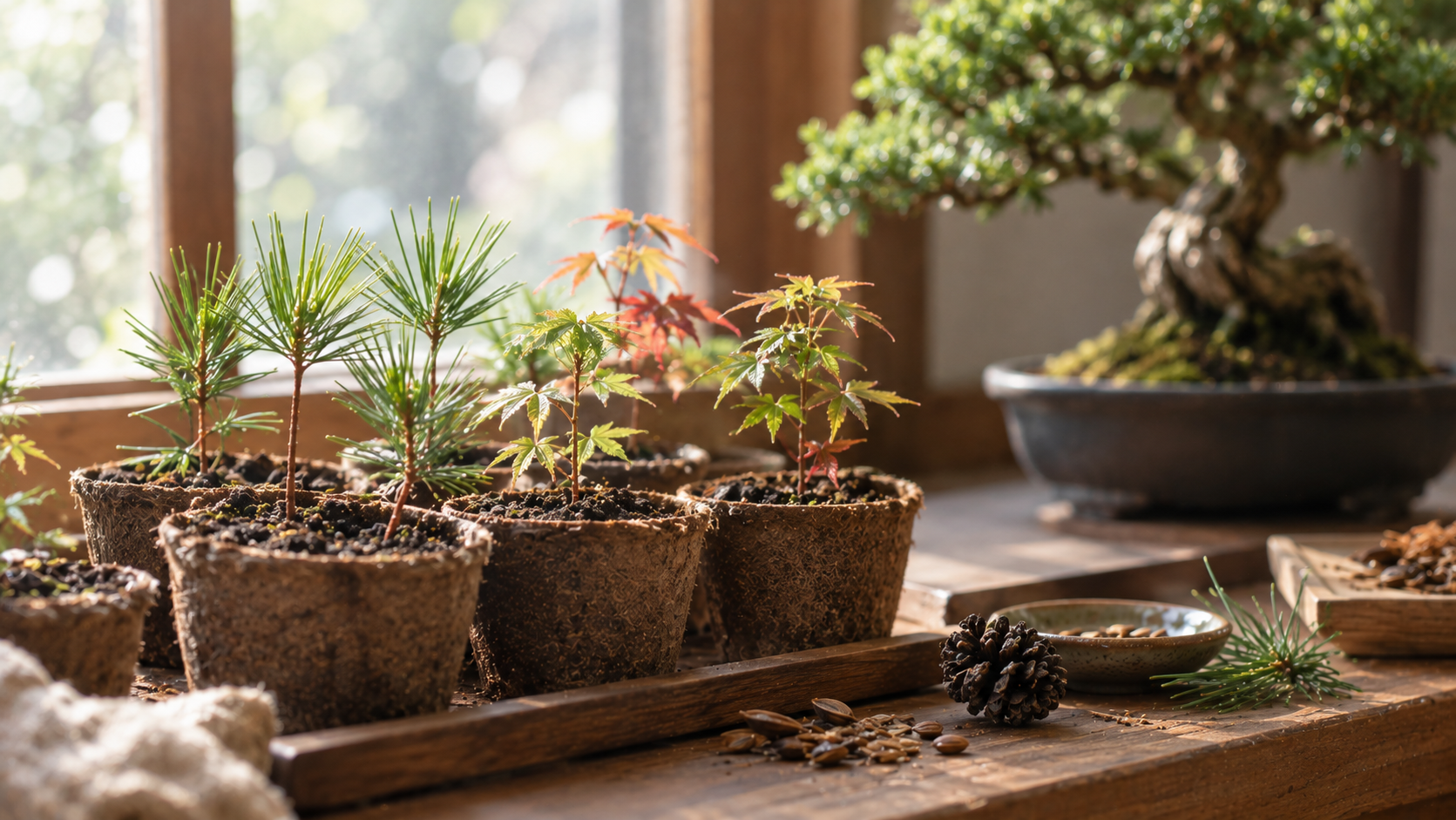
    A bonsai seed kit is one of the most popular bonsai gifts out there. The box promises everything you need to “grow your own bonsai”: seeds, little pots, soil discs, sometimes a pair of clippers. It looks like a fun weekend project.

    And it can be. Watching a seed sprout into a tiny tree is genuinely rewarding, and it teaches patience in a way no shop-bought bonsai can.

    But it’s worth being honest about what’s in the box. There’s no such thing as a special “bonsai seed.” Any tree can become a bonsai, and the seeds in most kits are ordinary tree seeds. Some kits include species that aren’t great for bonsai at all. And the timeline is long: Bonsai Empire estimates roughly two to three years before a seedling is ready for training, and three to five years or more before it has enough trunk to shape into a bonsai.

    In my experience, people who enjoy seed kits are the ones who go in expecting a long, slow experiment, not a finished bonsai by next summer. This guide explains what to look for, then compares five bonsai seed kits, and suggests a faster alternative for anyone who wants to start styling sooner.


    Who this bonsai seed kit guide is NOT for

    It’s not for people who want a bonsai to style this year. If you want to start pruning and wiring soon, a young nursery tree (pre-bonsai) is a much better choice. We cover that at the end.

    It’s not a species care guide. Each tree in a kit has different needs. Always look up care for the specific species you’re growing.

    It’s not for impatient gift recipients. If the person wants quick results, a living tree is usually a better gift.

    Still with us? Let’s go.


    How we picked these (3 things that actually matter)

    1. Species that actually make good bonsai

    This is the biggest difference between kits.

    Some kits include classic bonsai species like Japanese black pine, Japanese maple or Japanese flowering cherry. Others are filled with spruces, jacarandas or flame trees, which can be grown but are less commonly used for traditional bonsai. Bonsai Empire warns that some kit species are poorly suited to bonsai, so check the list before buying.

    2. Seed treatment and instructions

    Many temperate species need stratification: a cold, moist period that mimics winter before the seed will germinate. Bonsai Empire explains that seeds from a different climate, seeds planted out of season and purchased seeds often need it, while tropical species generally don’t.

    Some kits advertise “no stratification needed,” which usually means they’ve chosen species that germinate easily. That’s convenient, but it can limit which trees you grow. Good instructions explain soaking, stratification and planting depth clearly.

    3. What’s actually in the box

    Most kits include seeds, small biodegradable pots and compressed soil discs. Some add clippers, plant markers, a wooden planter box or a mini-greenhouse. Clippers in kits are usually basic. They’re fine for trimming seedlings, but not a substitute for real bonsai tools later on.

    A few seed-growing habits that matter more than the kit

    None of these cost anything.

    • Read up on each species first. Especially whether it needs stratification.
    • Don’t plant too deep. Bonsai Empire suggests around 1–2 cm.
    • Keep soil moist, not waterlogged.
    • Don’t overcrowd seedlings. Give each one space.
    • Move seedlings carefully. Keep roots and soil intact when transplanting.
    • Don’t style too early. Let trunks thicken for a few years first.
    • Give them light. Seedlings grown indoors often need extra light; our grow light for bonsai guide explains the options.

    Bonsai seed kit comparison table

    KitSpeciesExtrasStratificationApprox. price
    Morikami Bonsai Seed KitJapanese black pine, Japanese maple or Japanese flowering cherry (choose one)Growing medium, mini-greenhouseFollow included instructions~$14
    Grow Buddha Bonsai Tree KitJapanese red maple, wisteria, Japanese black pine, Judas treeClippers, bonsai pot, manual and e-bookCheck instructionsCheck price
    Nature’s Blossom Bonsai Tree KitColorado blue spruce, black spruce, Rocky Mountain juniper, Austrian pineBiodegradable pots, grower’s manualNot required (per review)Check price
    Planters’ Choice Bonsai Starter KitNorway spruce, Royal poinciana, blue jacaranda, Rocky Mountain pineClippers, burlap potsNot required (per seller)~$33
    Garden Republic Bonsai Tree KitBrazilian rosewood, Colorado blue spruce, flame tree, black spruceShears, wooden box planterCheck instructionsCheck price

    Prices are approximate and vary by retailer. Always check current prices and species lists before buying.


    The 5 best bonsai seed kits, reviewed

    1. Morikami Bonsai Seed Kit – best for classic Japanese species

    If you want to grow a traditional Japanese bonsai species from seed, this is the kit we’d choose first.

    It’s sold by the Morikami Museum and Japanese Gardens in Delray Beach, Florida. You choose one species: Japanese black pine, Japanese maple or Japanese flowering cherry. Each kit includes seeds, growing medium, a mini-greenhouse, and detailed instructions covering the whole process from seed onward. It costs around $14.

    Focusing on a single, genuinely classic bonsai species is a real advantage. Japanese black pine and Japanese maple are two of the most iconic bonsai trees there are.

    Pros

    • Classic Japanese bonsai species
    • Mini-greenhouse included
    • Very affordable
    • Sold by a respected Japanese garden museum

    Cons

    • One species per kit
    • No tools included

    Best for: anyone who wants to grow a traditional Japanese species from the start.

    Check Morikami Bonsai Seed Kits


    2. Grow Buddha Bonsai Tree Kit – best all-round kit with Japanese species

    Garden Gate magazine named this its “Best Overall” bonsai kit, and its species list is one of the strongest we’ve seen.

    It includes Japanese red maple, wisteria, Japanese black pine and Judas tree. The kit comes with four biodegradable pots, four expandable soil discs, plant labels, a pair of clippers, a larger bonsai pot, a paperback manual and an e-book. Garden Gate notes that the seed batches are tested for quality.

    The main downside is that it includes only one larger pot for all four species.

    Pros

    • Strong species list, including Japanese black pine and maple
    • Clippers and a bonsai pot included
    • Manual plus e-book
    • Seed batches tested for quality

    Cons

    • Only one larger pot
    • Several species may need stratification

    Best for: beginners who want a complete kit with good bonsai species.

    Search Grow Buddha bonsai kit on Amazon


    3. Nature’s Blossom Bonsai Tree Kit – easiest to germinate

    Garden Gate named Nature’s Blossom its “Best for Beginners” pick, mainly because it’s easy to get started.

    The kit includes Colorado blue spruce, black spruce, Rocky Mountain juniper and Austrian pine, with biodegradable pots, compressed soil discs, non-GMO seeds, plant markers and a grower’s manual. The review notes a germination rate of over 85% and seeds that need no stratification. Biodegradable pots can go directly into larger containers or the ground.

    The trade-off is species choice. Juniper and pine are good bonsai trees, but spruces are less common in classic bonsai. Some users also find the sprouts fragile.

    Pros

    • Easy germination, no stratification
    • Good instructions
    • Juniper and pine included

    Cons

    • Spruces are less typical bonsai species
    • Fragile sprouts
    • No clippers

    Best for: first-time growers and families who want quick success with germination.

    Search Nature’s Blossom bonsai kit on Amazon


    4. Planters’ Choice Bonsai Starter Kit – best value gift kit

    Planters’ Choice is one of the most widely sold bonsai kits, often seen in gift shops.

    One retailer lists it at around $33. It includes seeds for Norway spruce, Royal poinciana, blue jacaranda and Rocky Mountain pine, with four burlap growing pots, an expanding soil disc, bamboo plant markers, a bonsai clipper and an instruction booklet covering each tree’s history and care. The seller says it can be used indoors or outdoors and doesn’t require stratification. Garden Gate notes that the seeds need soaking in hot water a day before planting.

    It’s a nicely packaged gift. Just know that Royal poinciana and jacaranda are tropical trees, so they need warmth, and spruce and pine have very different needs.

    Pros

    • Nicely packaged, popular gift
    • Clipper included
    • No stratification needed

    Cons

    • Mixed species with very different needs
    • Not classic Japanese bonsai species

    Best for: gifts, especially for children or casual hobbyists.

    Search Planters’ Choice bonsai kit on Amazon


    5. Garden Republic Bonsai Tree Kit – most variety

    Garden Gate called Garden Republic its “Most Variety” pick.

    It includes Brazilian rosewood, Colorado blue spruce, flame tree and black spruce, with soil discs, burlap grow bags, bamboo markers, bonsai shears, and a wooden box that doubles as a planter, plus detailed instructions.

    Variety is fun, but the mix of tropical and cold-climate trees means they’ll need different conditions, and the reviewer notes they grow at different rates.

    Pros

    • Four very different species
    • Wooden box planter
    • Shears included

    Cons

    • Species have very different needs
    • Few classic bonsai species

    Best for: curious growers who enjoy experimenting with different trees.

    Search Garden Republic bonsai kit on Amazon


    Which bonsai seed kit should you buy? (By situation)

    You want a classic Japanese species: Morikami Bonsai Seed Kit.

    You want a complete kit with good bonsai species: Grow Buddha Bonsai Tree Kit.

    You want the easiest germination: Nature’s Blossom Bonsai Tree Kit.

    You’re buying a gift for a child or casual hobbyist: Planters’ Choice Bonsai Starter Kit.

    You want variety: Garden Republic Bonsai Tree Kit.

    You want to start styling a bonsai this year: skip seeds and buy a pre-bonsai.


    Which species are best for growing bonsai from seed?

    If you’d rather buy loose seeds than a kit, or want to know which kit species are worth the effort, it helps to know which trees are popular with bonsai growers.

    Japanese black pine is one of the classic bonsai species and is often grown from seed by enthusiasts. It’s slow, but the result is a tree with real bonsai heritage.

    Japanese maple and trident maple are popular deciduous choices. Maples typically need stratification, and Bonsai Empire gives about 30 days of cold, moist treatment as an example for maples.

    Japanese flowering cherry and wisteria are attractive flowering options, though they take years to flower.

    Junipers and pines in general suit bonsai well, which is why kits that include them are more useful than those filled with tropical shade trees.

    Species like jacaranda, flame tree and Royal poinciana are beautiful trees, but they’re tropical, grow large, and are less commonly seen in traditional bonsai collections. They can still be a fun experiment, especially indoors in a warm, bright spot.

    Whatever you grow, look up the needs of that specific species before you sow.


    Are bonsai seed kits good gifts?

    They can be, with the right recipient.

    A bonsai seed kit makes a lovely gift for children, curious beginners, or anyone who enjoys a long, slow project. It’s affordable, fun to unbox, and teaches patience.

    It’s a less ideal gift for someone who wants a bonsai to display now, or for an experienced grower, who will usually prefer quality tools or a young tree. If you’re buying for that kind of person, consider pairing a seed kit with something more immediate, like a small pre-bonsai or a pair of Japanese tweezers.


    The faster alternative: pre-bonsai

    Bonsai Empire isn’t a fan of seed kits. Its main argument is simple: if you want to learn bonsai, a young nursery tree, sometimes called pre-bonsai, lets you start much sooner. It gives an example of a four- to five-year-old nursery tree costing around $20.

    That’s a real point to consider. A pre-bonsai already has a few years of trunk growth, so you can start pruning, wiring and repotting right away. Many growers do both: grow a few seeds as a long-term side project, and learn techniques on a pre-bonsai in the meantime.

    Our where to buy bonsai trees online guide covers nurseries that sell pre-bonsai, and our bonsai tools for beginners guide explains the first tools you’ll need.


    How to grow bonsai from a seed kit (the basics)

    1. Check each species and whether it needs soaking or stratification.
    2. Soak seeds if the instructions say so.
    3. Stratify where needed, usually in the fridge for a set period, depending on species.
    4. Sow seeds about 1–2 cm deep in moist, free-draining soil.
    5. Keep them moist and bright, but not waterlogged.
    6. Thin and transplant carefully once seedlings are established, keeping roots intact.
    7. Move them into better soil when they outgrow the kit pots. A free-draining bonsai mix with akadama works well later on.
    8. Let them grow for a few years before styling.

    What you’ll need besides the kit

    Most kits cover the first few weeks. After that, seedlings need a little more.

    • Larger pots or a seed tray once seedlings outgrow the kit pots.
    • Free-draining soil for transplanting, rather than dense potting compost.
    • A spray bottle or gentle watering can so you don’t wash seeds out.
    • A bright spot or grow light for anything grown indoors.
    • Labels, because seedlings of different species can look alike for months.
    • Patience, which no kit includes.

    None of these are expensive, but having them ready makes the move from kit to real growing much smoother.


    Common bonsai seed kit mistakes

    Expecting a bonsai in a year. It takes several years.

    Skipping stratification. Some seeds simply won’t sprout without it.

    Overwatering. Waterlogged soil rots seeds and roots.

    Keeping all species together. Tropical and temperate trees need different conditions.

    Pruning too early. Let trunks thicken first.


    Conclusion: a fun long-term project, not a shortcut

    A bonsai seed kit can be a wonderful, slow project and a lovely gift, as long as everyone knows what to expect. For classic Japanese species, the Morikami kit is our first choice. The Grow Buddha kit is a strong all-round option, and Nature’s Blossom is the easiest to get sprouting.

    If you want to learn bonsai techniques sooner, pair a seed kit with a pre-bonsai. The seeds grow in the background while you learn on a tree that’s ready now.

    Ready to start growing? Check the Morikami Bonsai Seed Kits, or search the Grow Buddha kit on Amazon.
  • Where to Buy Bonsai Trees Online: 6 Nurseries and Sources Compared, Plus the Truth About Buying From Japan

    Where to Buy Bonsai Trees Online: 6 Nurseries and Sources Compared, Plus the Truth About Buying From Japan

    Affiliate disclosure: Some links on this page are affiliate links. If you buy through them, Aribonsai may earn a small commission at no extra cost to you. It doesn’t change what we recommend or how we rank anything.


    The tree in the photo isn’t always the tree in the box

    Buying a bonsai online sounds simple. You find a tree you like, click “add to cart,” and wait.

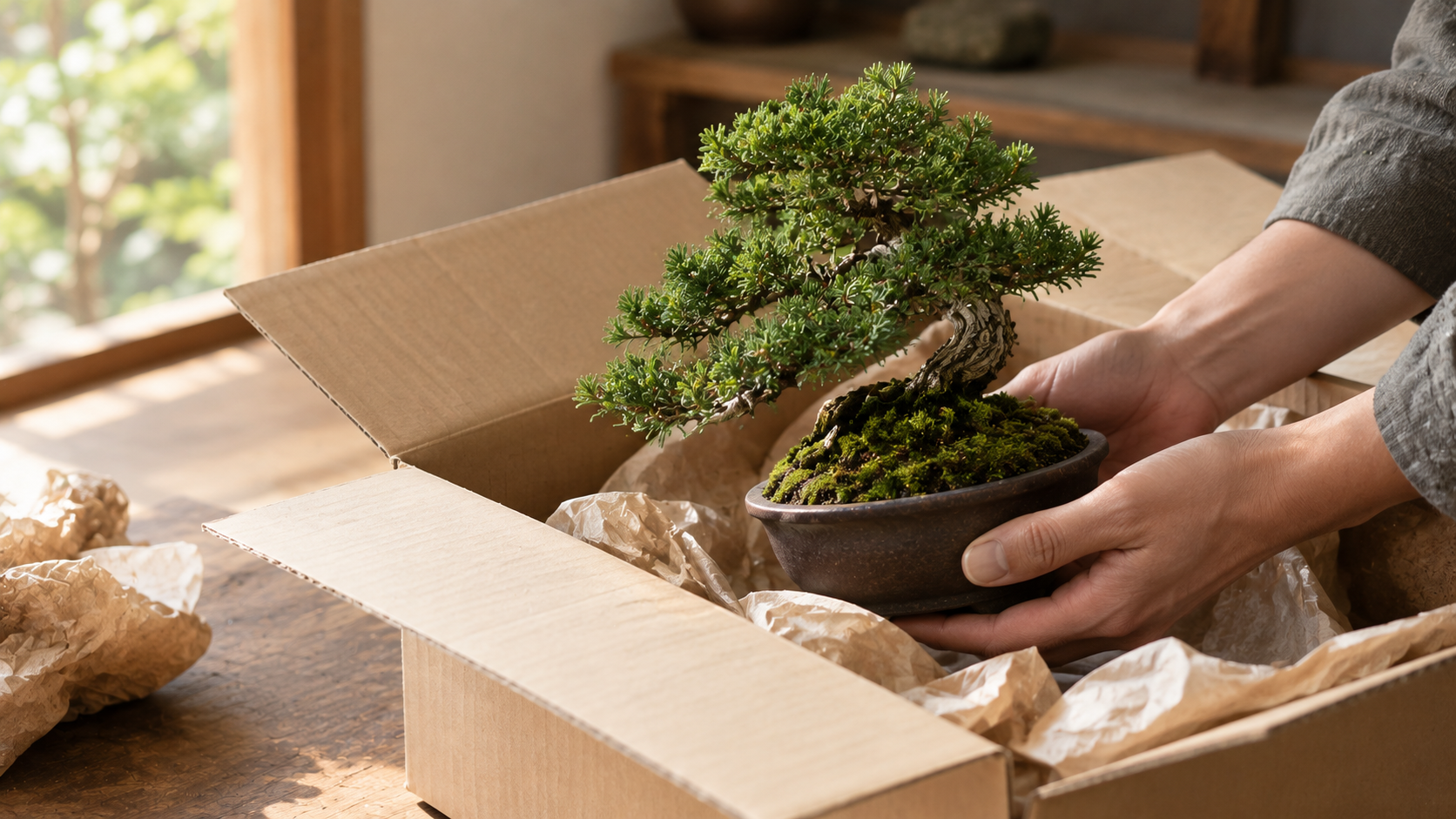
    Then the box arrives. Sometimes the tree is exactly what you hoped for. Sometimes it’s smaller than it looked. Sometimes it’s a young, straight seedling in a decorative pot, sold as a “bonsai.” And sometimes, after a few days in a cold truck or a hot warehouse, it arrives stressed, dropping leaves, or worse.

    Live trees are one of the hardest things to buy online. They’re living plants that have to survive shipping, and two trees sold under the same name can differ enormously in age, trunk, branch structure and health.

    There’s also a question many readers ask us: can I just buy a bonsai directly from Japan? The short answer is that for most people outside Japan, it isn’t practical, and we’ll explain why below.

    In my experience, the best online bonsai purchases come from nurseries that specialize in bonsai, show clear photos of the actual tree or a realistic sample, and have honest guarantees. This guide explains where to buy bonsai trees online, compares six sources from beginner-friendly shops to specialist nurseries, and explains what to check before you order.


    Who this “where to buy bonsai trees online” guide is NOT for

    It’s not about tools, pots or soil. Those are covered in our other guides. If you’re just starting, our bonsai tools for beginners guide explains what you’ll need alongside your first tree.

    It’s not a species guide. We’ll mention which trees suit beginners, but choosing a species for your climate deserves its own research.

    It’s not legal advice. Plant import rules are complex and change often. Always check with your country’s plant health authority before importing any plant.

    Still with us? Let’s go.


    How we compared these (3 things that actually matter)

    1. Specialist vs general retailer

    Bonsai specialists grow, import and style trees themselves. General online stores and marketplaces often resell young plants with little information about age or care. On bonsai forums, experienced growers repeatedly advise buying from sources others vouch for, and asking about scars and damage before buying.

    2. Honest photos and descriptions

    The best sellers either photograph the exact tree you’ll receive, or clearly state that you’ll get a similar tree. Look for size measurements, the tree’s age if known, and clear photos of the trunk and branches, not just the foliage.

    3. Shipping and guarantees

    Live trees are sensitive to temperature. Good nurseries explain when they ship, how they pack, and what happens if a tree arrives damaged. Read the guarantee and return policy before you buy, especially the time limit for reporting problems.

    A few buying habits that matter more than the shop

    None of these cost anything.

    • Start inexpensive. Many experienced growers advise beginners to start with affordable material before spending heavily.
    • Choose a species that suits your climate. An outdoor juniper and an indoor ficus need very different conditions.
    • Order in the right season. Shipping in extreme heat or cold is risky. Many nurseries limit shipping in winter.
    • Inspect the tree on arrival. Photograph it straight away, so you have a record if there’s a problem.
    • Don’t repot immediately. Let a newly shipped tree settle before major work.
    • Ask your local club. Members often know which sellers are reliable, and some sell trees themselves.
    • See trees in person when you can. Bonsai shows and local nurseries let you choose the exact tree.

    Where to buy bonsai trees online: comparison table

    SourceBased inBest forRangeExample pricesShips to
    Brussel’s BonsaiMississippi, USBeginners to collectorsBeginner, hobbyist and specimen trees~$37–95 for listed examplesUS
    Wigert’s BonsaiFlorida, USTropical and specimen treesPre-bonsai to specimenVariesUS
    Eastern LeafCalifornia, USWide catalog, suppliesIndoor and outdoor trees, suppliesVariesUS
    Bonsai Boy of New YorkNew York, USGifts and starter treesStarter and gift treesVariesUS
    Herons BonsaiSurrey, UKUK buyers, Japanese specimensStarter to imported specimensVariesUK
    Local nurseries and clubsYour areaChoosing the exact treeEverythingVariesCollect in person

    Prices and shipping areas are approximate and change often. Always check the seller’s current listings and policies.


    The 6 best places to buy bonsai trees online, reviewed

    1. Brussel’s Bonsai – best all-round US nursery

    Brussel’s Bonsai, based in Olive Branch, Mississippi, describes itself as the largest dedicated nursery of bonsai trees in the United States.

    Its range is organized by skill level: Beginner (starter trees and gifts), Hobbyist (higher-quality trees) and Master (specimen trees, described as rare and hand-shaped). It sells both indoor trees like ficus and jade, and outdoor trees like junipers, azaleas and maples. Listed examples include a Green Mound Juniper from about $37, Satsuki Azalea from about $37 to $95, and Trident Maple around $58. Shipping is free on orders of $49 or more.

    On bonsai forums, one buyer described Brussel’s prices as reasonable for what they received, while another felt some material was expensive. That’s a fair summary of most large nurseries: good options at every level, but compare carefully.

    Pros

    • Large, dedicated bonsai nursery
    • Clear skill-level categories
    • Indoor and outdoor trees
    • Free shipping over $49

    Cons

    • Some material can feel pricey
    • Specimen trees aren’t described as Japanese imports

    Best for: US buyers at any level, especially beginners choosing a first outdoor tree.

    Visit Brussel’s Bonsai


    2. Wigert’s Bonsai – best for tropical and specimen trees

    Wigert’s Bonsai is based on an 8-acre property in North Fort Myers, Florida. It started in 2003 as a hobby and now describes itself as one of the country’s largest full-service bonsai nurseries, and one of its largest wholesale producers of tropical pre-bonsai.

    That makes it a strong choice for tropical species like ficus and buttonwood, which suit indoor growers in cold climates. Wigert’s also says it offers collected and imported trees, as well as nursery-grown material, and lists a range of one-of-a-kind specimen trees. It’s certified to ship bonsai anywhere in the United States.

    Pros

    • Tropical bonsai specialist
    • Specimen and one-of-a-kind trees
    • Pre-bonsai for growers who want to style their own
    • Ships across the US

    Cons

    • Focus on tropicals may not suit cold-climate outdoor growers
    • Prices vary widely by tree

    Best for: indoor growers and anyone interested in tropical bonsai or pre-bonsai material.

    Visit Wigert’s Bonsai


    3. Eastern Leaf – best for a wide catalog in one place

    Eastern Leaf, based in Chino, California, sells live bonsai trees alongside a large range of bonsai supplies, including Japanese tools, soils, wire and pots. Its tree range includes Chinese elm, juniper and Fukien tea, among others.

    Being able to order a tree, a pot, soil and tools in one place is convenient. But it’s worth being honest about live-tree reviews. On Trustpilot, Eastern Leaf has a low score from a relatively small number of reviews, with complaints focusing on trees arriving in poor condition, trees smaller than pictured, and difficulties with refunds. Trustpilot notes the company didn’t invite those reviews, so they may not be representative.

    If you order a tree, read the size description carefully, avoid extreme-weather shipping, and photograph the tree when it arrives.

    Pros

    • Very wide catalog of trees and supplies
    • Convenient one-stop shop
    • Strong range of Japanese tools and soils

    Cons

    • Mixed reviews on live-tree shipping
    • Read size descriptions carefully

    Best for: buyers who want supplies and a tree from one store, and who check details carefully.

    Search Eastern Leaf bonsai trees on Amazon


    4. Bonsai Boy of New York – best for gift trees

    Bonsai Boy of New York is an online bonsai shop focused on ready-to-give trees, often sold in decorative pots and gift sets. It’s a popular choice for birthdays and holidays.

    The main thing to understand is what you’re buying. On bonsai forums, one member described many of its trees as young, straight seedlings that are expensive for what they are. Its Trustpilot profile has only a handful of reviews, split between happy buyers and complaints about plants arriving in poor condition or difficult support.

    That doesn’t mean it’s a bad choice for a gift. But if you’re buying for yourself and want a tree with real trunk character, a specialist nursery is usually better value.

    Pros

    • Easy, gift-ready trees
    • Wide range of popular indoor and outdoor species
    • Simple ordering

    Cons

    • Many trees are young starter material
    • Mixed, limited reviews

    Best for: gifts and first-time owners who want something ready to display.

    Search Bonsai Boy of New York trees on Amazon


    5. Herons Bonsai – best UK nursery, with real Japanese specimens

    For readers in the UK, Herons Bonsai in Surrey is one of the best-known nurseries. Its site is a seven-and-a-half-acre nursery, and founder Peter Chan has been traveling to Japan since the early 1980s to select rare bonsai material himself. The nursery has won many gold medals at the Chelsea Flower Show.

    Herons says most of its stock is grown on site, while some of its very ancient specimens are imported from Japan and then grown on and refined at the nursery. Its range runs from inexpensive starter trees to major specimens, and it’s particularly known for maples, alongside junipers, pines and satsuki azaleas.

    Pros

    • Long-established UK specialist
    • Some Japanese-imported specimen trees
    • Starter trees through to collector pieces
    • Strong reputation for maples

    Cons

    • Mainly serves UK buyers
    • Top specimens are expensive

    Best for: UK buyers, from beginners to collectors looking for Japanese specimens.

    Visit Herons Bonsai


    6. Local nurseries, clubs and specialist sellers – best for choosing the exact tree

    The most reliable way to get a great tree is often not a big online store at all.

    Local bonsai nurseries and clubs let you see the tree before you buy, check the trunk and roots, and ask about its history. Clubs often hold sales and auctions where members sell well-developed trees at fair prices. Many smaller specialist sellers also sell online, sometimes sharing individual photos and videos of each tree.

    On bonsai forums, experienced growers recommend buying from sources others vouch for, contacting sellers with a price range, and asking about scars or old damage before paying. Reviews of smaller sellers can be mixed, so personal recommendations matter.

    Pros

    • See the exact tree before buying
    • Advice from experienced growers
    • Often better value for developed trees

    Cons

    • Depends on where you live
    • Less convenient than online ordering

    Best for: anyone who wants a tree with real character, and anyone ready to join a club.

    Search bonsai clubs and societies near you


    Can you buy bonsai directly from Japan?

    This is one of the most common questions we get, and the honest answer is: for most hobbyists outside Japan, not easily.

    In the United States, importing plants is regulated by USDA APHIS. Bonsai forum members who have looked into importing describe requirements such as growing in registered export nurseries and periods of post-entry quarantine, with rules that vary by species and state and change over time. The consistent advice is to contact APHIS directly before trying to import anything.

    In the UK and EU, rules are also strict. For example, a 2020 regulation allowed certain dwarfed Japanese white pines and junipers from Japan into Great Britain only under tight conditions: at least two years in officially registered Japanese nurseries, regular inspections for listed pests, traceability, phytosanitary certificates, and a period of detention after arrival. That derogation ran only until the end of 2023, which shows how limited and specific these permissions are.

    The practical takeaway: if you want a Japanese tree, buy from a nursery in your own country that imports legally and handles quarantine. Herons in the UK is one example of a nursery that imports some specimens from Japan.


    Which source should you buy from? (By situation)

    You’re a US beginner looking for your first outdoor tree: Brussel’s Bonsai.

    You want an indoor tropical tree or pre-bonsai: Wigert’s Bonsai.

    You want a tree plus supplies in one order: Eastern Leaf, with careful checks on size and shipping timing.

    You’re buying a gift: Bonsai Boy of New York or a beginner tree from Brussel’s.

    You’re in the UK: Herons Bonsai.

    You want a tree with real character: a local nursery, club sale or recommended specialist.

    You want a Japanese specimen: a domestic nursery that imports legally.


    What to do when your tree arrives

    1. Open the box straight away and check the tree.
    2. Photograph it from several sides, including the trunk and soil.
    3. Water if the soil is dry.
    4. Put it in suitable light, but avoid harsh sun for the first few days.
    5. Don’t repot or prune heavily until it has settled.
    6. Contact the seller quickly if there’s a problem. Many guarantees have short time limits.

    Once it’s settled, a good pot makes a big difference. Our Japanese bonsai pots guide covers Tokoname makers, and our akadama guide covers soil for the first repot.


    Common mistakes when buying bonsai online

    Buying on looks alone. A pretty pot doesn’t make a good tree. Look at the trunk.

    Choosing the wrong species for your climate. Indoor and outdoor trees aren’t interchangeable.

    Ordering in extreme weather. Heat and frost in transit cause many problems.

    Ignoring the guarantee terms. Know the deadline for reporting issues.

    Expecting a specimen at a starter price. Real age and character take years, and that’s reflected in price.


    Conclusion: buy from specialists, and see trees when you can

    Knowing where to buy bonsai trees online makes a big difference to what arrives at your door. Specialist nurseries like Brussel’s and Wigert’s in the US, and Herons in the UK, offer the best mix of choice and reliability. Gift-focused shops are fine for presents, but usually sell younger material. And buying directly from Japan is rarely practical for hobbyists, so a domestic nursery that imports legally is the way to get a Japanese tree.

    Whenever you can, see trees in person, ask your local club, and start with something affordable while you learn.

    Once your tree arrives, display it well. Our bonsai display stand guide shows how to finish the look.

    Ready to choose? Browse Brussel’s Bonsai, or explore Wigert’s specimen and tropical trees.