Affiliate disclosure: Some links on this page are affiliate links. If you buy through them, Aribonsai may earn a small commission at no extra cost to you. It doesn’t change what we recommend or how we rank anything.
Small trees, small problems that grow fast
Bonsai pest control is one of those topics nobody thinks about until something goes wrong.
You notice a sticky shine on the leaves of your ficus. A cluster of tiny green insects on new shoots. A pale, speckled look on a juniper that turns out to be spider mites. White fluff in the branch crotches. Or spots and powdery patches on a maple’s leaves.
On a big garden tree, a few pests rarely matter. On a bonsai, they can. A small tree has far fewer leaves to lose, and pests spread quickly when trees sit close together on a bench or a windowsill.
The trouble is that the garden-center shelf is overwhelming. Insecticides, fungicides, oils, soaps, systemic granules, ready-to-use sprays and concentrates. Some are gentle enough for regular use, others are much stronger. And some, used in the wrong conditions, can damage the very tree you’re trying to protect.
In my experience, most bonsai pest problems are solved with the gentlest tools first: a strong rinse, a cotton swab, insecticidal soap or neem oil. Stronger products are a last resort. This guide explains how to choose, then compares six bonsai pest control options, from simple household fixes to copper fungicide.
Who this bonsai pest control guide is NOT for
It’s not a diagnosis guide. If you’re not sure what’s wrong with your tree, identify the problem first. Overwatering, underwatering, poor light and nutrient problems can all look like pests or disease.
It’s not a replacement for the label. Every product here has its own dilution rates, timing and safety instructions. Always read and follow the label.
It’s not for every country. Pesticide availability and rules vary by country and state. Some products here can’t be shipped to certain US states, and some aren’t sold in Canada.
Still with us? Let’s go.
How we picked these (3 things that actually matter)
1. Gentle first, strong last
Bonsai Learning Center recommends a sensible order for dealing with pests: physical removal first, then good growing practices, then organic controls like neem oil, insecticidal soap and horticultural oil, and only then targeted chemicals such as copper fungicides or systemic insecticides.
That’s the order we follow here. Gentle options are safer for your trees, for beneficial insects, and for you.
2. Matching the product to the problem
Different products work on different problems.
- Soft-bodied insects (aphids, whiteflies, mealybugs, spider mites): insecticidal soap or neem oil.
- Scale and overwintering eggs: horticultural oil, or a cotton swab with rubbing alcohol for small outbreaks.
- Fungal diseases (powdery mildew, black spot, rust, leaf spots): neem oil for mild cases, copper fungicide for more serious ones.
Using the wrong product wastes time and can stress the tree.
3. Plant safety and conditions
Many sprays can damage leaves if used in the wrong conditions. For example, Bonide’s horticultural oil label says not to apply above 90°F or to dry plants, and not to use it together with sulfur sprays or when sulfur is on the foliage. Always test any spray on a small part of the tree first, especially on sensitive species and newly repotted trees.
A few pest prevention habits that matter more than any product
None of these cost anything.
- Inspect your trees often. Check while you water, especially in spring and summer.
- Quarantine new trees. Keep new arrivals apart for several weeks before they join your collection.
- Improve airflow. Space trees out so leaves dry quickly.
- Water the soil, not the foliage, when fungus is a problem. A gentle bonsai watering can helps.
- Keep the bench clean. Remove fallen leaves and debris, where pests and fungus overwinter.
- Pick off pests by hand. Fine bonsai tweezers are perfect for caterpillars and small clusters.
- Rinse with water. A firm spray knocks off aphids and spider mites surprisingly well.
Common bonsai pests at a glance
Knowing what you’re looking at is half of bonsai pest control. These are the pests growers report most often.
- Aphids: small green, black or brown insects clustered on soft new shoots. Leaves may curl or feel sticky.
- Spider mites: tiny and hard to see. Look for fine pale speckling on leaves or needles, and sometimes fine webbing. Junipers are a common target.
- Scale insects: small, hard or waxy bumps on bark and leaves that don’t look like insects at first.
- Mealybugs: white, cotton-like clumps, often in branch crotches and leaf joints, especially on indoor trees.
- Caterpillars: chewed leaves and small droppings. Usually easiest to remove by hand.
- Fungus gnats: small flies around the soil of indoor trees, often a sign the soil is staying too wet.
If you’re unsure, take a clear photo and ask at a local bonsai club or nursery before spraying anything.
Bonsai pest control comparison table
| Product | Type | Targets | Strength | Approx. price |
|---|---|---|---|---|
| Rubbing alcohol + cotton swab | Household | Scale, mealybugs | Very gentle, spot use | Very low |
| Safer Brand Insect Killing Soap | Insecticidal soap | Aphids, mites, whiteflies, mealybugs | Gentle | ~$15 (16 oz concentrate) |
| Bonide Captain Jack’s Neem Oil | Neem oil | Insects, mites, mildew, rust | Gentle to moderate | Varies |
| Bonide All Seasons Spray Oil | Horticultural oil | Scale, mites, eggs | Moderate | ~$30 (32 oz) |
| Bonide Liquid Copper Fungicide | Copper fungicide | Leaf spots, blights, mildew | Stronger | ~$28 (16 oz concentrate) |
| Lime sulfur (dormant spray) | Dormant treatment | Overwintering fungus and pests | Strong, dormant season only | Varies |
Prices are approximate and vary by retailer. Always check the current price and local rules before buying.
The 6 best bonsai pest control options, reviewed
1. Rubbing alcohol and a cotton swab – the first thing to try
Before you buy anything, check your bathroom cabinet.
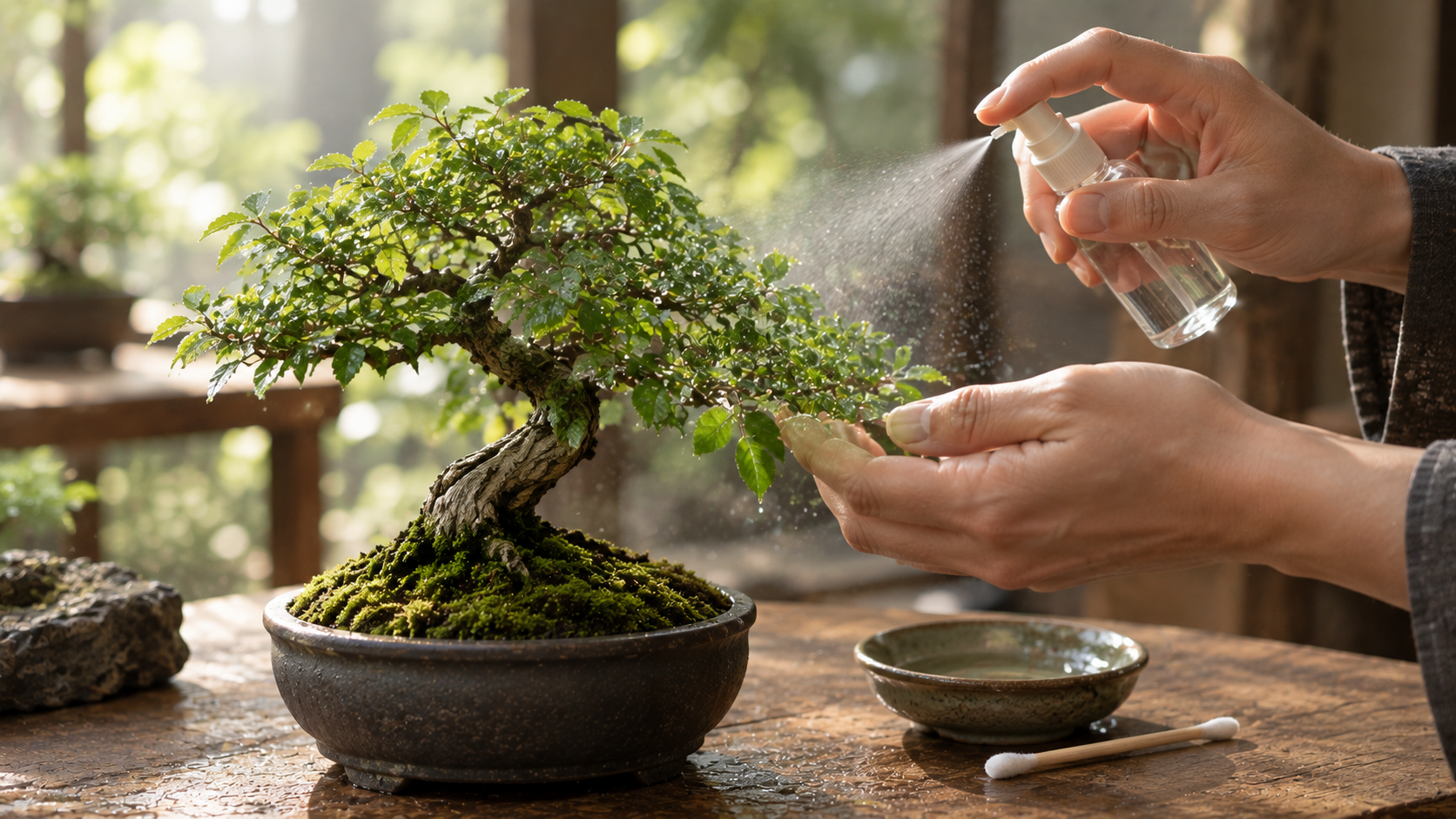
Bonsai Learning Center recommends dabbing scale insects and mealybugs with a cotton swab dipped in rubbing alcohol. It’s precise, cheap and very effective for small outbreaks, because you treat only the pests, not the whole tree. Pair it with a firm water rinse for aphids and spider mites.
It isn’t practical for large infestations, but for a few scale insects on a juniper or mealybugs in a ficus’s branch crotches, it’s often all you need.
Pros
- Almost free
- Precise, treats only the pest
- No spray drift onto other trees
Cons
- Slow on large infestations
- Doesn’t prevent new pests
Best for: small outbreaks of scale and mealybugs.
Search cotton swabs and isopropyl alcohol on Amazon
2. Safer Brand Insect Killing Soap – the best gentle spray
Insecticidal soap is the classic first spray for soft-bodied pests. Safer Brand’s concentrate uses potassium salts of fatty acids, which break down the waxy coating of insects and cause them to dehydrate. It works on contact and doesn’t persist in the environment.
The label lists aphids, mealybugs, spider mites, whiteflies, leafhoppers, soft scales and more. You mix 1 part concentrate with 50 parts water, and a 16 oz bottle makes up to 6 gallons. It’s OMRI listed for organic use and costs about $15. One retailer notes it isn’t available for sale in Canada.
Because it only works on contact, you need to spray the insects directly, including the undersides of leaves, and repeat while pests are present.
Pros
- Gentle and OMRI listed
- Works on many common bonsai pests
- Concentrate makes a lot of spray
- Doesn’t persist in the environment
Cons
- Contact only, so coverage matters
- Needs repeat applications
- Not sold in Canada
Best for: aphids, spider mites, whiteflies and mealybugs on indoor and outdoor bonsai.
Search Safer Brand insecticidal soap on Amazon
3. Bonide Captain Jack’s Neem Oil – best all-rounder for insects and fungus
Neem oil is popular with bonsai growers because it does two jobs: it controls insects and mites, and it helps with some fungal diseases.
Bonide’s Captain Jack’s Neem Oil is a ready-to-use spray derived from neem seed. Bonide says it kills all stages of insects, including eggs, larvae and adults, and targets mites, aphids and whiteflies. It also controls black spot, powdery mildew and rust, and can be used as a dormant spray. Bonide describes it as approved for organic gardening.
In Europe, bonsai shops also sell small bottles of neem oil concentrate. Maillot, for example, sells a 60 ml bottle for around €6.40 and suggests monthly preventive use on outdoor bonsai from May to September.
Pros
- Works on insects, mites and some fungal diseases
- Approved for organic gardening
- Ready-to-use convenience
- Bonsai-sized concentrates available in Europe
Cons
- Strong smell
- Test on sensitive trees first
- Check temperature guidance on the label
Best for: growers who want one spray for common insects and mild fungal problems.
Search Bonide neem oil on Amazon
4. Bonide All Seasons Horticultural & Dormant Spray Oil – best for scale and overwintering pests
Horticultural oil is the tool for scale insects, mites and overwintering eggs, which can be hard to reach with soap.
Bonide’s All Seasons oil is a refined mineral oil that coats and smothers insects and eggs. The label lists scale insects, spider mites, aphids, whitefly, mealybugs and more, plus some diseases like powdery mildew and rust. It can be used during dormancy or the growing season. A 32 oz ready-to-spray bottle costs about $30.
Read the cautions carefully. The label says not to apply above 90°F or to dry plants, not to use it with sulfur sprays or when sulfur is on the foliage, and not to use the hose-end sprayer on houseplants or in greenhouses. It’s also toxic to fish.
Pros
- Effective on scale and overwintering eggs
- Usable in dormant and growing seasons
- Covers many common pests
Cons
- Can damage leaves in heat or on dry plants
- Not compatible with sulfur sprays
- Hose-end version not for houseplants
Best for: outdoor bonsai with scale or persistent mite problems.
Search Bonide All Seasons spray oil on Amazon
5. Bonide Liquid Copper Fungicide – best for stubborn fungal disease
When fungal disease goes beyond a few spots, copper fungicide is a common next step. Bonsai Learning Center mentions copper-based fungicides as a targeted option for certain fungal diseases.
Bonide Liquid Copper Fungicide lists a wide range of diseases on its label, including anthracnose, bacterial leaf spot, black spot, botrytis, downy mildew, fire blight, powdery mildew and scab. A 16 oz concentrate costs about $28. One retailer notes it isn’t OMRI certified, and that it can’t be shipped to Alaska, California or Washington, D.C.
It’s stronger than neem oil, so use it when you’ve identified a specific disease, follow the label closely, and avoid overuse.
Pros
- Covers many fungal and bacterial diseases
- Long shelf life
- Widely available in the US
Cons
- Not OMRI certified
- Shipping restrictions in some states
- Toxic to fish
Best for: identified fungal problems that gentler sprays haven’t solved.
Search Bonide Liquid Copper Fungicide on Amazon
6. Lime sulfur as a dormant spray – the winter clean-up
Many bonsai growers know lime sulfur as a deadwood treatment, but it’s also used in some places as a dormant spray against overwintering fungus and pests.
It’s strong, smells of sulfur, and is mainly applied when deciduous trees are dormant. Rules on its horticultural use vary by country and state, and it shouldn’t be combined with oil sprays; Bonide’s oil label warns against using oil where sulfur is on the foliage. Our lime sulfur for bonsai guide covers products, safety and where to buy.
Pros
- Useful dormant-season clean-up
- Also used for deadwood treatment
- A little goes a long way
Cons
- Strong and unpleasant to handle
- Restricted in some areas
- Not compatible with oil sprays
Best for: experienced growers doing a dormant-season clean-up on outdoor trees.
Which bonsai pest control product should you use? (By problem)
Aphids on new shoots: rinse with water, then insecticidal soap.
Spider mites on junipers: rinse, then insecticidal soap or neem oil, repeated.
Scale insects: cotton swab with rubbing alcohol for small outbreaks; horticultural oil for larger ones.
Mealybugs on indoor trees: rubbing alcohol on a swab, then insecticidal soap.
Powdery mildew or rust: improve airflow, then neem oil; copper fungicide if it persists.
Leaf spots and blights: remove affected leaves, then copper fungicide.
Winter clean-up on outdoor trees: dormant oil or lime sulfur, never together.
A simple starter kit
Most hobbyists can handle the majority of pest problems with just three things: a spray bottle, a bottle of insecticidal soap and a bottle of neem oil. Add horticultural oil or copper fungicide only if you face scale or stubborn fungal disease.
What about systemic insecticides?
Systemic insecticides are absorbed by the plant and kill sap-sucking insects that feed on it. Bonsai Learning Center lists them as a last-resort option for persistent sap-sucking pests.
They can work well, but they’re stronger, can affect beneficial insects and pollinators, and are restricted in some countries. If you consider one, read the label carefully, avoid flowering trees that attract pollinators, and check local rules first.
How to spray bonsai safely
- Identify the pest or disease before treating.
- Read the label, including temperature limits and plant warnings.
- Test on a small area and wait a day or two.
- Spray in cool conditions, such as early morning or evening.
- Cover both sides of the leaves, plus branch crotches and bark.
- Keep sprays off the soil where possible, especially on newly repotted trees.
- Repeat as the label directs. Most pests need more than one treatment.
- Wear gloves and eye protection, and keep pets and children away until it dries.
Common bonsai pest control mistakes
Spraying without identifying the problem. Watering issues often look like pests.
Using strong chemicals first. Start gentle and step up only if needed.
Spraying in hot sun. Many sprays burn leaves in heat.
Mixing oil and sulfur. It can damage foliage.
Treating once and stopping. Eggs hatch later. Follow up.
Bringing home untreated new trees. Quarantine first.
Conclusion: gentle, early and consistent
Good bonsai pest control isn’t about having the strongest spray. It’s about spotting problems early, starting with the gentlest fix, and following up.
For most growers, a cotton swab with rubbing alcohol, insecticidal soap and neem oil will handle the majority of problems. Horticultural oil is the next step for scale and overwintering pests, and copper fungicide is there for stubborn fungal disease. Whatever you use, read the label, test first, and spray in cool conditions.
Ready to protect your trees? Search Safer Brand insecticidal soap, or search Bonide neem oil on Amazon.
Leave a Reply