Affiliate disclosure: Some links on this page are affiliate links. If you buy through them, Aribonsai may earn a small commission at no extra cost to you. It doesn’t change what we recommend or how we rank anything.
The tray under almost every indoor bonsai
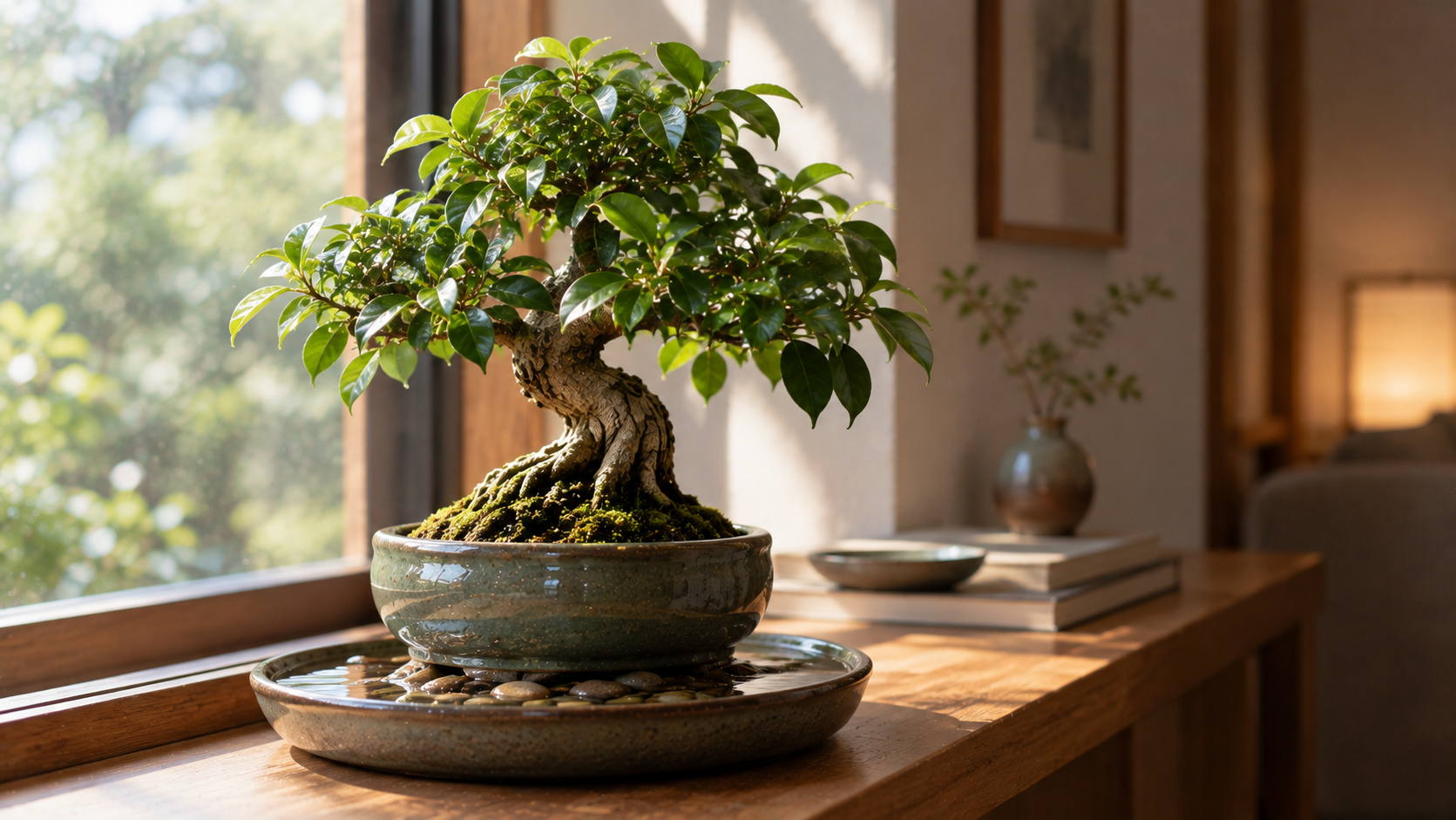
Buy an indoor bonsai and there’s a good chance it comes sitting on a shallow plastic tray filled with pebbles. That’s a bonsai humidity tray, and for years it’s been sold as an essential part of indoor bonsai care.
The idea makes sense. Indoor air, especially with heating or air conditioning running, is often dry. Tropical trees like ficus and serissa come from humid places. So a tray of water under the pot should add moisture to the air around the tree.
Here’s the honest part, though: experienced growers are divided on how much a humidity tray actually raises humidity. On bonsai forums, several long-time growers argue the effect is small, and one member cites a small study showing almost no increase just a few centimeters above the tray. Others still find trays useful, mainly for catching runoff and keeping tables clean, and for very small trees.
In my experience, a humidity tray is a good, cheap accessory, but it works best when you understand what it does well and what it doesn’t. This guide explains both, then compares six options: classic humidity trays, a matching pot-and-tray set, a DIY version, and the tools that actually make a measurable difference to indoor humidity.
Who this bonsai humidity tray guide is NOT for
It’s not for outdoor bonsai. Trees living outside get their humidity from the weather. Trays aren’t needed.
It’s not a substitute for light. Light is usually the biggest problem for indoor bonsai. Our grow light for bonsai guide covers that first.
It’s not about watering. A tray doesn’t replace regular watering of the soil.
Still with us? Let’s go.
How we picked these (3 things that actually matter)
1. What the tray is really for
A humidity tray does a few jobs:
- Catches runoff, so you can water properly without damaging furniture.
- Raises the pot above standing water, using pebbles or a grid.
- Adds a little moisture to the air right around the tree, though how much is debated.
- Improves display, since a neat tray looks better than a saucer.
If you mainly want higher humidity, a room humidifier is the more effective tool. If you want clean, tidy watering indoors, a tray is ideal.
2. Keeping the pot out of the water
This is the most important rule. The pot must sit on pebbles or a grid, above the water, never in it. On bonsai forums, one grower warns that beginners often set pots directly in the water, which can rot roots, and suggests this may have killed more trees than trays have helped. Bonsai soil is designed to drain freely; standing water defeats that.
3. Size and style
Choose a tray a little larger than the pot, so runoff lands in it. Plastic trays are cheap and practical. Ceramic trays look more refined and can match the pot.
A few indoor humidity habits that matter more than the tray
None of these cost anything.
- Keep trees away from heaters and air conditioning vents. Dry, moving air is hard on leaves.
- Group plants together. Several plants close together can share a slightly more humid microclimate.
- Rinse the tray regularly. One indoor bonsai guide recommends rinsing pebble trays weekly to keep them fresh.
- Keep the water level below the pot.
- Water the soil properly. A tray doesn’t replace watering.
- Measure, don’t guess. A cheap hygrometer tells you real indoor humidity.
Bonsai humidity tray comparison table
| Product | Type | What it’s best at | Size | Approx. price |
|---|---|---|---|---|
| Brussel’s Humidity Tray | Plastic tray with decorative rocks | Catching runoff, beginner setups | 8″ to 25″ | ~$10–60 |
| Bonsai Direct pot with matching tray | Glazed ceramic pot + tray set | Display and tidy watering | 21 cm and other sizes | ~£40 (UK) |
| DIY tray with grid | Plastic tray + egg crate grid | Several trees, low cost | Any | Low |
| Japanese suiban-style tray | Shallow ceramic water tray | Display, suiseki, small trees | Varies | Varies |
| Room humidifier | Appliance | Actually raising humidity | Room | Varies |
| Digital hygrometer | Monitor | Measuring humidity | Small | Low |
Prices are approximate and vary by retailer. Always check current prices before buying.
The 6 best bonsai humidity tray options, reviewed
1. Brussel’s Humidity Tray – the classic, easy option
Brussel’s Bonsai, a large US bonsai nursery, sells humidity trays in several sizes: 8 inches (about $10), 11 inches (about $15), 13 inches (about $18) and 25 inches (about $60). The trays come with decorative rocks, which form the layer the pot sits on. Reviewers describe them as sturdy and solid. Brussel’s also sells starter kits that include an 8-inch or 13-inch tray.
It’s a simple, practical choice: the rocks raise the pot, the tray catches runoff, and it looks neat on a table or windowsill.
Pros
- Several sizes, including a large 25-inch tray
- Decorative rocks included
- Described as sturdy
- Affordable
Cons
- Some sizes may be out of stock
- Material not described on the listing
Best for: beginners with one or two indoor trees.
Check humidity trays at Brussel’s Bonsai
2. Bonsai Direct Pot with Matching Tray – best for display
If your indoor bonsai is on display in a living room, a matching ceramic pot and tray looks much more refined than a plastic tray with pebbles.
UK retailer Bonsai Direct sells handmade, glazed ceramic pots with matching humidity trays. A 21 cm oval teal pot and tray, for example, costs around £39.99 and comes with bonsai soil, mesh, anchor wire, a chopstick and a repotting guide. The retailer describes the tray as catching excess water and helping regulate moisture, and the pots as suitable for indoor and outdoor use.
It’s more of a display set than a humidity solution, but it’s a lovely way to present an indoor tree. Our Japanese bonsai pots guide covers higher-end Japanese pots if you want to go further.
Pros
- Matching pot and tray look polished
- Handmade glazed ceramic
- Includes repotting supplies
Cons
- Mainly available in the UK
- Means repotting into the new pot
- Not a major humidity boost
Best for: display trees in a home setting.
Check the pot and tray set at Bonsai Direct
3. DIY humidity tray with a grid – best for several trees
If you have a shelf full of indoor trees, small individual trays get fiddly. Many growers build their own.
On bonsai forums, a popular approach is a large plastic tray topped with a grid to lift pots above the water. Ideas include egg crate light diffuser panels (sold for ceiling lights) cut to size and set on small risers, upside-down plastic nursery flats, or small bathroom tiles under each pot. One grower notes that egg crate panels can be awkward to cut, and suggests snapping the rows apart with pliers.
It’s cheap, flexible and catches runoff from many trees at once.
Pros
- Very low cost
- Works for many trees
- Fully customizable size
Cons
- Takes some DIY effort
- Less attractive than bought trays
- Egg crate can be awkward to cut
Best for: indoor collections on shelves or under grow lights.
Search egg crate light diffuser panels on Amazon
4. Japanese suiban-style tray – the elegant dual-purpose option
A suiban is a shallow, undrilled ceramic tray from the Japanese display tradition, often used for suiseki (viewing stones). On bonsai forums, one grower points out that a humidity tray filled with water or sand can double as a small suiban for displaying stones.
The idea also works in reverse. A suiban-style tray, with a layer of fine gravel and the pot raised above the water, makes a refined base for a small indoor bonsai, and can later be used for a stone display. Choose one a little larger than the pot.
Pros
- Elegant, traditional look
- Can also display suiseki
- Suits small trees
Cons
- Usually more expensive than plastic
- Needs gravel or a riser for the pot
- Limited sizes
Best for: small display trees and growers interested in Japanese display.
Search ceramic suiban trays on Amazon
5. Room humidifier – the option that actually raises humidity
If your goal is higher humidity, this is what makes a measurable difference.
On bonsai forums, several experienced growers recommend a room humidifier over humidity trays for indoor tropicals. One grower who measured humidity with gauges found trays didn’t make a measurable difference, so switched to a room humidifier. Others suggest humidifying a small enclosed space, such as a grow cabinet or closet, which is easier than humidifying a whole room.
Humidifiers range from small, inexpensive models to larger ones for whole rooms. Choose one sized for your space, and clean it regularly.
Pros
- Measurably raises humidity
- Helps all plants in the room
- Many sizes and prices
Cons
- Needs refilling and cleaning
- Uses electricity
- Too much humidity can encourage mold
Best for: anyone serious about humidity for tropical indoor trees.
Search room humidifiers on Amazon
6. Digital hygrometer – know your actual humidity
You can’t manage humidity without measuring it. A small digital hygrometer shows the humidity (and usually temperature) near your trees.
It’s one of the cheapest and most useful tools for indoor bonsai. It tells you whether your room is genuinely dry, whether a humidifier is working, and whether your tray is making any difference at all.
Pros
- Very inexpensive
- Shows real conditions
- Helps you decide if you need a humidifier
Cons
- Doesn’t change humidity by itself
Best for: every indoor grower.
Search digital hygrometers on Amazon
Which bonsai humidity tray should you buy? (By situation)
You have one indoor tree and want tidy watering: a Brussel’s humidity tray.
Your tree is a living-room display piece: a matching ceramic pot and tray, or a suiban-style tray.
You have a shelf of indoor trees: a DIY tray with an egg crate grid.
Your air is genuinely dry: a room humidifier, plus a hygrometer to check it.
You’re not sure if humidity is a problem: start with a hygrometer.
A simple indoor setup
For most indoor bonsai, a good setup is: a bright spot or grow light, a humidity tray to catch runoff, the pot raised above the water, a hygrometer nearby, and a humidifier if readings stay low. Display it on a small bonsai display stand for a finished look.
Which indoor bonsai benefit most from extra humidity?
Not every indoor tree is equally fussy. Species that come from humid tropical and subtropical regions tend to appreciate more moisture in the air, especially in winter when heating dries out the room. Common examples include ficus, serissa, Fukien tea and other trees often sold as indoor bonsai.
Signs that the air may be too dry include leaf tips that turn brown and crispy, leaves that drop for no obvious reason, and new growth that dries out before it opens. But these symptoms can also come from low light, under-watering or over-watering, so check those first. A hygrometer helps you tell whether humidity is really the cause.
Trees that are more forgiving of dry air, such as jade, are less likely to need any special humidity measures beyond normal care.
Does misting help?
Misting is another common piece of advice for indoor bonsai. One indoor bonsai care guide recommends frequent misting of the foliage during the day as part of a humid microclimate, along with a pebble tray and placing the tree away from heating and cooling vents.
The catch is that misting only raises humidity briefly. Water on the leaves evaporates quickly in a dry, heated room, so the effect fades fast. Many growers see misting as a pleasant extra rather than a solution, and rely on a humidifier when the air is consistently dry.
If you do mist, do it earlier in the day so leaves can dry, and avoid misting trees that are prone to fungal problems.
The honest verdict on bonsai humidity trays
So, are humidity trays worth buying? Yes, but for the right reasons.
A bonsai humidity tray is excellent for catching runoff, protecting furniture, keeping pots raised above standing water and making an indoor tree look tidy. Those benefits alone justify a tray for most indoor growers.
Where trays fall short is as a cure for genuinely dry indoor air. If your hygrometer shows low humidity for weeks at a time, a room humidifier will do far more than any tray. Many experienced growers use both: a tray for practical watering, and a humidifier for real moisture in the air.
How to set up a bonsai humidity tray
- Choose a tray slightly larger than the pot.
- Add pebbles, gravel or a grid.
- Add water to just below the top of the pebbles.
- Place the pot on top, so it sits above the water.
- Water the tree as usual. Excess water drains into the tray. A gentle bonsai watering can helps.
- Empty or rinse the tray regularly to keep it fresh.
Common bonsai humidity tray mistakes
Letting the pot sit in water. This can rot roots.
Expecting a tray to fix very dry air. Use a humidifier for that.
Never cleaning the tray. Standing water can become stale.
Choosing a tray that’s too small. Runoff spills over the edge.
Ignoring light. Low light is usually a bigger problem than humidity.
Conclusion: a useful tray, with realistic expectations
A bonsai humidity tray is a cheap, useful accessory for indoor trees. It catches runoff, keeps your furniture safe, and makes a tree look tidy. Just don’t rely on it alone to solve dry air.
For most beginners, a simple tray from a bonsai nursery is perfect. For display, a matching ceramic tray or a suiban-style tray looks lovely. And if humidity is genuinely low, a room humidifier and a hygrometer will make the real difference.
Keep the pot above the water, keep the tray clean, and focus on light first. Get those basics right, and your indoor bonsai will have a far better chance of staying green, compact and healthy through the dry months of the year.
Ready to set up? Check humidity trays at Brussel’s Bonsai, or search digital hygrometers on Amazon.
Leave a Reply