Tag: indoor bonsai

  • Best Bonsai Humidity Tray: 6 Options, Plus What Actually Raises Humidity for Indoor Trees

    Best Bonsai Humidity Tray: 6 Options, Plus What Actually Raises Humidity for Indoor Trees

    Affiliate disclosure: Some links on this page are affiliate links. If you buy through them, Aribonsai may earn a small commission at no extra cost to you. It doesn’t change what we recommend or how we rank anything.


    The tray under almost every indoor bonsai

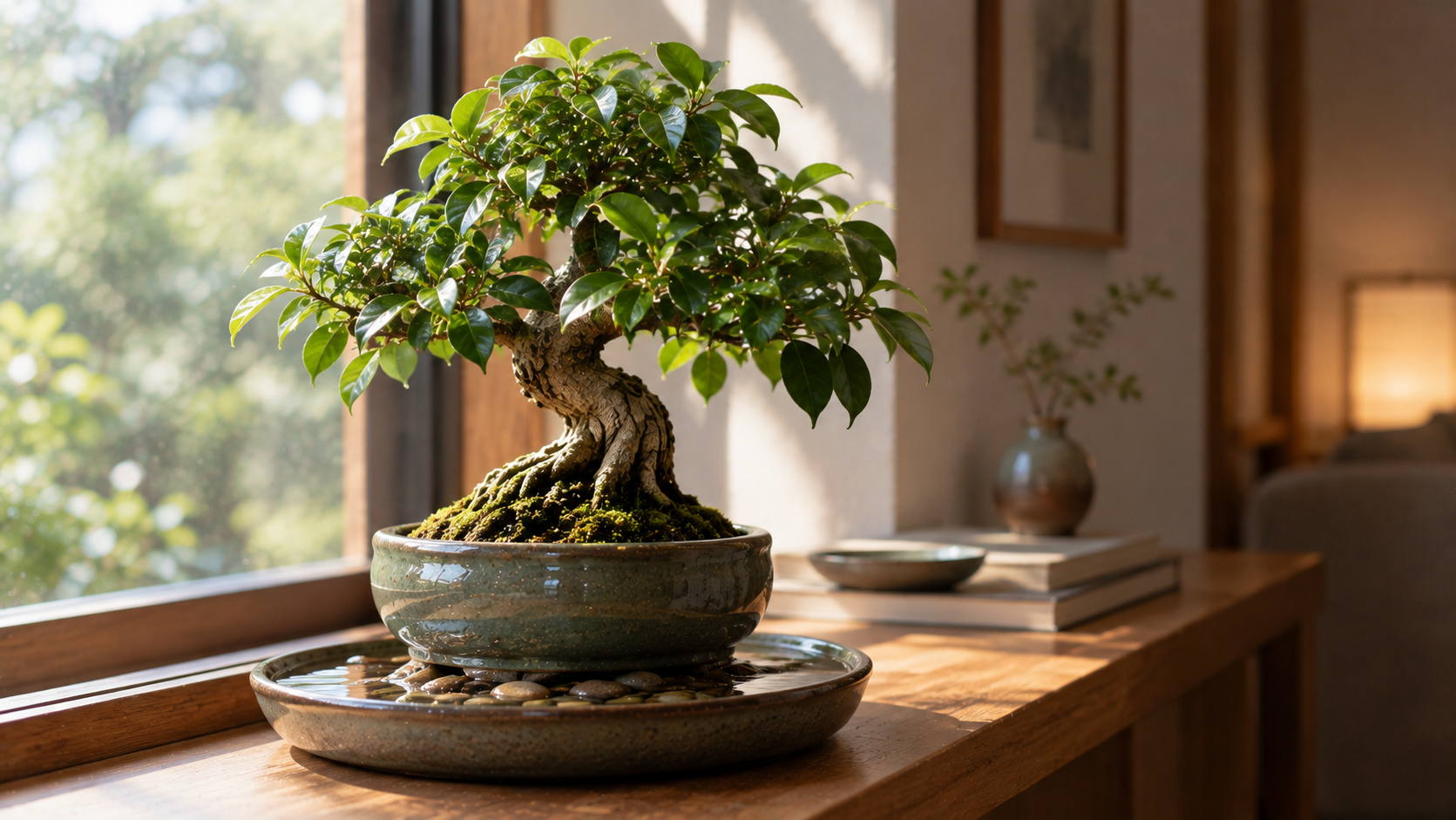
    Buy an indoor bonsai and there’s a good chance it comes sitting on a shallow plastic tray filled with pebbles. That’s a bonsai humidity tray, and for years it’s been sold as an essential part of indoor bonsai care.

    The idea makes sense. Indoor air, especially with heating or air conditioning running, is often dry. Tropical trees like ficus and serissa come from humid places. So a tray of water under the pot should add moisture to the air around the tree.

    Here’s the honest part, though: experienced growers are divided on how much a humidity tray actually raises humidity. On bonsai forums, several long-time growers argue the effect is small, and one member cites a small study showing almost no increase just a few centimeters above the tray. Others still find trays useful, mainly for catching runoff and keeping tables clean, and for very small trees.

    In my experience, a humidity tray is a good, cheap accessory, but it works best when you understand what it does well and what it doesn’t. This guide explains both, then compares six options: classic humidity trays, a matching pot-and-tray set, a DIY version, and the tools that actually make a measurable difference to indoor humidity.


    Who this bonsai humidity tray guide is NOT for

    It’s not for outdoor bonsai. Trees living outside get their humidity from the weather. Trays aren’t needed.

    It’s not a substitute for light. Light is usually the biggest problem for indoor bonsai. Our grow light for bonsai guide covers that first.

    It’s not about watering. A tray doesn’t replace regular watering of the soil.

    Still with us? Let’s go.


    How we picked these (3 things that actually matter)

    1. What the tray is really for

    A humidity tray does a few jobs:

    • Catches runoff, so you can water properly without damaging furniture.
    • Raises the pot above standing water, using pebbles or a grid.
    • Adds a little moisture to the air right around the tree, though how much is debated.
    • Improves display, since a neat tray looks better than a saucer.

    If you mainly want higher humidity, a room humidifier is the more effective tool. If you want clean, tidy watering indoors, a tray is ideal.

    2. Keeping the pot out of the water

    This is the most important rule. The pot must sit on pebbles or a grid, above the water, never in it. On bonsai forums, one grower warns that beginners often set pots directly in the water, which can rot roots, and suggests this may have killed more trees than trays have helped. Bonsai soil is designed to drain freely; standing water defeats that.

    3. Size and style

    Choose a tray a little larger than the pot, so runoff lands in it. Plastic trays are cheap and practical. Ceramic trays look more refined and can match the pot.

    A few indoor humidity habits that matter more than the tray

    None of these cost anything.

    • Keep trees away from heaters and air conditioning vents. Dry, moving air is hard on leaves.
    • Group plants together. Several plants close together can share a slightly more humid microclimate.
    • Rinse the tray regularly. One indoor bonsai guide recommends rinsing pebble trays weekly to keep them fresh.
    • Keep the water level below the pot.
    • Water the soil properly. A tray doesn’t replace watering.
    • Measure, don’t guess. A cheap hygrometer tells you real indoor humidity.

    Bonsai humidity tray comparison table

    ProductTypeWhat it’s best atSizeApprox. price
    Brussel’s Humidity TrayPlastic tray with decorative rocksCatching runoff, beginner setups8″ to 25″~$10–60
    Bonsai Direct pot with matching trayGlazed ceramic pot + tray setDisplay and tidy watering21 cm and other sizes~£40 (UK)
    DIY tray with gridPlastic tray + egg crate gridSeveral trees, low costAnyLow
    Japanese suiban-style trayShallow ceramic water trayDisplay, suiseki, small treesVariesVaries
    Room humidifierApplianceActually raising humidityRoomVaries
    Digital hygrometerMonitorMeasuring humiditySmallLow

    Prices are approximate and vary by retailer. Always check current prices before buying.


    The 6 best bonsai humidity tray options, reviewed

    1. Brussel’s Humidity Tray – the classic, easy option

    Brussel’s Bonsai, a large US bonsai nursery, sells humidity trays in several sizes: 8 inches (about $10), 11 inches (about $15), 13 inches (about $18) and 25 inches (about $60). The trays come with decorative rocks, which form the layer the pot sits on. Reviewers describe them as sturdy and solid. Brussel’s also sells starter kits that include an 8-inch or 13-inch tray.

    It’s a simple, practical choice: the rocks raise the pot, the tray catches runoff, and it looks neat on a table or windowsill.

    Pros

    • Several sizes, including a large 25-inch tray
    • Decorative rocks included
    • Described as sturdy
    • Affordable

    Cons

    • Some sizes may be out of stock
    • Material not described on the listing

    Best for: beginners with one or two indoor trees.

    Check humidity trays at Brussel’s Bonsai


    2. Bonsai Direct Pot with Matching Tray – best for display

    If your indoor bonsai is on display in a living room, a matching ceramic pot and tray looks much more refined than a plastic tray with pebbles.

    UK retailer Bonsai Direct sells handmade, glazed ceramic pots with matching humidity trays. A 21 cm oval teal pot and tray, for example, costs around £39.99 and comes with bonsai soil, mesh, anchor wire, a chopstick and a repotting guide. The retailer describes the tray as catching excess water and helping regulate moisture, and the pots as suitable for indoor and outdoor use.

    It’s more of a display set than a humidity solution, but it’s a lovely way to present an indoor tree. Our Japanese bonsai pots guide covers higher-end Japanese pots if you want to go further.

    Pros

    • Matching pot and tray look polished
    • Handmade glazed ceramic
    • Includes repotting supplies

    Cons

    • Mainly available in the UK
    • Means repotting into the new pot
    • Not a major humidity boost

    Best for: display trees in a home setting.

    Check the pot and tray set at Bonsai Direct


    3. DIY humidity tray with a grid – best for several trees

    If you have a shelf full of indoor trees, small individual trays get fiddly. Many growers build their own.

    On bonsai forums, a popular approach is a large plastic tray topped with a grid to lift pots above the water. Ideas include egg crate light diffuser panels (sold for ceiling lights) cut to size and set on small risers, upside-down plastic nursery flats, or small bathroom tiles under each pot. One grower notes that egg crate panels can be awkward to cut, and suggests snapping the rows apart with pliers.

    It’s cheap, flexible and catches runoff from many trees at once.

    Pros

    • Very low cost
    • Works for many trees
    • Fully customizable size

    Cons

    • Takes some DIY effort
    • Less attractive than bought trays
    • Egg crate can be awkward to cut

    Best for: indoor collections on shelves or under grow lights.

    Search egg crate light diffuser panels on Amazon


    4. Japanese suiban-style tray – the elegant dual-purpose option

    A suiban is a shallow, undrilled ceramic tray from the Japanese display tradition, often used for suiseki (viewing stones). On bonsai forums, one grower points out that a humidity tray filled with water or sand can double as a small suiban for displaying stones.

    The idea also works in reverse. A suiban-style tray, with a layer of fine gravel and the pot raised above the water, makes a refined base for a small indoor bonsai, and can later be used for a stone display. Choose one a little larger than the pot.

    Pros

    • Elegant, traditional look
    • Can also display suiseki
    • Suits small trees

    Cons

    • Usually more expensive than plastic
    • Needs gravel or a riser for the pot
    • Limited sizes

    Best for: small display trees and growers interested in Japanese display.

    Search ceramic suiban trays on Amazon


    5. Room humidifier – the option that actually raises humidity

    If your goal is higher humidity, this is what makes a measurable difference.

    On bonsai forums, several experienced growers recommend a room humidifier over humidity trays for indoor tropicals. One grower who measured humidity with gauges found trays didn’t make a measurable difference, so switched to a room humidifier. Others suggest humidifying a small enclosed space, such as a grow cabinet or closet, which is easier than humidifying a whole room.

    Humidifiers range from small, inexpensive models to larger ones for whole rooms. Choose one sized for your space, and clean it regularly.

    Pros

    • Measurably raises humidity
    • Helps all plants in the room
    • Many sizes and prices

    Cons

    • Needs refilling and cleaning
    • Uses electricity
    • Too much humidity can encourage mold

    Best for: anyone serious about humidity for tropical indoor trees.

    Search room humidifiers on Amazon


    6. Digital hygrometer – know your actual humidity

    You can’t manage humidity without measuring it. A small digital hygrometer shows the humidity (and usually temperature) near your trees.

    It’s one of the cheapest and most useful tools for indoor bonsai. It tells you whether your room is genuinely dry, whether a humidifier is working, and whether your tray is making any difference at all.

    Pros

    • Very inexpensive
    • Shows real conditions
    • Helps you decide if you need a humidifier

    Cons

    • Doesn’t change humidity by itself

    Best for: every indoor grower.

    Search digital hygrometers on Amazon


    Which bonsai humidity tray should you buy? (By situation)

    You have one indoor tree and want tidy watering: a Brussel’s humidity tray.

    Your tree is a living-room display piece: a matching ceramic pot and tray, or a suiban-style tray.

    You have a shelf of indoor trees: a DIY tray with an egg crate grid.

    Your air is genuinely dry: a room humidifier, plus a hygrometer to check it.

    You’re not sure if humidity is a problem: start with a hygrometer.

    A simple indoor setup

    For most indoor bonsai, a good setup is: a bright spot or grow light, a humidity tray to catch runoff, the pot raised above the water, a hygrometer nearby, and a humidifier if readings stay low. Display it on a small bonsai display stand for a finished look.


    Which indoor bonsai benefit most from extra humidity?

    Not every indoor tree is equally fussy. Species that come from humid tropical and subtropical regions tend to appreciate more moisture in the air, especially in winter when heating dries out the room. Common examples include ficus, serissa, Fukien tea and other trees often sold as indoor bonsai.

    Signs that the air may be too dry include leaf tips that turn brown and crispy, leaves that drop for no obvious reason, and new growth that dries out before it opens. But these symptoms can also come from low light, under-watering or over-watering, so check those first. A hygrometer helps you tell whether humidity is really the cause.

    Trees that are more forgiving of dry air, such as jade, are less likely to need any special humidity measures beyond normal care.


    Does misting help?

    Misting is another common piece of advice for indoor bonsai. One indoor bonsai care guide recommends frequent misting of the foliage during the day as part of a humid microclimate, along with a pebble tray and placing the tree away from heating and cooling vents.

    The catch is that misting only raises humidity briefly. Water on the leaves evaporates quickly in a dry, heated room, so the effect fades fast. Many growers see misting as a pleasant extra rather than a solution, and rely on a humidifier when the air is consistently dry.

    If you do mist, do it earlier in the day so leaves can dry, and avoid misting trees that are prone to fungal problems.


    The honest verdict on bonsai humidity trays

    So, are humidity trays worth buying? Yes, but for the right reasons.

    A bonsai humidity tray is excellent for catching runoff, protecting furniture, keeping pots raised above standing water and making an indoor tree look tidy. Those benefits alone justify a tray for most indoor growers.

    Where trays fall short is as a cure for genuinely dry indoor air. If your hygrometer shows low humidity for weeks at a time, a room humidifier will do far more than any tray. Many experienced growers use both: a tray for practical watering, and a humidifier for real moisture in the air.


    How to set up a bonsai humidity tray

    1. Choose a tray slightly larger than the pot.
    2. Add pebbles, gravel or a grid.
    3. Add water to just below the top of the pebbles.
    4. Place the pot on top, so it sits above the water.
    5. Water the tree as usual. Excess water drains into the tray. A gentle bonsai watering can helps.
    6. Empty or rinse the tray regularly to keep it fresh.

    Common bonsai humidity tray mistakes

    Letting the pot sit in water. This can rot roots.

    Expecting a tray to fix very dry air. Use a humidifier for that.

    Never cleaning the tray. Standing water can become stale.

    Choosing a tray that’s too small. Runoff spills over the edge.

    Ignoring light. Low light is usually a bigger problem than humidity.


    Conclusion: a useful tray, with realistic expectations

    A bonsai humidity tray is a cheap, useful accessory for indoor trees. It catches runoff, keeps your furniture safe, and makes a tree look tidy. Just don’t rely on it alone to solve dry air.

    For most beginners, a simple tray from a bonsai nursery is perfect. For display, a matching ceramic tray or a suiban-style tray looks lovely. And if humidity is genuinely low, a room humidifier and a hygrometer will make the real difference.

    Keep the pot above the water, keep the tray clean, and focus on light first. Get those basics right, and your indoor bonsai will have a far better chance of staying green, compact and healthy through the dry months of the year.

    Ready to set up? Check humidity trays at Brussel’s Bonsai, or search digital hygrometers on Amazon.
  • Best Grow Light for Bonsai: 6 LED Picks for Indoor Trees, From Clip-On Bulbs to Full Panels

    Best Grow Light for Bonsai: 6 LED Picks for Indoor Trees, From Clip-On Bulbs to Full Panels

    Affiliate disclosure: Some links on this page are affiliate links. If you buy through them, Aribonsai may earn a small commission at no extra cost to you. It doesn’t change what we recommend or how we rank anything.


    Why your indoor bonsai keeps dropping leaves

    It’s one of the most common stories in bonsai. Someone buys a beautiful ficus or serissa, puts it on a shelf in the living room, and for a few weeks it looks great. Then the leaves start yellowing and falling. New growth comes in long, pale and weak. Pests show up out of nowhere.

    Most of the time, the problem is light.

    A room that feels bright to us is often dim for a tree. Even a spot near a window can get far less light than a tree would get outdoors, especially in winter, on cloudy days, or if the window faces north. Bonsai Empire notes that tropical and subtropical species kept indoors usually need extra light, and that low light leads to leaf loss, pests, and weak, pale growth.

    A grow light fixes that. Modern LED grow lights are efficient, run cool, and can turn a dim corner into a spot where an indoor bonsai actually thrives.

    The tricky part is choosing one. Grow lights range from a single clip-on bulb to large panels designed for indoor gardens, and the marketing is full of watts, lumens and “full spectrum” claims that are hard to compare.

    In my experience, most people either buy a light that’s too weak, or hang a good light too far from the tree. This guide explains what matters, then compares six grow lights for bonsai, from simple bulbs for one tree to panels for a whole indoor collection.


    Who this grow light for bonsai guide is NOT for

    It’s not for outdoor temperate trees. Junipers, pines, maples and most temperate species belong outside. Bonsai Empire notes that temperate trees generally don’t need extra light, and deciduous trees need none while leafless.

    It’s not about growing trees indoors permanently that should live outside. A grow light can’t replace the seasonal cycle many trees need.

    It’s not a technical lighting guide. We’ll keep the numbers practical.

    Still with us? Let’s go.


    How we picked these (3 things that actually matter)

    1. LED, full spectrum

    Bonsai Empire recommends good-quality LED plant lights as offering the best balance of plant-friendly light and energy efficiency. Full-spectrum fluorescent tubes also work and run cool, but use more energy and don’t last as long. Incandescent bulbs aren’t suitable: too much heat and the wrong kind of light.

    “Full spectrum” white light is also nicer to live with than the purple light of some older grow lights. Your tree looks natural, and so does your room.

    2. Strength and distance

    A weak light hung far away does very little. Bonsai Empire suggests hanging LED lights about 30–40 cm above the plant, and fluorescent tubes a little closer, around 20–30 cm. The higher the light, the less intense it is at the tree.

    Match the light to the space. One bulb can cover a single small tree. A shelf of shohin needs several strips. A whole collection over winter needs a panel.

    3. Timer and daily hours

    Plants need a consistent day-night rhythm. Bonsai Empire recommends about 12–15 hours of total light (natural plus artificial) for tropical and subtropical species, using a timer, and not lighting plants overnight. If a tree sits near a sunny window, a few extra hours morning and evening may be enough.

    A built-in timer, or a simple plug-in timer, makes this easy and consistent.

    A few indoor light habits that matter more than the brand

    None of these cost anything.

    • Put the tree near the brightest window first. A grow light works best as a supplement.
    • Hang the light close enough. Most problems come from lights too high above the tree.
    • Use a timer. Consistency matters more than intensity.
    • Turn the tree regularly so all sides get light. A bonsai turntable makes this easy.
    • Don’t light it 24 hours a day. Trees need darkness too.
    • Watch the leaves. Pale, stretched growth means too little light. Scorched or bleached leaves mean too much, or too close.
    • Increase watering as growth improves. A well-lit tree uses more water.

    Grow light for bonsai comparison table

    LightTypePowerBest forApprox. price
    Sansi 40W Clip-On Grow Light BulbLED bulb with clip and timer40 W (other sizes available)One tree~$54 (40 W), from ~$26
    Barrina T5 Grow Light Strips (6-pack)LED strips10 W eachShelves of small trees~$52
    Spider Farmer SF600LED panel74 WLong shelf or benchCheck price
    Spider Farmer SF1000Dimmable LED panel~100 WOverwintering a collection~$109
    Soltech AspectDesigner LED pendantNot listedLiving room displayCheck price
    Plug-in outlet timerTimern/aAny light without a timerLow

    Prices are approximate and vary by retailer. Always check the current price before buying.


    The 6 best grow lights for bonsai, reviewed

    1. Sansi 40W Clip-On Grow Light Bulb – best for a single tree

    If you have one indoor bonsai on a desk or table, a clip-on grow light bulb is the simplest solution.

    Sansi’s 40W full-spectrum LED grow bulb comes in a clip-on lamp with a built-in timer that offers 4, 8 or 12-hour cycles on a 24-hour schedule. The listing describes 4,000 lumens, a 4000K color temperature and a high color rendering index of 97, so your tree looks natural. It costs about $54 for the 40W version, with smaller 10W, 20W and 30W options from around $26.

    One listing detail is inconsistent: it also mentions a maximum safe rating of 10W per head, so check the details before buying.

    Pros

    • Simple clip-on setup
    • Built-in timer
    • Natural-looking white light
    • Several power options

    Cons

    • Covers a small area
    • Some listing details are inconsistent

    Best for: one indoor bonsai on a desk, table or shelf.

    Search Sansi clip-on grow lights on Amazon


    2. Barrina T5 Grow Light Strips – best for shelves of small trees

    If you have several small trees on a shelf or rack, thin LED strips are more practical than bulbs.

    Barrina’s T5 grow light pack includes six 2 ft strips at 10W each, with full-spectrum 5000K white light. The strips are linkable, up to 16 lamps in series, and the kit includes cords, connectors, clips, tape and cable ties. The 6-pack lists at around $52, though it was sold out on Barrina’s site when we checked.

    Strips are easy to mount under a shelf, so each level of a rack can have its own light. That makes them popular for shohin and mame collections indoors.

    Pros

    • Even light across a whole shelf
    • Linkable for larger setups
    • Easy under-shelf mounting
    • Good value for several trees

    Cons

    • Each strip is low power, so mount them close
    • More cables to manage

    Best for: shelves and racks of small indoor bonsai.

    Search Barrina T5 grow lights on Amazon


    3. Spider Farmer SF600 – best for a long bench or shelf

    Spider Farmer is a popular grow-light brand, and the SF600 is its smaller LED panel.

    It draws 74W and is rated for a 2 × 4 ft area. In a detailed review, Pepper Geek recommends about 1 × 3 ft at a 12-inch hanging height for even coverage. The reviewer praises its efficiency, quiet running and cool operation, but notes it has no dimmer, isn’t water resistant, can’t be daisy-chained and feels a little flimsy.

    Its long, narrow light footprint suits a row of trees on a bench or a long shelf.

    Pros

    • Efficient, cool and quiet
    • Long, narrow coverage
    • Stronger than strips or bulbs

    Cons

    • No dimmer
    • Not water resistant
    • Feels lighter-built than the SF1000

    Best for: a row of indoor trees on a bench or long shelf.

    Search Spider Farmer SF600 on Amazon


    4. Spider Farmer SF1000 – best for overwintering a collection

    If you bring several tropical trees indoors every winter, a stronger panel makes a real difference.

    The SF1000 draws about 100W and provides full-spectrum light for a 2 × 2 ft core area, with a listed maximum of 3 × 3 ft. It has a dimming knob from 0–100%, can be daisy-chained, and includes timer settings. One retailer lists it at around $109.

    Pepper Geek’s review praises the quality components, dimming, water-resistant coating and easy height adjustment, plus a 5-year warranty. The main downside is price compared with other 100W lights.

    The dimmer is especially useful for bonsai. You can start lower and increase intensity gradually as trees adjust.

    Pros

    • Strong, even light for several trees
    • Dimmable
    • Water-resistant coating
    • 5-year warranty

    Cons

    • More expensive than similar-wattage lights
    • Industrial look in a living space

    Best for: overwintering a group of tropical bonsai indoors.

    Search Spider Farmer SF1000 on Amazon


    5. Soltech Aspect – best-looking grow light for a living room

    If your bonsai lives in your living room, you may not want a grow-room panel hanging above it. Soltech’s Aspect is designed to look like a modern pendant lamp.

    Soltech describes the Aspect Gen 2 as suited to medium to large plants that need overhead coverage. It comes in white and black finishes, with accessories including an adjustable pendant stand, wall mounts and an angle kit to direct the light. Soltech’s page doesn’t list wattage, distance or price, so check the retailer before buying.

    It’s more expensive than a panel for the same coverage, but it’s the option most likely to stay in a room that’s also a home.

    Pros

    • Designed to look good in a living space
    • Multiple mounting options
    • Suited to overhead lighting of a single tree

    Cons

    • Specs not listed on the brand’s page
    • Higher price for the coverage

    Best for: a display bonsai in a living room.

    Search Soltech Aspect grow light on Amazon


    6. A plug-in outlet timer – the cheapest essential

    If your grow light doesn’t have a built-in timer, a plug-in outlet timer is the most important accessory you can buy.

    Bonsai Empire stresses a consistent day-night rhythm, and recommends using a timer for supplementary light. A simple mechanical or digital timer turns the light on and off at the same time every day, so you don’t have to remember.

    It costs very little, and it prevents both of the common mistakes: forgetting to turn the light on, and leaving it on all night.

    Pros

    • Very cheap
    • Consistent daily schedule
    • Works with any plug-in light

    Cons

    • One more plug
    • Mechanical timers can be noisy

    Best for: anyone whose grow light doesn’t have a built-in timer.

    Search plug-in outlet timers on Amazon


    Which grow light for bonsai should you buy? (By situation)

    You have one indoor bonsai: Sansi clip-on grow light bulb.

    You have a shelf of small trees: Barrina T5 strips under each shelf.

    You have a row of trees on a bench: Spider Farmer SF600.

    You overwinter several tropical trees: Spider Farmer SF1000.

    Your bonsai is a living room centerpiece: Soltech Aspect.

    Your light has no timer: add a plug-in outlet timer.

    A simple indoor setup

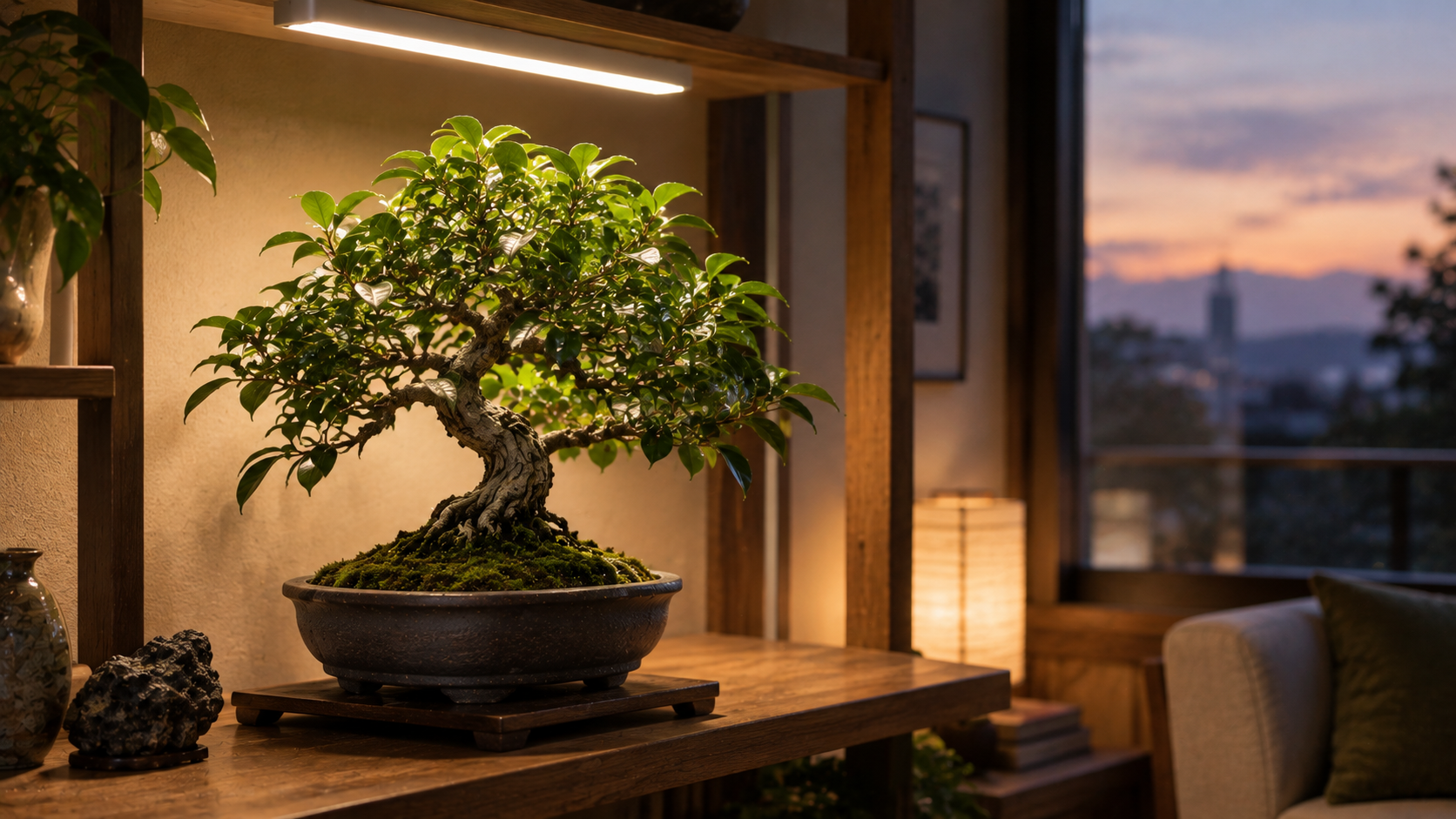
    For most indoor growers, the easiest setup is: the brightest window you have, a grow light 30–40 cm above the tree, a timer set for 12–15 hours of total light per day, and a tree you turn every week or two. Display it on a simple bonsai display stand and it looks good while it grows well.


    Watts, lumens and “full spectrum”: what the numbers mean

    Grow light listings are full of numbers. Here’s a quick, practical way to read them when choosing a grow light for bonsai.

    Watts tell you how much electricity the light uses, not exactly how much light the tree gets. Within LED lights, though, higher wattage usually means more light. A 10W strip suits a small shelf; a 100W panel suits a group of trees.

    Lumens measure brightness as human eyes see it. They’re a rough guide, but plants respond to light differently from our eyes, so lumens aren’t a perfect measure for growing.

    Color temperature (K) describes how warm or cool the white light looks. Around 4000–5000K looks like clear daylight and is pleasant in a living space.

    “Full spectrum” usually means white light that covers a broad range of colors, rather than only red and blue. It makes trees look natural and works well for foliage plants.

    Coverage tells you the area a light is designed for. It’s the most useful number of all: match it to the space your trees occupy.


    Which bonsai species benefit from grow lights?

    Grow lights are mainly for tropical and subtropical trees kept indoors. Common examples include ficus, serissa, Fukien tea, jade, Chinese elm kept indoors, and other species sold as indoor bonsai.

    Bonsai Empire notes that supplementary light is generally needed when daylight falls below about 12 hours, roughly September to March in the northern hemisphere.

    Temperate trees like junipers, maples and pines are different. They belong outdoors, and most need a cold winter rest. A grow light won’t make them happy indoors.


    How to set up a grow light for bonsai

    1. Choose the spot. Near a window if possible, away from heat sources.
    2. Mount the light above the tree, about 30–40 cm for most LEDs.
    3. Set the timer for 12–15 hours of total daily light.
    4. Watch the tree for two weeks. Look for new, compact growth.
    5. Adjust height or intensity. Raise or dim if leaves bleach; lower if growth stays long and pale.
    6. Adjust watering. Better light means more growth and more water use. A gentle bonsai watering can helps indoors.

    Common grow light mistakes

    Hanging the light too high. Light weakens quickly with distance.

    Using a regular household bulb. Most aren’t strong enough for plants, and incandescent bulbs get too hot.

    Leaving the light on all night. Trees need darkness.

    Keeping temperate trees indoors. No light replaces their natural seasons.

    Expecting instant results. Improvement shows in new growth over weeks.


    Conclusion: the right light, close enough, on a timer

    The best grow light for bonsai isn’t the most powerful one. It’s the one that fits your space, hangs close enough to your tree, and runs on a consistent schedule.

    For a single tree, a clip-on bulb like the Sansi is simple and effective. For shelves of small trees, Barrina’s T5 strips work well. For a winter collection of tropicals, the Spider Farmer SF1000 gives strong, adjustable light. And if looks matter, the Soltech Aspect fits a living room.

    Put the tree near a window, hang the light 30–40 cm above it, set a timer for 12–15 hours, and watch the new growth.

    Ready to brighten things up? Search Sansi clip-on grow lights, or compare Spider Farmer panels on Amazon.