Category: Bonsai Supplies

  • Best Bonsai Display Stands in 2026: 6 Picks, From Simple Tables to Japanese Jita Boards

    Best Bonsai Display Stands in 2026: 6 Picks, From Simple Tables to Japanese Jita Boards

    Affiliate disclosure: Some links on this page are affiliate links. If you buy through them, Aribonsai may earn a small commission at no extra cost to you. It doesn’t change what we recommend or how we rank anything.


    The tree is finished. Now where does it go?

    A bonsai display stand is the last piece of a finished tree, and the one most people forget.

    You spend years on a tree. You wire it, prune it, repot it into the right pot. Then you bring it inside for guests, or into a show, and set it straight down on a shelf or a tablecloth. Somehow it looks smaller than it does on the bench, and a little unfinished.

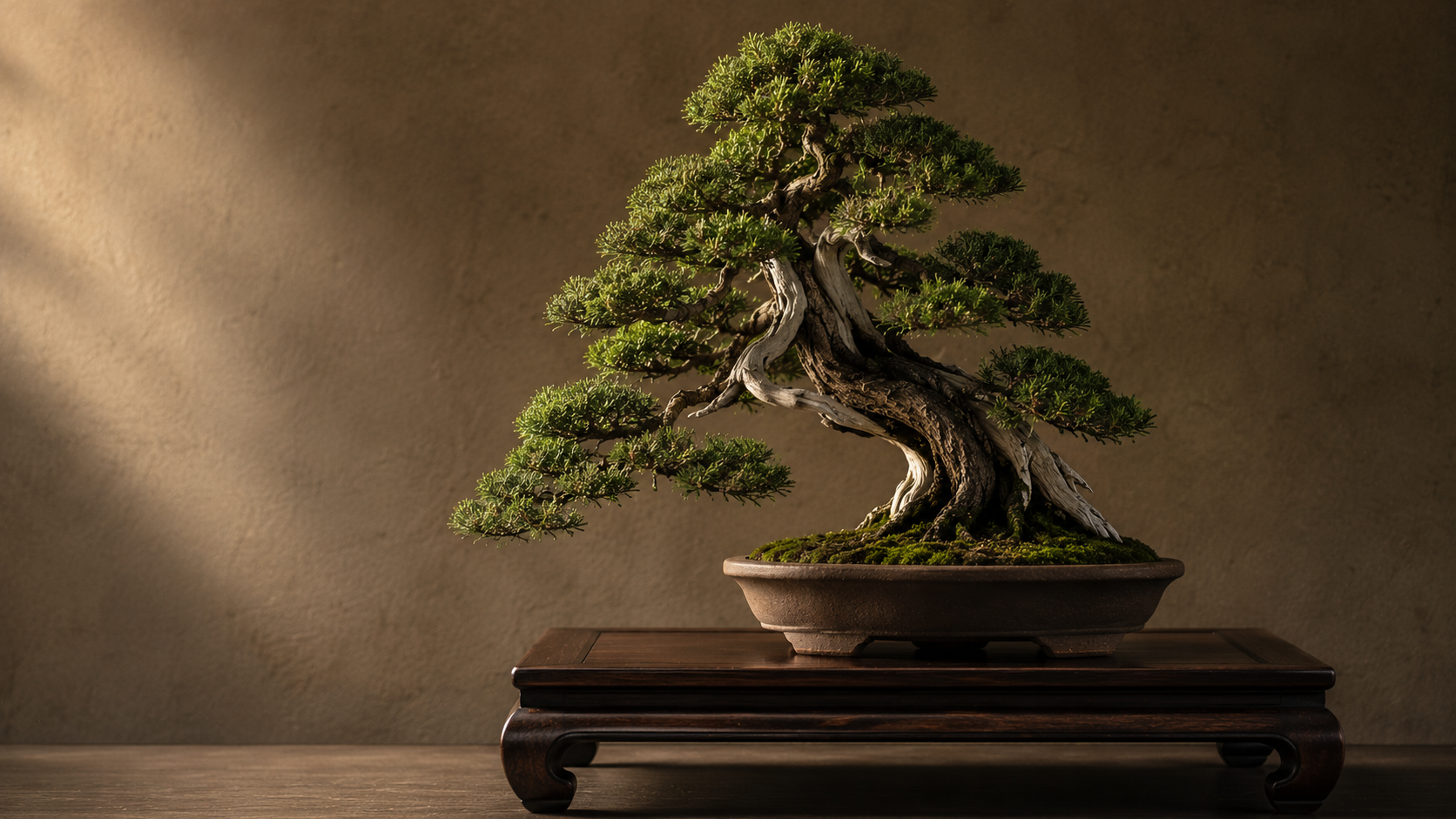
    In Japan, a tree on display almost always sits on something: a wooden table with legs (a shoku), a thin wooden board (a jita), or a slab of natural wood. The stand lifts the tree, separates it from its surroundings, and frames it. It’s the same idea as putting a picture in a frame rather than taping it to the wall.

    The confusing part is the range. A simple bonsai display stand can cost under $20. A handmade Japanese jita board can cost several hundred euros. And many of the nicest pieces are one-offs, sold secondhand, with no clear information about who made them or where.

    In my experience, the most common mistake isn’t buying a cheap stand. It’s buying one that’s the wrong size or style for the tree. This guide explains what to look for, then compares six options, from simple everyday stands to Japanese handcrafted boards.


    Who this bonsai display stand guide is NOT for

    It’s not for you if you’re looking for a work turntable. Stands for working on a tree are a different tool. Our bonsai turntable guide covers those.

    It’s not about outdoor benches. Benches for keeping a collection outside are a separate project. Display stands are mainly for showing a tree indoors or at an exhibition.

    It’s not a full guide to formal display. Japanese display (with scrolls, accent plants and tokonoma alcoves) has its own traditions. We’ll touch on the basics, but this guide is about choosing the stand itself.

    Still with us? Let’s go.


    How we picked these (3 things that actually matter)

    1. Table or board

    There are two main kinds of bonsai display stand.

    • Shoku (display tables) have legs and lift the tree noticeably. They suit most upright trees and give a more formal look. Taller versions are used for cascade trees, where the trunk hangs below the pot.
    • Jita (display boards) are thin, flat boards or natural slabs. They lift the tree only slightly and give a quieter, more natural feel. They’re popular for shohin, literati trees and informal displays.

    Neither is better. It depends on the tree and the feeling you want to create.

    2. Size and proportion

    This is where most mistakes happen.

    A display stand should be a little larger than the pot, so there’s a visible margin all around. Too small and the pot looks like it’s about to fall off. Too large and the tree looks lost on it. Height matters too: a tall stand under a small, delicate tree can feel top-heavy.

    A simple approach is to bring the potted tree with you, or measure the pot carefully, and choose a stand that leaves a modest border on every side.

    3. Style, finish and origin

    As a general convention, darker, more formal tables with straight legs tend to suit conifers and formal upright trees. Lighter, softer shapes and natural slabs often suit deciduous and informal trees. These aren’t strict rules, just a useful starting point.

    Origin is worth checking carefully. Some stands are clearly labeled as made in Japan. Many others are “imported” with no country listed. And many nice pieces are handmade by makers outside Japan. We’ve labeled each one as clearly as we can.

    A few display habits that make any stand look better

    None of these cost anything, and they make a bigger difference than an expensive stand.

    • Clean the pot first. Wipe away soil, water marks and white mineral deposits. A clean pot on a modest stand looks better than a dirty pot on a beautiful one.
    • Tidy the soil surface. A light top dressing or a little moss makes the whole display feel finished.
    • Place the tree slightly off-center if it leans. Many growers set the pot a little toward the side opposite the tree’s main movement, so the tree feels balanced on the stand.
    • Keep the background plain. A neutral wall behind the tree lets the tree, pot and stand be seen clearly.
    • Protect the stand from water. Water the tree well before bringing it inside, let it drain fully, and put it back on the stand only once the pot has stopped dripping.

    Looking after wooden stands. Display stands are furniture, not garden tools. Keep them indoors, out of direct sun and away from standing water. Wipe up spills straight away. Lacquered and varnished finishes in particular can mark or cloud if water sits on them, which is one reason many growers keep a small cloth or mat handy for watering days.

    Prices below are approximate and were checked in October 2026. Many display stands are one-of-a-kind, so exact listings change often.


    Bonsai display stand comparison table

    StandTypeSizeMaterialOriginApprox. priceBest for
    Wazakura Small Wooden Plant & Bonsai StandSmall table12.8 × 12.8 × 6.3cmScorched plywoodMade in Japan~$15Mame and desk display
    Eastern Leaf Rosewood Display StandTable11″ × 8″RosewoodNot listed~$49Everyday indoor display
    Bonsai Outlet Cascade Display Stand (No. 010)Tall tableNot listedDark wood, polished round topImported, country not listed~$28–40Cascade and semi-cascade trees
    Maillot handcrafted exhibition tablesTable~16–30cmLacquered woodHandcrafted in Europe (country not stated)~€28–45European readers, shows
    Maillot Japanese jita boardsBoard~15–40cmVarnished wood / fruitwoodMade in Japan or Japanese handcrafted~€220–375Special trees, exhibitions
    Vintage Japanese-made slabs (secondhand)Slab / boardVariesVariesListed as Japanese made~$128 + shipping (example)Collectors, unique pieces

    Bonsai display stand reviews

    1. Wazakura Small Wooden Plant & Bonsai Stand

    The simplest and cheapest way to get a Japanese-made stand.

    Wazakura’s small stand is 12.8 × 12.8cm and 6.3cm tall, made in Japan from lightly scorched plywood with a dark finish that still shows the wood grain. It holds up to 3kg and assembles by sliding the two legs together and adding the top. It’s listed at $14.99, with free shipping to the US, UK, Canada, the EU and other regions, though it was sold out when we checked.

    It’s designed for succulents, mini bonsai and small pots on a desk, shelf or windowsill. It’s not a show stand, but it’s a nice everyday way to lift a mame tree off a flat surface.

    Pros

    • Made in Japan at a very low price
    • Simple, modern look
    • Free shipping to several regions

    Cons

    • Only suits very small trees (3kg max)
    • Plywood rather than solid wood
    • Often out of stock

    Who it’s for: Mame and small shohin growers who want a simple, inexpensive stand for everyday display at home.


    2. Eastern Leaf Rosewood Display Stand (11″ × 8″)

    An affordable, classic-looking bonsai display stand for everyday use.

    Eastern Leaf sells an 11″ × 8″ rosewood display stand for $49, describing it as an “ultrasleek rosewood stand.” The listing doesn’t state the country of origin.

    This is the kind of stand most people start with: a small, dark wooden table that lifts a medium tree and gives it a more finished look indoors. It’s a big step up from setting a pot straight on a shelf.

    Pros

    • Affordable for a solid wood stand
    • Classic dark look suits many trees
    • Easy to buy in the US

    Cons

    • Origin isn’t listed
    • One size only
    • Not a specialist exhibition piece

    Before ordering, check the size against your pot. An 11″ × 8″ top suits a pot a little smaller than that on each side. If your pot is close to 11 inches long, this bonsai display stand will be too small, and you’ll want something larger.

    Who it’s for: Anyone who wants a good-looking, affordable stand for displaying a medium tree indoors.


    3. Bonsai Outlet Cascade Bonsai Display Stand (No. 010)

    A taller stand for trees that hang down.

    Bonsai Outlet sells this cascade display stand from $27.95 to $39.95, depending on the option. It’s dark wood with a polished circular top. The store describes its stands generally as “handcrafted, imported,” without naming a country.

    Cascade and semi-cascade trees need height, because the trunk falls below the rim of the pot. On a low table, the tip of the cascade ends up touching the surface. A tall, narrow stand solves that and lets the tree’s shape read properly.

    In my experience, a cascade on the right tall stand looks completely different from the same tree on a shelf. It’s one of the cases where the stand really changes how the tree is seen.

    Pros

    • Gives cascade trees the height they need
    • Affordable
    • Polished round top suits round pots

    Cons

    • Size isn’t clearly listed
    • Origin isn’t stated
    • Only suited to cascade-style trees

    Because the size isn’t clearly listed, measure your pot and check the options carefully before ordering. A cascade stand needs a top wide enough to hold the pot securely, since tall stands are less forgiving if a pot hangs over the edge.

    Who it’s for: Anyone displaying a cascade or semi-cascade bonsai.


    4. Maillot Handcrafted Exhibition Tables

    A good-value option for readers in Europe.

    French retailer Maillot sells a series of lacquered wooden exhibition tables, handcrafted by a named maker, in sizes from about 162 × 162mm up to 300 × 205mm and heights of about 32–70mm. Prices run from about €28 to €45. The page doesn’t state the country of origin.

    These are simple, well-proportioned tables at a reasonable price, in several sizes. That makes it easier to find one that fits your pot properly, which matters more than anything else.

    Pros

    • Several sizes to match different pots
    • Handcrafted by a named maker
    • Reasonable prices
    • Convenient for European buyers

    Cons

    • Not Japanese-made
    • Shipping outside Europe may be expensive
    • Limited information on wood type

    Who it’s for: European growers looking for affordable, handcrafted tables in a range of different sizes.


    5. Maillot Japanese Jita Boards

    Japanese handcrafted boards for special trees.

    Maillot also sells a small range of Japanese jita boards. Two are listed as “Made in Japan,” in solid varnished wood with sculpted edges: about 29 × 21cm (€265) and 38 × 28cm (€270). Five more are described as Japanese handcrafted, made of varnished fruitwood with carved edges and signed by a Japanese maker, in sizes from about 150 × 120mm (€220) to 405 × 270mm (€348), with some at €375. Several are one-of-a-kind.

    These are display pieces for trees that deserve them: exhibition trees, a favorite shohin, or a literati tree that needs something quiet underneath.

    Pros

    • Clearly Japanese-made or Japanese handcrafted
    • One-of-a-kind pieces with carved edges
    • Range of sizes, including small ones for shohin

    Cons

    • Expensive
    • One-offs sell quickly
    • Shipping from France adds cost outside Europe

    Who it’s for: Serious growers and collectors who want a genuine Japanese jita for exhibition or a special tree.


    6. Vintage Japanese-Made Slabs (Secondhand)

    Where many unique pieces come from.

    A lot of beautiful Japanese display slabs and stands are sold secondhand, often by collectors. As an example, one eBay listing from a US seller offers a “Japanese Made Slab Jitta” for shohin, about 6 inches long, at $128 or best offer plus $15.85 shipping. The seller notes the pieces are unsigned and that any small defects are shown in the photos.

    This route can turn up genuinely special pieces. The trade-off is that information is often limited. Material, exact size and maker may not be listed.

    Pros

    • Unique, often older Japanese pieces
    • Sometimes better value than new handmade boards
    • Good for finding something distinctive

    Cons

    • Limited information on maker and material
    • Condition varies, so photos matter
    • Returns can be less straightforward

    If you go this way, ask the seller for measurements and extra photos before buying, especially of the underside and any cracks. A slab that looks perfect from above can have a split or warp that only shows from the side.

    Who it’s for: Collectors who enjoy searching for one-of-a-kind display pieces.


    Best bonsai display stand by use case

    “I have a mame or tiny shohin on my desk.” Wazakura Small Wooden Stand.

    “I want one affordable stand for indoor display.” Eastern Leaf Rosewood Display Stand.

    “I have a cascade tree.” Bonsai Outlet Cascade Display Stand.

    “I’m in Europe and need a stand that fits my pot.” Maillot handcrafted exhibition tables.

    “I’m showing a special tree and want a Japanese jita.” Maillot Japanese jita boards.

    “I like hunting for unique pieces.” Vintage Japanese-made slabs, checked carefully from photos.


    Conclusion: choosing a bonsai display stand that fits

    Here’s the short version.

    A bonsai display stand is how a finished tree becomes a finished display. Start with size: choose a stand slightly larger than the pot, with a margin all around. Then think about style: a table for most upright trees, a tall stand for cascades, and a board or slab for shohin and informal trees.

    If you only have one bonsai display stand, choose a simple, dark, medium-sized table. It will suit more trees than a highly decorative piece, and you can move it from tree to tree as different ones come into their best season.

    You don’t need an expensive stand to make a difference. A simple, well-proportioned table already does most of the work. Save the handcrafted Japanese pieces for the trees, and the occasions, that deserve them.

    And the stand works best with the right pot on top. Our Japanese bonsai pots guide covers how to choose a pot that suits the tree.

    Ready to choose?
  • Best Bonsai Fertilizer in 2026: 5 Japanese Organic Picks, From BioGold to Rapeseed Cakes

    Best Bonsai Fertilizer in 2026: 5 Japanese Organic Picks, From BioGold to Rapeseed Cakes

    Affiliate disclosure: Some links on this page are affiliate links. If you buy through them, Aribonsai may earn a small commission at no extra cost to you. It doesn’t change what we recommend or how we rank anything.


    Small pot, hungry tree

    A bonsai lives in a very small amount of soil. And most bonsai soil, especially granular mixes based on akadama, pumice and lava, holds very little food on its own.

    So everything the tree needs to grow, it gets from you. Too little feeding and growth stalls, leaves get small and pale, and the tree slowly weakens. Too much, or the wrong kind at the wrong time, and you get long, coarse shoots that undo a season of refinement.

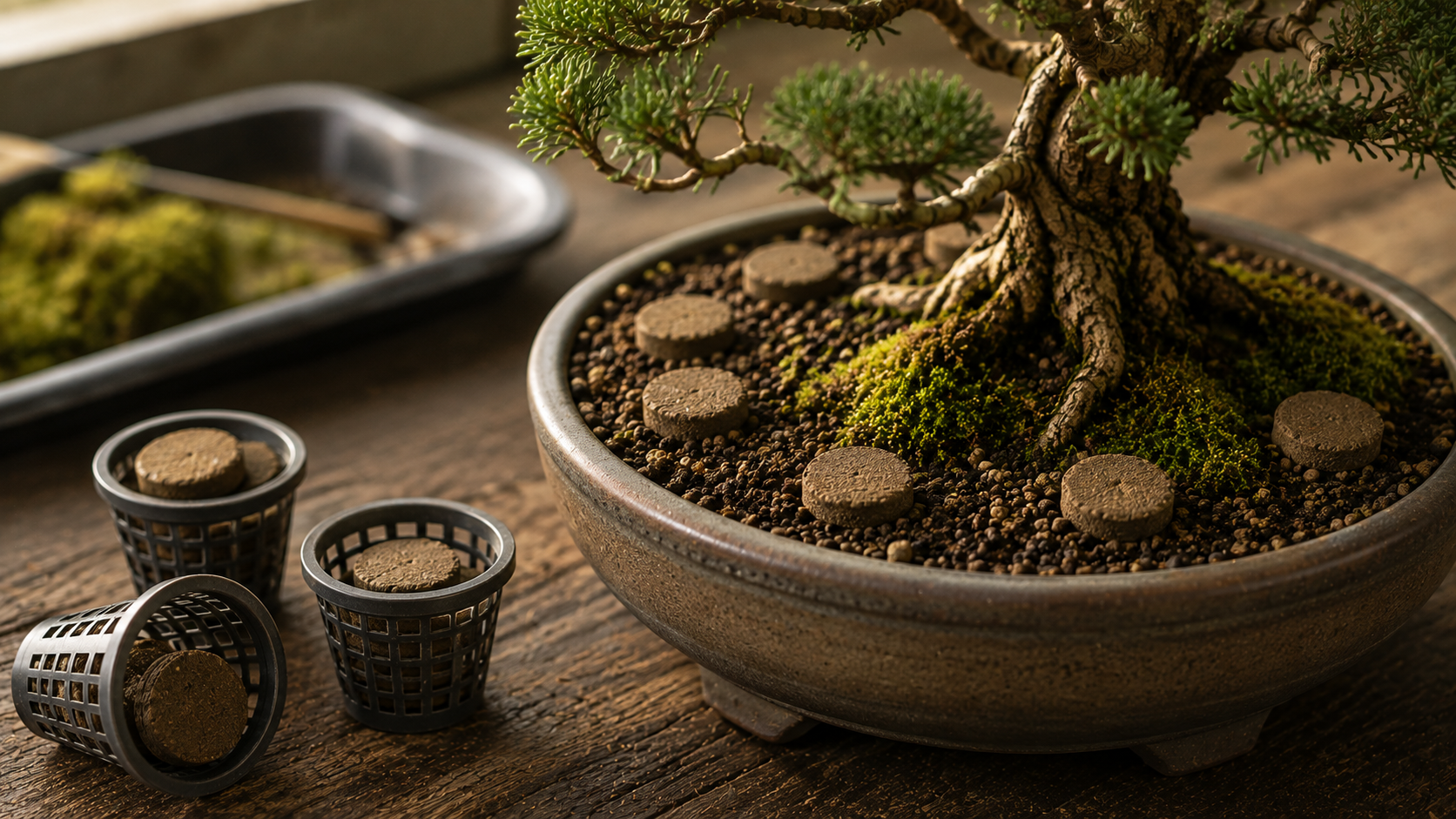
    That’s where Japanese organic fertilizers come in. Walk through any Japanese bonsai nursery and you’ll see little brown cakes or pellets sitting on the soil surface of almost every tree, sometimes under small plastic baskets. They release food slowly every time you water, for weeks at a time.

    Outside Japan, the choice is confusing. BioGold, rapeseed cakes, Tamahi, Hanagokoro, flowering formulas. Pellets, cakes, baskets. NPK numbers that don’t seem to match between retailers.

    In my experience, the right fertilizer matters less than feeding consistently through the growing season. But a good slow-release organic fertilizer makes consistency much easier. This guide compares five Japanese options you can buy outside Japan, and explains which suits which tree.


    Who this article is NOT for

    It’s not a feeding schedule guide. When to feed, and when to stop, depends a lot on the species, the tree’s stage of development and your climate. We’ll mention general patterns, but always check guidance for your specific trees.

    It’s not about synthetic liquid fertilizers. Many growers use them successfully, often alongside organic feeds. This guide focuses on Japanese organic solid fertilizers.

    It’s not for you if your tree is sick, freshly repotted or recently collected. Those trees usually need recovery time before heavy feeding. Ask an experienced grower or your local club first.

    Still with us? Let’s go.


    How we picked these (3 things that actually matter)

    1. Slow-release and organic

    Japanese bonsai fertilizers are mostly organic: rapeseed meal, bone meal, fish meal, blood meal and similar ingredients, often fermented. They break down gradually as you water, feeding the tree a little at a time.

    That slow release is the main appeal. You place the fertilizer on the soil and it keeps working for weeks. Retailers list around 50 days for rapeseed cakes, about two months for BioGold, and two to three months for Tamahi cakes.

    One nice side effect: granular soils like akadama work well with this approach. Bonsai Tonight describes akadama as able to “hold and release fertilizer,” which is part of why the two are often used together. Our akadama and Japanese bonsai soil guide covers soil choice in more detail.

    2. NPK balance

    NPK is the ratio of nitrogen (N), phosphorus (P) and potassium (K).

    • Nitrogen drives leaf and shoot growth.
    • Phosphorus supports roots, flowers and fruit.
    • Potassium supports overall health and hardiness.

    Rapeseed cakes are usually higher in nitrogen, which is why they’re popular for spring and summer growth. Flowering fertilizers are lower in nitrogen and higher in phosphorus, so they don’t push long shoots at the expense of flowers.

    One caution: retailers don’t always agree. BioGold, for example, is listed as 3.5-3.7-3.3 by Eastern Leaf, 4-5-4 by Bonsai Tonight, and 5.5-6.5-3.5 by a UK retailer. Check the bag you actually receive.

    3. Odor, mold and practicality

    Organic fertilizers can smell, especially when first wet, and some develop surface mold. That’s usually normal. One Hanagokoro seller says it doesn’t deteriorate even when it looks moldy, and a Tamahi listing says its slight initial odor disappears after the first watering.

    For indoor trees, low odor matters a lot more. For outdoor benches, birds and animals sometimes move cakes around, which is why many growers use fertilizer baskets: small plastic cups that hold the cake in place on the soil. They also make it easy to remove old fertilizer and replace it.

    A few habits that matter more than the brand.

    • Space it out on the soil. Place cakes or pellets evenly around the pot, a little away from the trunk, rather than in one pile. That spreads the feeding across the root system.
    • Replace, don’t pile on. When the old cakes have broken down, remove what’s left before adding new ones. Stacking new fertilizer on top of old makes it hard to tell how much the tree is actually getting.
    • Keep notes. Write down when you fed each tree. With slow-release fertilizer lasting six to ten weeks, it’s easy to lose track.
    • Watch the tree, not the calendar. Healthy color and steady growth suggest the feeding is about right. Very long, coarse shoots on a tree you’re refining can be a sign to ease off.
    • Store it dry and sealed. Organic fertilizer can absorb moisture and clump in storage. A sealed bag or tub in a cool, dry place keeps it usable.

    A note on fertilizer baskets. Baskets aren’t essential, but they solve a few small problems at once. They stop birds from picking at cakes, keep pellets from washing to the edge of the pot, and make it obvious where the fertilizer is when it’s time to replace it. Some growers also like that they keep the soil surface cleaner on display trees.

    Prices below are approximate and were checked in October 2026 at retailers outside Japan.


    Comparison table

    FertilizerTypeNPK (as listed)SizeApprox. priceBest for
    BioGold OriginalFermented organic pelletsListed from 3.5-3.7-3.3 to 5.5-6.5-3.5240g / 900g (also 2.4kg, 5kg)~$17 (240g) / ~$30 (900g)All-round feeding, low odor
    Maruta Rapeseed CakesRapeseed cakes5-2-1500g~$17 (sale)Spring and summer growth
    Tamahi Rapeseed Cake + BasketsRapeseed and bone meal5-4-1500g + 10 baskets~$24Starting with baskets
    HanagokoroOrganic piecesAbout 5-4-2About 500g~C$25Root development, steady feeding
    Hanasaku HiryoFlowering fertilizer1.5-9-4.510 oz pouch~$12–30Flowering and fruiting trees

    Individual reviews

    1. BioGold Original

    The most popular Japanese bonsai fertilizer outside Japan, and our pick for most people.

    BioGold is a made-in-Japan organic fertilizer, fermented with microorganisms and sold as small pellets of about 12.7mm. Eastern Leaf sells 240g for $16.95 and 900g for $29.95. Bonsai Tonight sells 900g for $30, plus larger 2.4kg and 5kg bags.

    You can use it two ways. Bonsai Tonight explains that you can sprinkle the pellets on the soil, where they stay effective for about two months. Or you can dissolve two or three pellets in a liter of water as a liquid feed that lasts about ten days, useful when you want a quicker effect.

    It’s also known for being relatively low in odor. Bonsai Tonight’s customer reviews specifically mention the lack of smell.

    Pros

    • Widely available from US and UK retailers
    • Low odor compared with traditional rapeseed cakes
    • Can be used as pellets or dissolved as a liquid feed
    • Sizes from 240g up to 5kg

    Cons

    • NPK figures vary between retailer listings
    • Pellets are small, so birds can sometimes move them
    • More expensive per kilo than bulk rapeseed cakes

    The liquid option is worth remembering. It’s handy for trees that need a quicker boost, or for indoor trees where you’d rather not leave pellets sitting on the soil for weeks.

    Who it’s for: Almost anyone. A safe first Japanese fertilizer for outdoor trees, and a reasonable choice indoors thanks to the low odor.


    2. Maruta Rapeseed Bonsai Fertilizer Cakes

    The classic Japanese rapeseed cake.

    Stone Lantern sells Maruta rapeseed cakes, made in Japan, at $16.95 per 500g bag (on sale from $22.95). They’re about 1″ across, listed as 5-2-1, and last about 50 days. The retailer suggests 4–6 cakes for an 8″ bonsai pot.

    Stone Lantern notes that the higher nitrogen makes rapeseed especially useful in spring and summer, while being mild enough to use year-round.

    In my experience, rapeseed cakes are what most people picture when they think of Japanese bonsai fertilizer. They’re simple and reliable. The main downside is that they’re more noticeable, both in smell and on the soil surface.

    Pros

    • Traditional, proven fertilizer
    • Higher nitrogen for active growth
    • Clear guidance on how many cakes per pot size
    • Affordable, especially on sale

    Cons

    • More odor than BioGold, especially when first wet
    • Larger cakes are more visible on display trees
    • Can attract birds or animals without baskets

    They’re also a good way to understand how organic feeding works. You can see each cake slowly soften and shrink over the weeks, which makes it easy to tell when it’s time to replace them.

    Who it’s for: Outdoor trees in active growth, especially during spring and summer.


    3. Tamahi Original Rapeseed Cake + 10 Baskets

    The easiest way to get started with cakes and baskets together.

    Cali Bonsai Depot sells a 500g bag of Tamahi rapeseed cake fertilizer with 10 fertilizer baskets for $23.99. It’s a product of Japan, made from rapeseed meal and bone meal, listed as 5-4-1. The pellets are about 25mm. The baskets come with covers, are made in Japan and include anti-UV ingredients.

    The listing suggests scattering pellets on the soil or placing them in a basket, not too close to the roots, and watering over the basket for slow release. One application lasts about two to three months. It also notes a slight initial odor that disappears after the first watering.

    House of Bonsai also sells Tamahi in a 7kg bulk size, for growers with large collections.

    Pros

    • Comes with 10 baskets with covers
    • Bone meal adds phosphorus compared with plain rapeseed
    • Long-lasting, around two to three months
    • Bulk size available

    Cons

    • Slight initial odor
    • Larger pellets than BioGold
    • Baskets are small, so very large pots may need several

    Ten baskets is enough for a small collection, and once you see how convenient they are, it’s easy to pick up more as you add trees.

    Who it’s for: Growers who want to try the traditional cake-and-basket approach without buying baskets separately.


    4. Hanagokoro

    A rapeseed-based fertilizer with a broader mix of ingredients.

    The Garden Cafe in Canada sells Hanagokoro at C$25 for about 500g (C$20 each when buying three or more). It lists ingredients as rapeseed oil, blood meal, bone meal, rice bran and algae extracts, with an NPK of about 5:4:2. The seller says the algae extracts help fine root development. The page describes it as traditionally used in Japan, though it doesn’t say where this particular product is made.

    The seller gives a clear guide by pot size: 3–4 pieces for a 5″ pot, 4–5 for a 6″ pot, 5–7 for a 7″ pot and 6–8 for an 8″ pot, replaced about every 50 days in summer. It also says it’s “nearly impossible to overfeed” with it, because it releases slowly. As always, take that as the seller’s view and follow the label.

    Pros

    • Broad mix of organic ingredients
    • Clear dosage by pot size
    • Steady, slow release

    Cons

    • Origin isn’t stated on the listing we checked
    • Repackaged by the retailer in smaller amounts
    • Canadian retailer, so shipping elsewhere may cost more

    Who it’s for: Growers who want a well-rounded organic feed with clear dosing, especially in Canada where shipping is simplest.


    5. Hanasaku Hiryo (Japanese Flowering Fertilizer)

    The specialist pick for flowering and fruiting trees.

    Bonsai Outlet sells Hanasaku Hiryo, a Japanese flowering fertilizer, in a 10 oz pouch, listed between $11.90 and $29.90 depending on the option. Its NPK is 1.5-9-4.5, much lower in nitrogen and much higher in phosphorus than rapeseed cakes.

    That balance is the point. Too much nitrogen on a flowering tree pushes leafy growth instead of flowers. A low-nitrogen, high-phosphorus feed supports flowering without encouraging long, coarse shoots. Bonsai Outlet also sells it in a “Flowering Feeding Bundle” with fertilizer cups.

    Pros

    • Formulated for flowering trees
    • Low nitrogen avoids pushing excess shoots
    • Small pouch, easy to try

    Cons

    • Not an all-purpose fertilizer
    • Pricing depends on the option you pick
    • Mostly useful for specific species

    Many growers use a flowering fertilizer for part of the year and a general one for the rest, rather than one or the other. If you have a mixed collection, a small pouch alongside a bag of BioGold covers most needs.

    Who it’s for: Growers with azaleas, flowering quince, crabapples and other flowering or fruiting bonsai.


    Recommendation by use case

    “I just want one good fertilizer for most of my trees.” BioGold Original. Start with 240g or 900g.

    “My trees are growing outdoors and I want strong spring growth.” Maruta Rapeseed Cakes or Tamahi.

    “I want to try fertilizer baskets.” Tamahi + 10 Baskets.

    “I want clear dosing by pot size.” Hanagokoro or Maruta, both of which give per-pot guidance.

    “I grow flowering or fruiting trees.” Hanasaku Hiryo for the flowering period, with a general fertilizer at other times.

    “I keep trees indoors.” BioGold, for its lower odor. The liquid method is an option if you’d rather not leave pellets on the soil.


    Conclusion: feed steadily, and match the fertilizer to the tree

    Here’s the short version.

    For most people, BioGold is the easiest place to start. It’s low in odor, widely available, and flexible. Rapeseed cakes are a classic, cheaper choice for outdoor trees in active growth. A flowering fertilizer is worth adding if you grow azaleas or fruiting trees.

    Whatever you choose, consistency matters more than brand. Organic fertilizers release a little at a time as you water, which is why good watering habits and good feeding go together. Our bonsai watering guide covers the tools that make watering easier and more even.

    If you’re just starting out, keep it simple. One general fertilizer, applied steadily through the growing season, will do more for your trees than a shelf of specialist products used occasionally. Add a flowering feed or baskets later, once you know what your trees need.

    And always follow the label. Retailer guidance is a good starting point, but the instructions on the bag you actually buy should come first.

    Ready to stock up?

  • Best Akadama and Japanese Bonsai Soil in 2026: 6 Picks You Can Buy Outside Japan

    Best Akadama and Japanese Bonsai Soil in 2026: 6 Picks You Can Buy Outside Japan

    Affiliate disclosure: Some links on this page are affiliate links. If you buy through them, Aribonsai may earn a small commission at no extra cost to you. It doesn’t change what we recommend or how we rank anything.


    Every bag says “akadama.” They’re not all the same.

    If you’ve started looking at proper bonsai soil, you’ve probably hit this.

    Every bonsai book and video mentions akadama. So you search for it, and suddenly there are bags called Double Line, Triple Red Line, Ryusen, Ho Yoku, Gun Poh and “super hard.” Prices range from about $30 to $70 a bag. Some say heat-treated. Some come in “shohin grain.” Some are mixed with something called kiryu. And then someone in a forum tells you akadama turns to mud after a year and you should just use lava rock.

    Soil is the one part of bonsai you can’t see once the tree is potted. But it affects everything: how often you water, how well the roots grow, and how long you can go between repots.

    In my experience, the biggest mistakes with Japanese soil aren’t about brand. They’re about grain size, about using akadama in a climate where it breaks down quickly, and about buying one bag and expecting it to suit every tree.

    This guide explains what the main Japanese soils actually do, then compares six bags you can buy from retailers outside Japan.


    Who this article is NOT for

    It’s not for you if you want to order soil straight from Japan. Soil is restricted for import in many countries, so Japanese stores generally won’t ship it overseas. Every product here is sold by a retailer outside Japan.

    It’s not for you if you grow only indoor tropical trees in a dry home. Akadama can work indoors, but many indoor growers prefer mixes based on pumice, lava or other inorganic materials. That’s a different discussion.

    It’s not a complete soil science guide. We’ll cover the basics you need to choose a bag. Detailed mixes for every species are beyond one article.

    Still with us? Let’s go.


    How we picked these (3 things that actually matter)

    1. What the soil is, and what it’s for

    There are three Japanese soils you’ll see most often outside Japan.

    Akadama is a Japanese clay soil that’s dug, dried and sorted into grains. Bonsai Tonight describes it as something that can “hold and release water, hold and release fertilizer, and support root growth over very long periods.” Roots can also grow into the grains, which is part of why it’s so popular.

    Kanuma is a soft, pale yellow volcanic soil. House of Bonsai describes it as “highly acidic (pH level about 5.5)” and best for acid-loving plants like azaleas and camellias. It’s usually mixed with other soils, not used alone.

    Kiryu (kiryuzuna) is a volcanic aggregate from Japan, often mixed with akadama to improve drainage and aeration.

    Most growers use akadama as part of a mix, not on its own. One commonly shared formula, quoted by Bonsai Empire, is roughly one part lava rock, one part pumice and one part akadama. Deciduous trees are often given more akadama, and conifers less.

    2. Hardness and how long it lasts

    This is the big one. Akadama breaks down over time. Bonsai Empire says it “breaks down over 1 to 2 years, depending on the quality of the akadama, freeze/thaw cycle in your climate and frequency of watering.” As it breaks down, it compacts, drains worse and can hold too much water.

    Harder akadama lasts longer. That’s why you see labels like “hard,” “super hard” and “double line” or “triple line,” which are used to signal quality grades. A simple home test that Bonsai Tonight mentions: soft akadama “crumbles easily between pinched fingers,” while hard grains don’t.

    If you live somewhere with cold, wet winters and frequent freezing and thawing, hardness matters even more.

    3. Grain size and bag price

    Grain size should match your trees. Small grains suit shohin and small pots. Larger grains suit bigger pots and help with drainage. Many bags come in several grain sizes, so check before you buy.

    Price per liter varies a lot. The bags here range from 13 to 18 liters, so compare by volume, not just by price.

    One more thing: most akadama sold outside Japan is heat-treated. Bonsai Tonight notes that heat-treated akadama (around 300°C) is primarily for import compliance, and that it’s different from fully baked akadama, which is fired much hotter and becomes more ceramic-like. Some heat-treated products also produce a bit of dust in shipping, so sifting before use is a good idea.

    A few habits that get more out of any bag.

    • Sift before you use it. Shake the soil through a sieve to remove dust and broken fines. Fine particles fill the gaps between grains and are a big part of why akadama mixes stop draining well.
    • Store it dry. Keep opened bags out of the rain and off damp ground. Akadama that sits wet for months starts breaking down before it ever reaches a pot.
    • Do the pinch test. Before using a new bag, squeeze a few grains between your fingers. If they crumble easily, use a lower percentage in your mix, or save that bag for trees you repot often.
    • Label your mixes. If you blend your own, write the ratio on the bag or bucket. It’s surprisingly easy to forget what’s in a mix by the next repotting season.
    • Watch how it behaves. After a season, check how quickly the soil dries out and whether the surface has started to look muddy. That tells you more about whether a bag suits your climate than any label does.

    Prices below are approximate and were checked at US retailers in October 2026. Prices and stock in other countries will differ.


    Comparison table

    SoilTypeBagGrain sizesApprox. priceBest for
    Double Line Ibaraki AkadamaHard akadama, heat-treated14LSmall (~6mm), Shohin~$59All-round quality akadama
    Ryusen AkadamaAkadama14LSmall (~6mm)~$59Alternative premium brand
    Ho Yoku Hard Premium AkadamaHard akadama, heat-treated18L1–3mm, 3–5mm, 5–7mm~$55Choice of grain sizes, larger bag
    Gun Poh Super Hard AkadamaSuper hard akadama, heat-treated14L3–6mm, 6–10mm, 10–18mm~$32Best value
    Double Line Akadama + Kiryu Blend~70% akadama, ~30% kiryu13L8–10mm+~$46Ready-to-use mix
    KanumaAcidic volcanic soil18L6–7mm+~$42Azaleas and acid-loving trees

    Individual reviews

    1. Double Line Ibaraki Akadama (14L)

    One of the best-known hard akadama brands sold outside Japan.

    Eastern Leaf sells the small grain (about 6mm) for $59 per 14L bag, roughly 20 lbs. It’s made in Japan and heat-treated. Eastern Leaf describes it as having “bonsai level hardness that prevents deterioration and compaction.” A finer shohin grain is also available at the same price.

    Eastern Leaf also lists Triple Red Line akadama at $69, which it positions as a premium grade above Double Line, and a “Japanese Super Hard Akadama” at $59.

    Pros

    • Well-known brand with a reputation for hardness
    • Shohin grain available for small trees
    • Easy to buy from a US retailer
    • Heat-treated for import

    Cons

    • One of the pricier options per liter
    • Limited grain sizes compared to some brands
    • Like all akadama, it will still break down eventually

    Who it’s for: Growers who want a reliable, well-known hard akadama for general use. If you only buy one bag of akadama this year, this is a safe choice.


    2. Ryusen Akadama (14L)

    Ryusen is another premium akadama brand, also sold by Eastern Leaf.

    The small grain (about 6mm) is $59 per 14L bag. Eastern Leaf says it’s made by the same company that produces Double Red Line akadama. It was out of stock when we checked.

    Eastern Leaf notes it’s often blended with fine lava rock or similar materials to improve drainage and root growth, which is good general advice for any akadama.

    Pros

    • Premium brand from a known producer
    • Same price as Double Line
    • Good for mixing with lava or pumice

    Cons

    • Stock can be patchy
    • Only one grain size listed
    • Similar price per liter to other premium bags

    Who it’s for: Growers who want a premium akadama and are happy to use Ryusen or Double Line, depending on what’s in stock.


    3. Ho Yoku Hard Premium Akadama (18L)

    The pick if you want a bigger bag and more grain sizes.

    Bonsai Outlet sells Ho Yoku hard premium akadama for $54.95 per 18L bag. It’s imported from Japan and comes in three grain sizes: small (1–3mm) for shohin, standard (3–5mm) for general use, and large (5–7mm) for bigger trees.

    Bonsai Outlet says it has been heat-treated to about 400 degrees, which makes it more durable, but that it can produce some dust during shipping. They suggest sifting before use, especially for small pots or fine mixes.

    In my experience, having the same brand in three grain sizes is more useful than it sounds. You can build mixes for different trees without your soil behaving differently from bag to bag.

    Pros

    • Larger 18L bag for a similar price
    • Three grain sizes, including very fine for shohin
    • Heat-treated for durability

    Cons

    • Can arrive with dust, so sifting is recommended
    • Less brand recognition than Double Line
    • Grain sizes are on the small side for very large trees

    Who it’s for: Growers with a mix of tree sizes who want consistent akadama in several grains.


    4. Gun Poh “Super Hard Quality” Akadama (14L)

    The value pick.

    Wigert’s Bonsai sells Gun Poh super hard akadama for $32 per 14L bag. It’s imported from Japan and heat-treated, and it comes in small (3–6mm), medium (6–10mm) and large (10–18mm) grains.

    That’s roughly half the price of the premium brands for the same volume. And it covers larger grain sizes than most, which is useful for big trees and for improving drainage.

    Pros

    • Much cheaper per liter than the premium brands
    • Wide range of grain sizes, including large
    • Labeled super hard and heat-treated

    Cons

    • Less widely known than Double Line or Ryusen
    • Mainly sold by one US retailer
    • Quality can vary between batches with any akadama

    A cheaper bag is also a sensible way to find out whether akadama suits your climate at all. If it breaks down too fast where you live, you’ll know after a season without having spent premium money to learn it.

    Who it’s for: Growers who use a lot of akadama, or who want to try it without paying premium prices.


    5. Double Line Hard Akadama + Kiryuzuna Blend (13L)

    The easiest option if you don’t want to mix your own.

    House of Bonsai sells this blend for $46 per 13L bag (about 20 lbs). It’s roughly 70% Double Line akadama and 30% kiryuzuna, in a medium 8–10mm grain. The retailer calls it “a great all purpose blend that’s ready to use on all sizes of bonsai trees,” though the medium grain is better suited to standard trees than tiny ones.

    It also changes color as it dries, from reddish brown when wet to a lighter golden brown when dry, which makes it easier to see when it’s time to water.

    Pros

    • Ready to use, no mixing needed
    • Kiryu adds drainage to the akadama
    • Color change helps with watering

    Cons

    • Only one grain size
    • Too coarse for shohin
    • You can’t adjust the ratio for different trees

    Who it’s for: Growers who want a good Japanese mix without buying several bags and blending.


    6. Kanuma (18L)

    The specialist soil for azaleas.

    House of Bonsai sells kanuma in an 18L bag for $42, in a medium 6–7mm grain. It’s made in Japan and described as soft and highly acidic, with a pH of about 5.5. It’s best for acid-loving plants like azaleas, camellias and gardenias.

    The retailer recommends mixing it with akadama or other bonsai soil rather than using it alone. Adding more kanuma increases acidity for plants that need it.

    Pros

    • The standard soil for satsuki and other azaleas
    • Good water retention with drainage
    • Large 18L bag

    Cons

    • Only useful for acid-loving trees
    • Soft, so it breaks down over time
    • Usually mixed, not used alone

    Its pale yellow color also makes it easy to tell apart from akadama in a mix, and House of Bonsai notes it can be used as a decorative top layer.

    Who it’s for: Anyone growing azaleas or other acid-loving trees.


    Recommendation by use case

    “I want one good akadama for most of my trees.” Double Line Ibaraki Akadama (or Ryusen if it’s in stock).

    “I have trees of different sizes and need several grain sizes.” Ho Yoku Hard Premium Akadama, in two or three grains.

    “I use a lot of soil and want the best value.” Gun Poh Super Hard Akadama.

    “I don’t want to mix my own soil.” Double Line Akadama + Kiryu Blend.

    “I grow azaleas.” Kanuma, mixed with some akadama.

    “I live somewhere with hard freezing winters.” A hard or super hard akadama, used as part of a mix with pumice and lava rather than on its own.


    Conclusion: pick hardness and grain size first, then the brand

    Here’s the short version.

    Akadama is a great part of a bonsai mix, but it isn’t magic, and it doesn’t last forever. Choose a hard grade so it holds up longer. Match the grain size to your trees. And use it in a mix with something that doesn’t break down, like pumice or lava, especially in cold, wet climates.

    Kanuma is for azaleas and other acid-loving trees. Kiryu helps drainage. None of them are must-haves on day one. And a ready-made blend is a perfectly good choice if you’d rather not mix your own.

    Soil goes hand in hand with repotting. When you’re ready to change it, a dedicated root cutter will save your other tools from the grit. And if the tree is moving into a new home, our Japanese bonsai pots guide covers choosing the right size and depth.

    Ready to stock up?

    Sources: Bonsai Empire: To Akadama, or not to Akadama?; Bonsai Tonight: Bonsai soil Q&A