Affiliate disclosure: Some links on this page are affiliate links. If you buy through them, Aribonsai may earn a small commission at no extra cost to you. It doesn’t change what we recommend or how we rank anything.
When your everyday shears are too big
Most bonsai growers start with one pair of scissors: a classic satsuki-style shear that handles everyday pruning. It’s the right first tool. But as trees mature, the work changes.
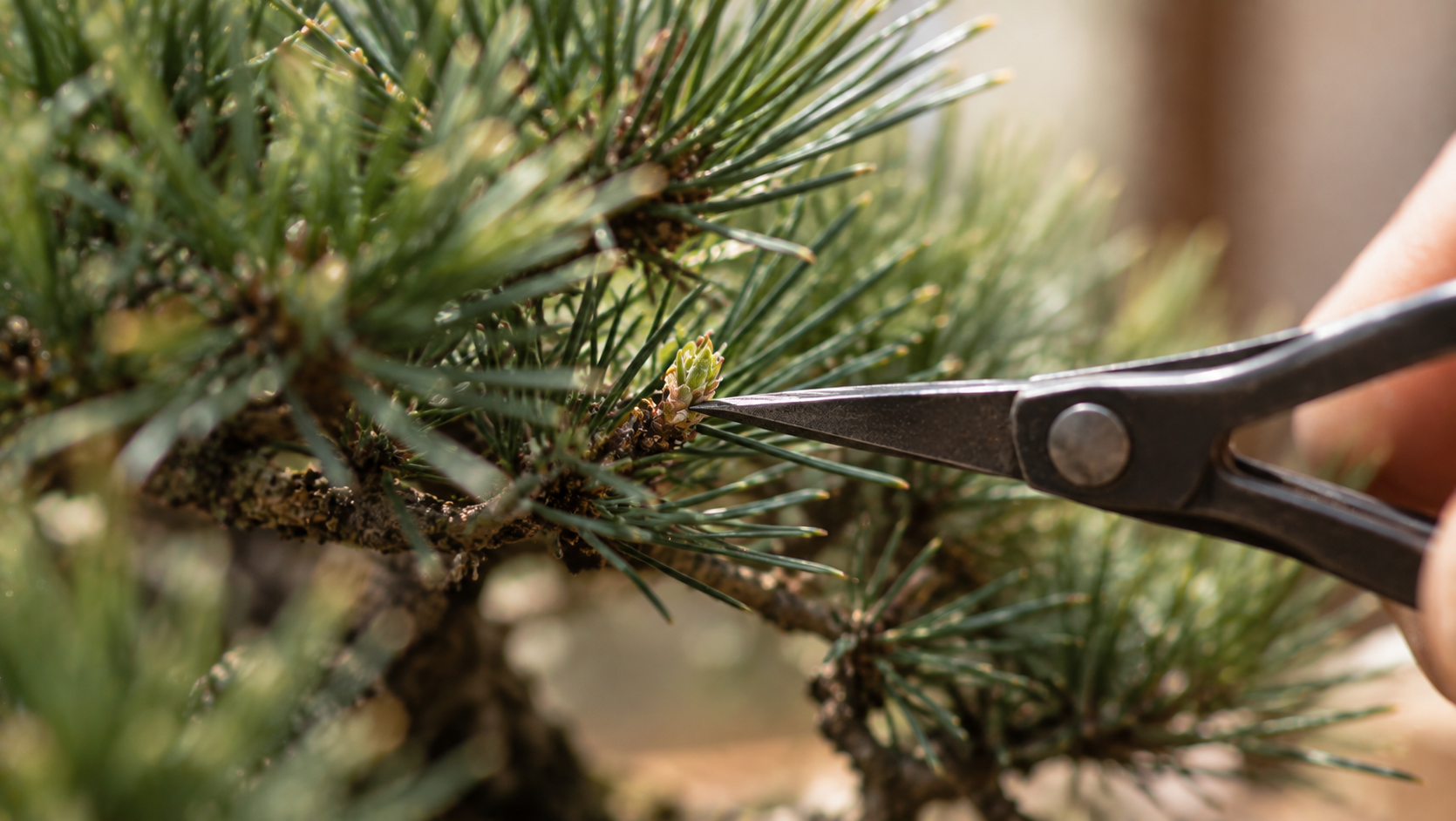
On a developed tree, you’re no longer cutting long shoots in open space. You’re removing a single bud deep inside a dense pad. Thinning needles on a white pine. Cutting individual leaves on a maple without nicking the one next to it. Snipping tiny shoots on a shohin tree barely the size of your hand.
That’s where bonsai trimming scissors come in. These are smaller, finer scissors with short, narrow blades designed to reach into tight spaces and make precise cuts. Japanese makers produce many variations: bud scissors, twig scissors, scissors made for specific species like Japanese white pine, and tiny shohin scissors.
They’re not a replacement for your main shears. They’re the tool you reach for when precision matters more than power.
In my experience, the moment growers buy their first pair of fine trimming scissors is usually the moment their trees start to look refined rather than just healthy. This guide explains what matters, then compares six Japanese bonsai trimming scissors, from budget bud scissors to premium Masakuni.
Who this bonsai trimming scissors guide is NOT for
It’s not for your first pair of scissors. If you’re starting out, a general satsuki-style pair is more versatile. Our bonsai shears guide covers those.
It’s not for cutting branches or roots. Fine scissors are easily damaged by thick wood. Use a concave cutter or root cutter instead.
It’s not for cutting wire. Never use fine scissors on wire.
Still with us? Let’s go.
How we picked these (3 things that actually matter)
1. Blade length and tip shape
Short, narrow blades reach into dense foliage without disturbing the surrounding growth. Kaneshin’s fine trimming scissors, for example, have blades of about 1.8 inches, and its white pine scissors have blades of about 1.2 inches. Longer, slimmer blades, like those on twig scissors, reach further into a tree.
Sharp, fine tips let you isolate a single bud or leaf.
2. Cutting capacity
Fine scissors are built for precision, not force. Niwaki notes that Kaneshin’s trimming scissors are limited to cuts of about 6–8 mm. Cutting thicker material can spring the blades or chip the edge.
If you regularly need to cut thicker shoots, keep your everyday shears or a concave cutter for that job.
3. Steel and weight
As with other Japanese tools, you’ll see carbon steel, Yasugi specialty steel and stainless steel. Carbon and Yasugi steels take a fine edge; stainless is more forgiving in humid conditions. Our stainless vs carbon steel guide explains the trade-offs.
Weight matters too. Fine trimming can take hours on a large tree, and lighter scissors reduce hand fatigue.
A few fine-trimming habits that matter more than the scissors
None of these cost anything.
- Use the tips for fine cuts and the blade base for slightly heavier cuts. Niwaki gives this advice for Kaneshin’s white pine scissors.
- Never twist the blades. Twisting springs fine scissors.
- Stay within capacity. If it doesn’t cut cleanly, use a bigger tool.
- Clean sap often. Pine and juniper sap gum up fine blades quickly.
- Oil after every session. A light coat of camellia oil prevents rust. Our bonsai tool maintenance guide covers the essentials.
- Store them separately. Fine tips are easily bent if they knock against heavier tools.
- Combine with tweezers. For removing needles and tiny buds, tweezers often work alongside scissors.
Bonsai trimming scissors comparison table
| Scissors | Type | Blade / size | Steel | Origin | Approx. price |
|---|---|---|---|---|---|
| Kaneshin Bonsai Trimming Scissors | Fine bud trimming | 7.1 in overall, 1.8 in blades | Carbon | Japan | ~$66 |
| Kaneshin Goyoumatsu Scissors (No.32) | White pine scissors | 6.1 in, 1.2 in blades | Carbon | Japan | ~$52 |
| Wazakura Yasugi Steel Twig Scissors | Twig scissors | 21 cm, 5.2 cm blades | YCS3 Yasugi steel | Sanjo, Japan | ~£40 (UK) |
| Masakuni Bud Trimming Shears (S) | Premium bud shears | 160 mm, 90 g | Stainless | Japan | ~€138 (EU) |
| Tsuyomitsu Bud Scissors | Budget bud scissors | 155 mm, 47 g | Steel or stainless | Japan | ~€25–30 (EU) |
| Tsuyomitsu Universal 120 mm Scissors | Shohin scissors | 120 mm, ~40 g | Black steel or stainless | Japan | ~€30–40 (EU) |
Prices are approximate and vary by retailer and country. Always check current prices before buying.
The 6 best bonsai trimming scissors, reviewed
1. Kaneshin Bonsai Trimming Scissors – the best all-round fine scissors
If you want one pair of fine scissors to go alongside your main shears, this is an excellent choice.
Niwaki describes Kaneshin’s trimming scissors as designed for fine trimming of buds and small branches, especially in dense, hard-to-reach areas of mature bonsai. They’re about 7.1 inches long with 1.8-inch blades, made in Japan from carbon steel, weigh about 3.6 oz, and cost around $66. Cuts are limited to about 6–8 mm.
They’re compact enough to reach inside a tree, but still comfortable for longer sessions.
Pros
- Designed for buds and fine shoots in dense foliage
- Made in Japan by Kaneshin
- Short, precise blades
- Comfortable size
Cons
- Limited to small cuts (about 6–8 mm)
- Carbon steel needs drying and oiling
Best for: growers refining mature trees with dense foliage.
Check the Kaneshin Bonsai Trimming Scissors at Niwaki
2. Kaneshin Goyoumatsu Scissors (No.32) – best for Japanese white pine
Japanese white pine (goyomatsu) is one of the most prized bonsai species, and Kaneshin makes scissors specifically for it.
The No.32 is a compact carbon steel scissor, made in Japan, about 6.1 inches long with 1.2-inch blades. Niwaki describes it as designed specifically for Japanese white pines, and suited to detailed work like trimming green growth, removing small buds and thinning crowded foliage. It suggests using the blade base for heavier cuts and the tips for finer work. It costs around $52.
The short blades are ideal for working between dense clusters of needles without cutting the ones you want to keep.
Pros
- Designed for Japanese white pine
- Very short, precise blades
- Made in Japan
- Useful for other fine conifer work too
Cons
- Specialized
- Short blades are slow on larger trees
Best for: white pine growers and anyone doing fine conifer work.
Check the Kaneshin Goyoumatsu Scissors at Niwaki
3. Wazakura Yasugi Steel Twig Scissors – best for reaching deep into a tree
Twig scissors have long, slim handles and narrow blades, giving you reach into the center of a tree.
Wazakura’s twig scissors are handcrafted in Sanjo, Niigata, a region known for metalworking, from YCS3 Yasugi specialty steel. They’re 21 cm long with 5.2 cm blades. Made In Japan UK describes them as designed for precise pruning and detailed maintenance, especially trimming twigs, shoots, leaves and fine branches. They’re around £40, though they were sold out at that retailer when we checked.
The longer reach is a real advantage on medium and larger trees, where short scissors can’t get to the inner growth.
Pros
- Handcrafted in Sanjo, Japan
- Yasugi specialty steel takes a fine edge
- Long reach into dense trees
- Good value for the steel
Cons
- Stock varies
- Longer blades are less nimble on tiny shohin
Best for: medium and large trees with dense interiors.
*Tip: Use code **ARIBONSAI** at checkout for 10% off at Wazakura.*
4. Masakuni Bud Trimming Shears (S) – the premium pick
If you want the finest bud trimming scissors money can buy, Masakuni is the name most collectors think of.
Bonsai.de lists Masakuni’s Bud Trimming Shears (S) at 160 mm long and 90 g, made from high-grade stainless steel, for around €138. That makes them light, rust-resistant and built to Masakuni’s well-known standards.
They’re expensive for fine scissors. But for a collector who spends many hours refining trees, a premium, lightweight stainless pair can be a real pleasure to use. If you’re weighing the two big brands, our Kaneshin vs Masakuni comparison covers their differences across tool types.
Pros
- Premium Masakuni quality
- Lightweight stainless steel
- Rust-resistant, low maintenance
Cons
- Expensive
- Harder to find outside Europe and Japan
Best for: collectors and advanced growers who want a premium tool.
Check Masakuni Bud Trimming Shears at Bonsai.de
5. Tsuyomitsu Bud Scissors – best budget Japanese option
You don’t have to spend a lot to get good Japanese bud scissors.
Bonsai.de sells Japanese-made bud scissors from Tsuyomitsu, 155 mm long. The steel version weighs just 47 g, with a 28 mm cutting surface, for around €25. A stainless steel version (65 g, 30 mm cutting surface) costs around €30.
They’re light, simple and inexpensive, a great way to try fine trimming scissors before investing in a premium pair.
Pros
- Very affordable
- Made in Japan
- Very light
- Steel and stainless options
Cons
- Less refined than Kaneshin or Masakuni
- Mainly available in Europe
Best for: budget-conscious growers trying fine scissors for the first time.
Check bud scissors at Bonsai.de
6. Tsuyomitsu Universal 120 mm Scissors – best for shohin
On a shohin or mame tree, even standard fine scissors can feel large. These tiny scissors are made for that scale.
Bonsai.de lists 120 mm universal bonsai scissors in black steel (about 42 g, around €30) and in stainless steel made in Japan by Tsuyomitsu (about 40 g, around €40). The retailer describes them as suited to delicate work such as on shohin trees.
Bonsai.de also sells a tiny tweezer-shaped leaf trimmer for removing small leaves or needles from a branch, which can be a useful companion.
Pros
- Tiny and precise, ideal for shohin and mame
- Very light
- Stainless option made in Japan
Cons
- Too small for larger trees
- Mainly available in Europe
Best for: shohin and mame growers.
Check shohin scissors at Bonsai.de
Which bonsai trimming scissors should you buy? (By situation)
You want one pair of fine scissors for most trees: Kaneshin Bonsai Trimming Scissors.
You grow Japanese white pine: Kaneshin Goyoumatsu Scissors.
You need reach into the center of larger trees: Wazakura Yasugi Steel Twig Scissors.
You want the best and don’t mind paying: Masakuni Bud Trimming Shears.
You’re on a budget: Tsuyomitsu Bud Scissors.
You grow shohin or mame: Tsuyomitsu Universal 120 mm Scissors.
A sensible scissor kit
Most growers who refine trees regularly end up with three scissors: an everyday satsuki-style shear, one pair of fine trimming scissors, and possibly a species-specific or shohin pair. Add fine bonsai tweezers for plucking needles and tiny buds, and you’re equipped for most refinement work.
Trimming scissors vs satsuki shears: what’s the difference?
It’s a fair question, since both are small Japanese bonsai scissors. The difference is in what they’re designed to do.
Satsuki-style shears are the all-rounders. They usually have longer blades and larger handles, and they’re built to handle everyday pruning: cutting back shoots, trimming foliage, cutting small branches and even fine roots. Kaneshin’s No.40E bonsai scissors, for example, are described by one UK retailer as general-purpose shaping scissors for leaves, buds and smaller branches on medium to large bonsai, and fine roots on bonsai of any size.
Bonsai trimming scissors, including bud and twig scissors, are specialists. Their blades are shorter, narrower or longer-reaching, and their tips are finer. They sacrifice some strength and versatility for precision, so they’re better for isolating a single bud, cutting leaves on a dense pad or working on tiny shohin trees.
In practice, most growers use both. The satsuki shear does the bulk of the cutting, and the fine trimming scissors handle the detailed refinement. If you only own one pair, make it a satsuki-style shear first, then add trimming scissors once your trees reach the refinement stage.
When to use bonsai trimming scissors
Fine scissors come into their own at specific times of the year, depending on species:
- Spring and early summer: cutting back new shoots and removing unwanted buds on deciduous trees.
- Summer: leaf cutting and leaf trimming on suitable deciduous species.
- Late summer and autumn: thinning and refining conifers, including pines.
- Year-round on indoor trees: trimming new growth on tropical species to keep them compact.
Timing varies by species and climate, so always check what your tree needs before heavy trimming.
How to care for fine trimming scissors
- Wipe off sap after every use, especially from pines and junipers.
- Dry the blades completely.
- Oil the blades and joint lightly.
- Remove rust early with a rust eraser.
- Hone carefully. Fine edges need gentle sharpening; consider professional sharpening for premium scissors.
- Store them in a tool roll so the tips stay aligned.
Common mistakes with bonsai trimming scissors
Cutting branches that are too thick. Fine scissors chip or spring.
Twisting the blades in a cut. It damages the alignment.
Using them on roots. Grit dulls fine edges quickly.
Leaving sap on the blades. It hardens and makes cuts ragged.
Dropping them. Fine tips bend easily.
Conclusion: precision is what makes a tree look refined
Bonsai trimming scissors aren’t your first tool, but they’re often the tool that takes your trees from healthy to refined. Short, fine blades let you remove exactly the bud, leaf or shoot you want, and nothing else.
For most growers, Kaneshin’s trimming scissors are the best all-round choice. White pine growers will love the Kaneshin Goyoumatsu scissors, and Wazakura’s Yasugi twig scissors offer great reach and value. If you want the best, Masakuni’s bud shears are a premium treat, and Tsuyomitsu offers good budget and shohin options.
Use them within their capacity, keep them clean and oiled, and they’ll serve you for years. Fine scissors reward care: a well-kept pair will still make crisp, clean cuts long after a neglected one has gone dull, and every tree you refine with it will show the difference.
Ready to refine your trees? Check the Kaneshin Bonsai Trimming Scissors at Niwaki, or shop Wazakura twig scissors*Tip: Use code **ARIBONSAI** at checkout for 10% off at Wazakura.*