Affiliate disclosure: Some links on this page are affiliate links. If you buy through them, Aribonsai may earn a small commission at no extra cost to you. It doesn’t change what we recommend or how we rank anything.
The tree in the photo isn’t always the tree in the box
Buying a bonsai online sounds simple. You find a tree you like, click “add to cart,” and wait.
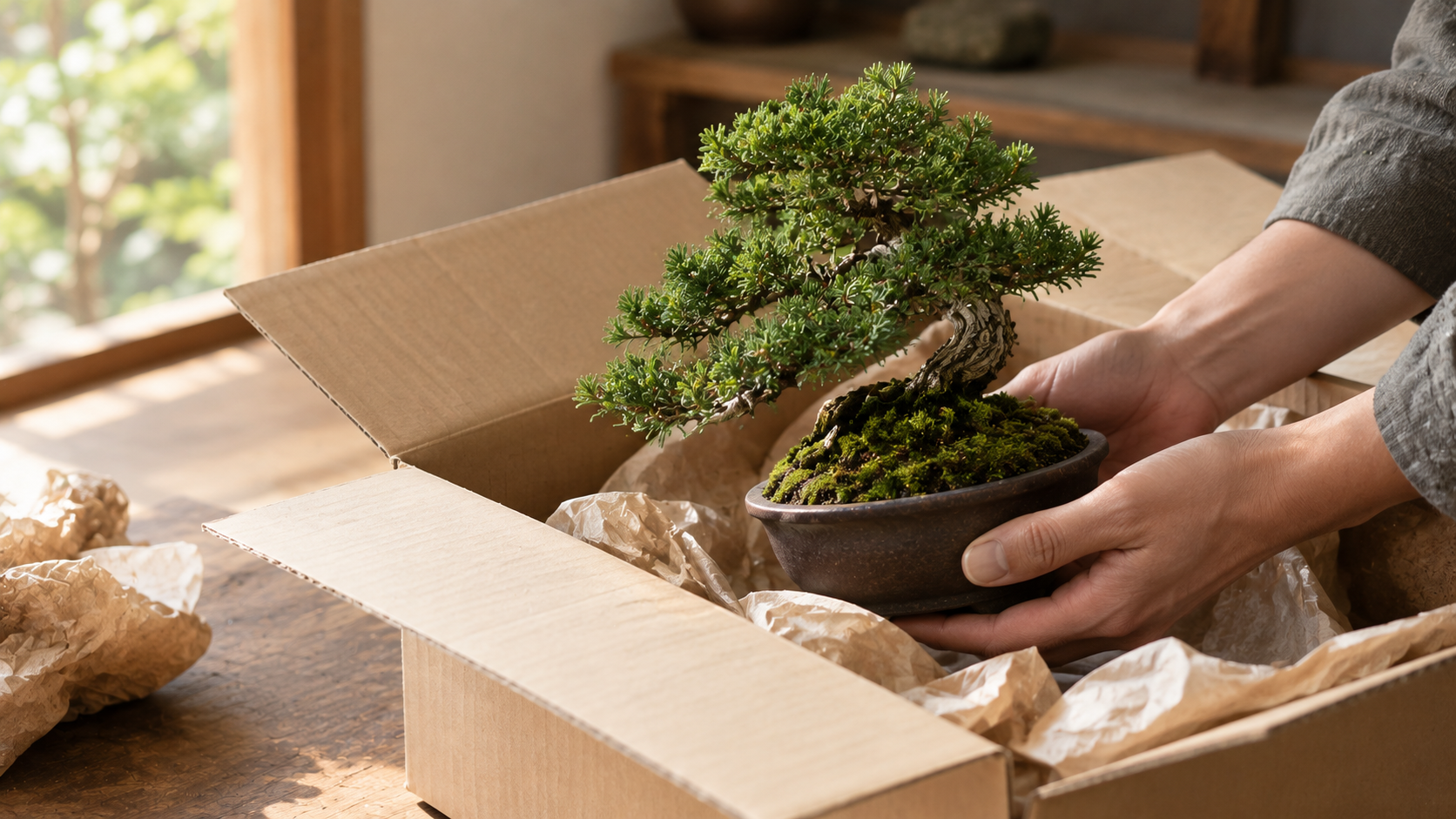
Then the box arrives. Sometimes the tree is exactly what you hoped for. Sometimes it’s smaller than it looked. Sometimes it’s a young, straight seedling in a decorative pot, sold as a “bonsai.” And sometimes, after a few days in a cold truck or a hot warehouse, it arrives stressed, dropping leaves, or worse.
Live trees are one of the hardest things to buy online. They’re living plants that have to survive shipping, and two trees sold under the same name can differ enormously in age, trunk, branch structure and health.
There’s also a question many readers ask us: can I just buy a bonsai directly from Japan? The short answer is that for most people outside Japan, it isn’t practical, and we’ll explain why below.
In my experience, the best online bonsai purchases come from nurseries that specialize in bonsai, show clear photos of the actual tree or a realistic sample, and have honest guarantees. This guide explains where to buy bonsai trees online, compares six sources from beginner-friendly shops to specialist nurseries, and explains what to check before you order.
Who this “where to buy bonsai trees online” guide is NOT for
It’s not about tools, pots or soil. Those are covered in our other guides. If you’re just starting, our bonsai tools for beginners guide explains what you’ll need alongside your first tree.
It’s not a species guide. We’ll mention which trees suit beginners, but choosing a species for your climate deserves its own research.
It’s not legal advice. Plant import rules are complex and change often. Always check with your country’s plant health authority before importing any plant.
Still with us? Let’s go.
How we compared these (3 things that actually matter)
1. Specialist vs general retailer
Bonsai specialists grow, import and style trees themselves. General online stores and marketplaces often resell young plants with little information about age or care. On bonsai forums, experienced growers repeatedly advise buying from sources others vouch for, and asking about scars and damage before buying.
2. Honest photos and descriptions
The best sellers either photograph the exact tree you’ll receive, or clearly state that you’ll get a similar tree. Look for size measurements, the tree’s age if known, and clear photos of the trunk and branches, not just the foliage.
3. Shipping and guarantees
Live trees are sensitive to temperature. Good nurseries explain when they ship, how they pack, and what happens if a tree arrives damaged. Read the guarantee and return policy before you buy, especially the time limit for reporting problems.
A few buying habits that matter more than the shop
None of these cost anything.
- Start inexpensive. Many experienced growers advise beginners to start with affordable material before spending heavily.
- Choose a species that suits your climate. An outdoor juniper and an indoor ficus need very different conditions.
- Order in the right season. Shipping in extreme heat or cold is risky. Many nurseries limit shipping in winter.
- Inspect the tree on arrival. Photograph it straight away, so you have a record if there’s a problem.
- Don’t repot immediately. Let a newly shipped tree settle before major work.
- Ask your local club. Members often know which sellers are reliable, and some sell trees themselves.
- See trees in person when you can. Bonsai shows and local nurseries let you choose the exact tree.
Where to buy bonsai trees online: comparison table
| Source | Based in | Best for | Range | Example prices | Ships to |
|---|---|---|---|---|---|
| Brussel’s Bonsai | Mississippi, US | Beginners to collectors | Beginner, hobbyist and specimen trees | ~$37–95 for listed examples | US |
| Wigert’s Bonsai | Florida, US | Tropical and specimen trees | Pre-bonsai to specimen | Varies | US |
| Eastern Leaf | California, US | Wide catalog, supplies | Indoor and outdoor trees, supplies | Varies | US |
| Bonsai Boy of New York | New York, US | Gifts and starter trees | Starter and gift trees | Varies | US |
| Herons Bonsai | Surrey, UK | UK buyers, Japanese specimens | Starter to imported specimens | Varies | UK |
| Local nurseries and clubs | Your area | Choosing the exact tree | Everything | Varies | Collect in person |
Prices and shipping areas are approximate and change often. Always check the seller’s current listings and policies.
The 6 best places to buy bonsai trees online, reviewed
1. Brussel’s Bonsai – best all-round US nursery
Brussel’s Bonsai, based in Olive Branch, Mississippi, describes itself as the largest dedicated nursery of bonsai trees in the United States.
Its range is organized by skill level: Beginner (starter trees and gifts), Hobbyist (higher-quality trees) and Master (specimen trees, described as rare and hand-shaped). It sells both indoor trees like ficus and jade, and outdoor trees like junipers, azaleas and maples. Listed examples include a Green Mound Juniper from about $37, Satsuki Azalea from about $37 to $95, and Trident Maple around $58. Shipping is free on orders of $49 or more.
On bonsai forums, one buyer described Brussel’s prices as reasonable for what they received, while another felt some material was expensive. That’s a fair summary of most large nurseries: good options at every level, but compare carefully.
Pros
- Large, dedicated bonsai nursery
- Clear skill-level categories
- Indoor and outdoor trees
- Free shipping over $49
Cons
- Some material can feel pricey
- Specimen trees aren’t described as Japanese imports
Best for: US buyers at any level, especially beginners choosing a first outdoor tree.
2. Wigert’s Bonsai – best for tropical and specimen trees
Wigert’s Bonsai is based on an 8-acre property in North Fort Myers, Florida. It started in 2003 as a hobby and now describes itself as one of the country’s largest full-service bonsai nurseries, and one of its largest wholesale producers of tropical pre-bonsai.
That makes it a strong choice for tropical species like ficus and buttonwood, which suit indoor growers in cold climates. Wigert’s also says it offers collected and imported trees, as well as nursery-grown material, and lists a range of one-of-a-kind specimen trees. It’s certified to ship bonsai anywhere in the United States.
Pros
- Tropical bonsai specialist
- Specimen and one-of-a-kind trees
- Pre-bonsai for growers who want to style their own
- Ships across the US
Cons
- Focus on tropicals may not suit cold-climate outdoor growers
- Prices vary widely by tree
Best for: indoor growers and anyone interested in tropical bonsai or pre-bonsai material.
3. Eastern Leaf – best for a wide catalog in one place
Eastern Leaf, based in Chino, California, sells live bonsai trees alongside a large range of bonsai supplies, including Japanese tools, soils, wire and pots. Its tree range includes Chinese elm, juniper and Fukien tea, among others.
Being able to order a tree, a pot, soil and tools in one place is convenient. But it’s worth being honest about live-tree reviews. On Trustpilot, Eastern Leaf has a low score from a relatively small number of reviews, with complaints focusing on trees arriving in poor condition, trees smaller than pictured, and difficulties with refunds. Trustpilot notes the company didn’t invite those reviews, so they may not be representative.
If you order a tree, read the size description carefully, avoid extreme-weather shipping, and photograph the tree when it arrives.
Pros
- Very wide catalog of trees and supplies
- Convenient one-stop shop
- Strong range of Japanese tools and soils
Cons
- Mixed reviews on live-tree shipping
- Read size descriptions carefully
Best for: buyers who want supplies and a tree from one store, and who check details carefully.
Search Eastern Leaf bonsai trees on Amazon
4. Bonsai Boy of New York – best for gift trees
Bonsai Boy of New York is an online bonsai shop focused on ready-to-give trees, often sold in decorative pots and gift sets. It’s a popular choice for birthdays and holidays.
The main thing to understand is what you’re buying. On bonsai forums, one member described many of its trees as young, straight seedlings that are expensive for what they are. Its Trustpilot profile has only a handful of reviews, split between happy buyers and complaints about plants arriving in poor condition or difficult support.
That doesn’t mean it’s a bad choice for a gift. But if you’re buying for yourself and want a tree with real trunk character, a specialist nursery is usually better value.
Pros
- Easy, gift-ready trees
- Wide range of popular indoor and outdoor species
- Simple ordering
Cons
- Many trees are young starter material
- Mixed, limited reviews
Best for: gifts and first-time owners who want something ready to display.
Search Bonsai Boy of New York trees on Amazon
5. Herons Bonsai – best UK nursery, with real Japanese specimens
For readers in the UK, Herons Bonsai in Surrey is one of the best-known nurseries. Its site is a seven-and-a-half-acre nursery, and founder Peter Chan has been traveling to Japan since the early 1980s to select rare bonsai material himself. The nursery has won many gold medals at the Chelsea Flower Show.
Herons says most of its stock is grown on site, while some of its very ancient specimens are imported from Japan and then grown on and refined at the nursery. Its range runs from inexpensive starter trees to major specimens, and it’s particularly known for maples, alongside junipers, pines and satsuki azaleas.
Pros
- Long-established UK specialist
- Some Japanese-imported specimen trees
- Starter trees through to collector pieces
- Strong reputation for maples
Cons
- Mainly serves UK buyers
- Top specimens are expensive
Best for: UK buyers, from beginners to collectors looking for Japanese specimens.
6. Local nurseries, clubs and specialist sellers – best for choosing the exact tree
The most reliable way to get a great tree is often not a big online store at all.
Local bonsai nurseries and clubs let you see the tree before you buy, check the trunk and roots, and ask about its history. Clubs often hold sales and auctions where members sell well-developed trees at fair prices. Many smaller specialist sellers also sell online, sometimes sharing individual photos and videos of each tree.
On bonsai forums, experienced growers recommend buying from sources others vouch for, contacting sellers with a price range, and asking about scars or old damage before paying. Reviews of smaller sellers can be mixed, so personal recommendations matter.
Pros
- See the exact tree before buying
- Advice from experienced growers
- Often better value for developed trees
Cons
- Depends on where you live
- Less convenient than online ordering
Best for: anyone who wants a tree with real character, and anyone ready to join a club.
Search bonsai clubs and societies near you
Can you buy bonsai directly from Japan?
This is one of the most common questions we get, and the honest answer is: for most hobbyists outside Japan, not easily.
In the United States, importing plants is regulated by USDA APHIS. Bonsai forum members who have looked into importing describe requirements such as growing in registered export nurseries and periods of post-entry quarantine, with rules that vary by species and state and change over time. The consistent advice is to contact APHIS directly before trying to import anything.
In the UK and EU, rules are also strict. For example, a 2020 regulation allowed certain dwarfed Japanese white pines and junipers from Japan into Great Britain only under tight conditions: at least two years in officially registered Japanese nurseries, regular inspections for listed pests, traceability, phytosanitary certificates, and a period of detention after arrival. That derogation ran only until the end of 2023, which shows how limited and specific these permissions are.
The practical takeaway: if you want a Japanese tree, buy from a nursery in your own country that imports legally and handles quarantine. Herons in the UK is one example of a nursery that imports some specimens from Japan.
Which source should you buy from? (By situation)
You’re a US beginner looking for your first outdoor tree: Brussel’s Bonsai.
You want an indoor tropical tree or pre-bonsai: Wigert’s Bonsai.
You want a tree plus supplies in one order: Eastern Leaf, with careful checks on size and shipping timing.
You’re buying a gift: Bonsai Boy of New York or a beginner tree from Brussel’s.
You’re in the UK: Herons Bonsai.
You want a tree with real character: a local nursery, club sale or recommended specialist.
You want a Japanese specimen: a domestic nursery that imports legally.
What to do when your tree arrives
- Open the box straight away and check the tree.
- Photograph it from several sides, including the trunk and soil.
- Water if the soil is dry.
- Put it in suitable light, but avoid harsh sun for the first few days.
- Don’t repot or prune heavily until it has settled.
- Contact the seller quickly if there’s a problem. Many guarantees have short time limits.
Once it’s settled, a good pot makes a big difference. Our Japanese bonsai pots guide covers Tokoname makers, and our akadama guide covers soil for the first repot.
Common mistakes when buying bonsai online
Buying on looks alone. A pretty pot doesn’t make a good tree. Look at the trunk.
Choosing the wrong species for your climate. Indoor and outdoor trees aren’t interchangeable.
Ordering in extreme weather. Heat and frost in transit cause many problems.
Ignoring the guarantee terms. Know the deadline for reporting issues.
Expecting a specimen at a starter price. Real age and character take years, and that’s reflected in price.
Conclusion: buy from specialists, and see trees when you can
Knowing where to buy bonsai trees online makes a big difference to what arrives at your door. Specialist nurseries like Brussel’s and Wigert’s in the US, and Herons in the UK, offer the best mix of choice and reliability. Gift-focused shops are fine for presents, but usually sell younger material. And buying directly from Japan is rarely practical for hobbyists, so a domestic nursery that imports legally is the way to get a Japanese tree.
Whenever you can, see trees in person, ask your local club, and start with something affordable while you learn.
Once your tree arrives, display it well. Our bonsai display stand guide shows how to finish the look.
Ready to choose? Browse Brussel’s Bonsai, or explore Wigert’s specimen and tropical trees.