Affiliate disclosure: Some links on this page are affiliate links. If you buy through them, Aribonsai may earn a small commission at no extra cost to you. It doesn’t change what we recommend or how we rank anything.
The tree is ready. The pot isn’t.
Bonsai repotting supplies are the small things nobody gets excited about, until you’re missing one.
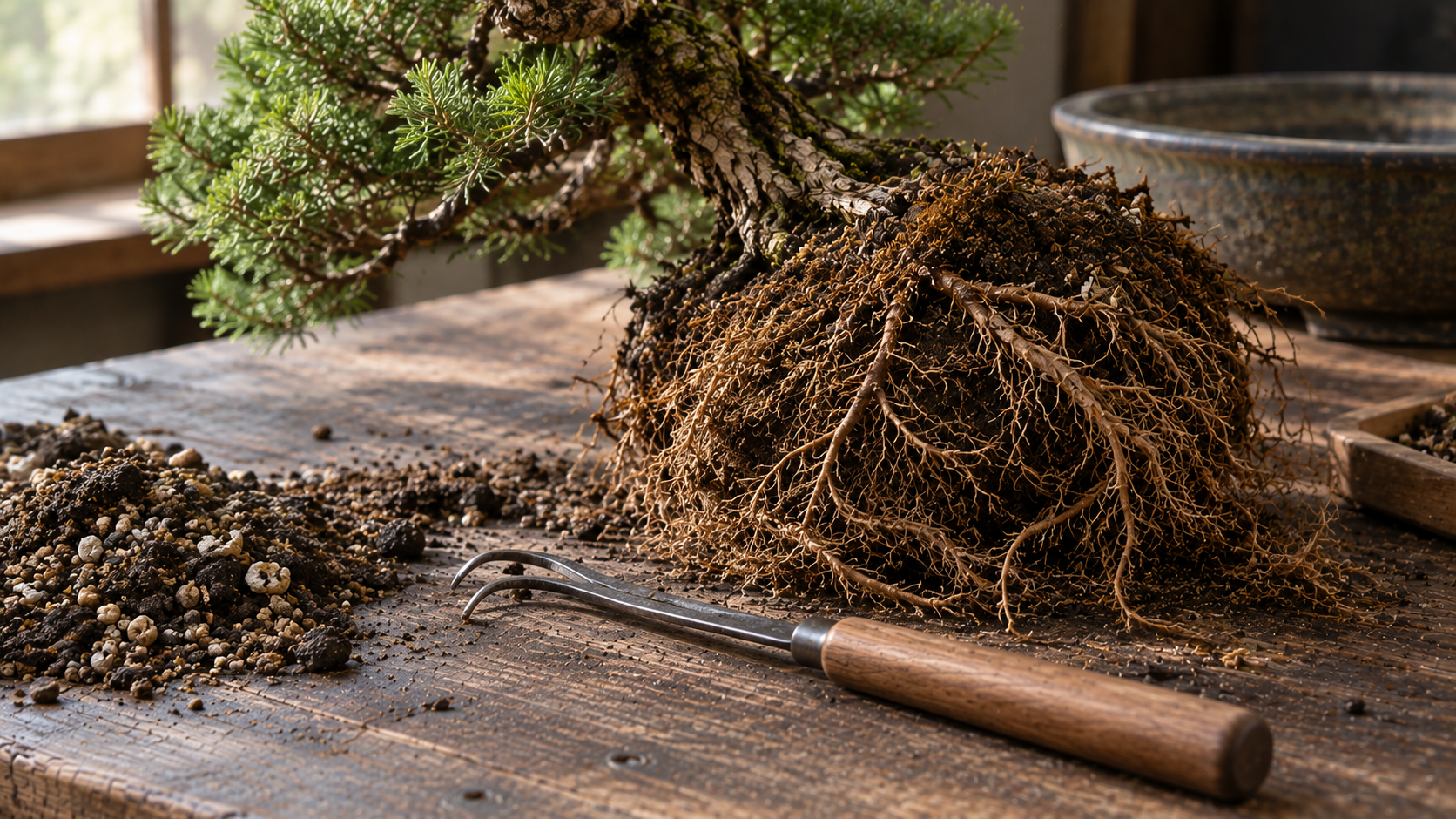
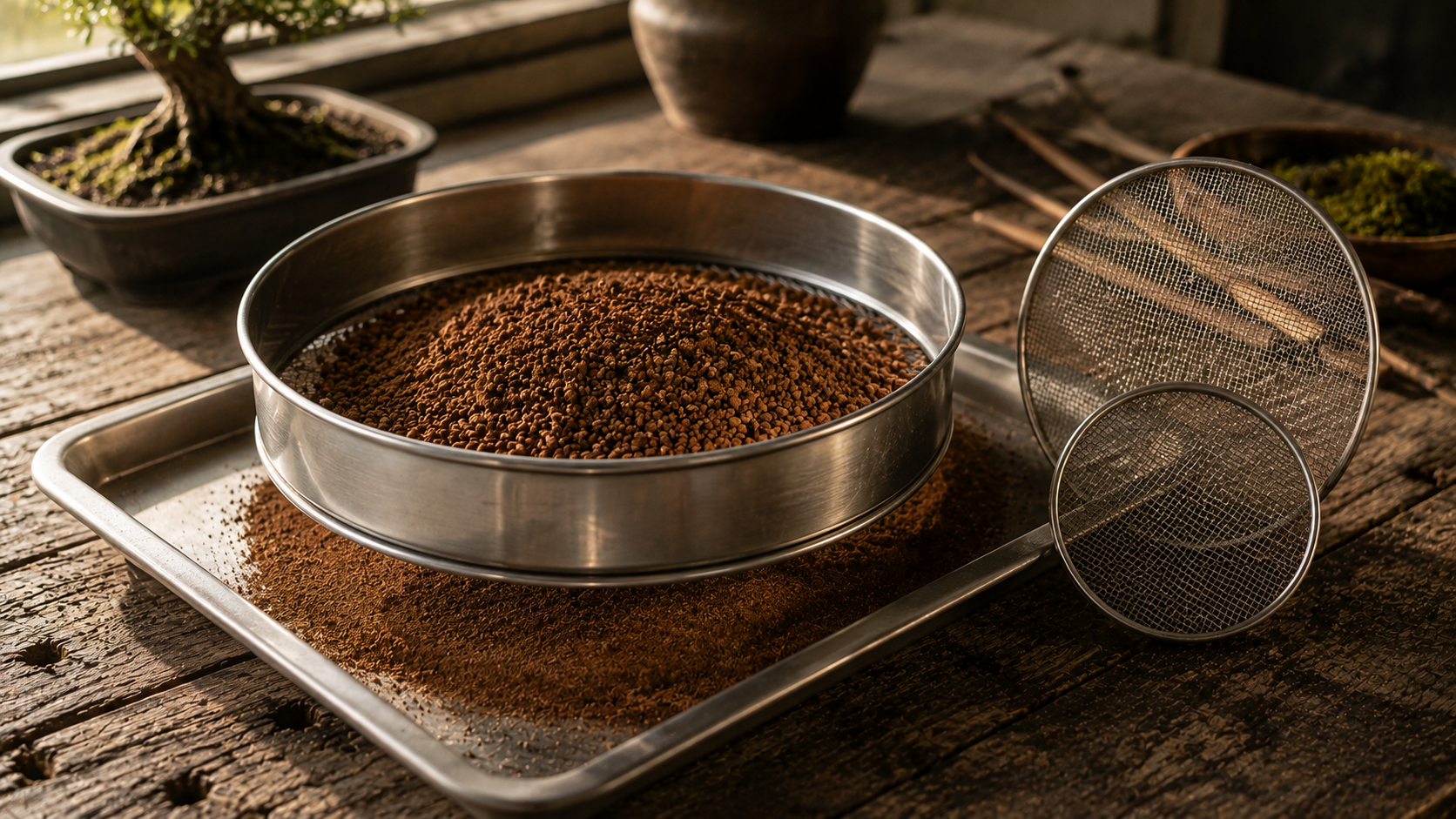
You’ve got fresh soil sifted. The tree is out of its old pot, roots combed out and trimmed. Then you pick up the new pot and realize you have nothing to cover the drainage holes. No wire to tie the tree in. No chopstick to work the soil between the roots. So the tree sits there drying out while you hunt through a drawer for a piece of window screen and a bent coat hanger.
It happens to almost everyone once.
The good news is that none of these supplies are expensive. Pot mesh, tie-down wire and a couple of bamboo chopsticks cost very little, and having them ready makes repotting faster, calmer and kinder to the tree. The less time roots spend exposed, the better.
In my experience, the difference between a smooth repot and a stressful one usually isn’t the soil or the pot. It’s whether the small stuff was ready before you started. This guide explains what you need, then compares six repotting essentials, from Japanese pot mesh to the tools you use to tie the tree in firmly.
Who this bonsai repotting supplies guide is NOT for
It’s not a soil guide. Soil choice deserves its own article. Our akadama and Japanese bonsai soil guide covers that.
It’s not about cutting tools. Root cutters, shears and saws are covered in our tool guides. This guide is about the consumables and small extras.
It’s not a step-by-step repotting tutorial. Timing and technique depend on your species and climate. We’ll explain where each supply fits, but not when to repot a particular tree.
Still with us? Let’s go.
How we picked these (3 things that actually matter)
1. Will it keep soil in and let water out?
That’s the whole job of pot mesh. It covers the drainage holes so soil doesn’t wash out, while letting water drain freely. It also helps keep some pests from crawling in through the bottom.
Good bonsai mesh is stiff enough to stay flat, has openings small enough to hold fine soil particles, and is easy to cut to size.
2. Will it hold the tree firmly?
A newly repotted tree must not move. If it rocks in the wind or when you water, the new fine roots tear and the tree struggles to establish.
That’s why bonsai growers tie trees into their pots with wire that runs through the drainage or tie-down holes and over the root ball. The wire needs to be strong enough to hold, but soft enough to bend and tighten easily. Pliers make tightening much easier.
3. Will it help soil reach every gap?
Air pockets under the root ball are a common problem. Roots that sit in empty space dry out and die back.
A simple bamboo chopstick, worked gently into the soil, settles it around the roots without crushing them. It’s one of the cheapest and most important repotting tools there is.
A few repotting habits that matter more than any product
None of these cost anything.
- Prepare everything first. Cut mesh, prepare wire and sift soil before the tree comes out of its pot.
- Work in the shade. Exposed roots dry quickly in sun and wind.
- Mist the roots. If a repot takes longer than expected, mist exposed roots with water.
- Use the right wire thickness. Too thin and it won’t hold. Too thick and it’s hard to tighten neatly.
- Don’t overtighten. Tie-down wire should hold the root ball firmly, not cut into roots or bark.
- Water thoroughly afterward. Water until it runs clear from the drainage holes, which also washes out remaining dust.
- Protect the tree afterward. Keep it out of strong wind and harsh sun for a while after repotting.
Bonsai repotting supplies comparison table
| Supply | What it does | Format | Origin | Approx. price |
|---|---|---|---|---|
| Japanese Pot Mesh (Wigert’s) | Covers drainage holes | 5 sheets, 12 × 8 in | Japanese mesh | ~$10 |
| Japanese Pot Mesh (Herons) | Covers drainage holes | 5 A4 sheets | Japanese quality | ~£15 (UK) |
| Pre-cut Mesh Discs (Yorkshire Bonsai) | Covers drainage holes, no cutting | 3.5 cm or 7 cm discs | Not stated | ~£4 per 5 (UK) |
| Aluminum Tie-Down Wire | Anchors tree and mesh | Coils, various gauges | Varies | Varies |
| Bamboo Chopsticks | Works soil around roots | Handmade or bought | Varies | Very low |
| Pliers for Tie-Down Wire | Tightens and forms wire | Hand tool | Japan (bonsai brands) | Varies |
Prices are approximate and vary by country and seller. Always check the current price before buying.
The 6 best bonsai repotting supplies, reviewed
1. Japanese Pot Mesh from Wigert’s Bonsai – best value for US growers
If you’re in the US, this is an easy first pick. Wigert’s Bonsai sells Japanese mesh in packs of five 12 × 8 inch sheets for around $10.
That’s a lot of mesh for the money. One sheet covers the drainage holes of many small and medium pots. Wigert’s notes that the original Japanese packaging is sometimes out of stock, in which case it supplies the same amount of mesh cut from its own large sheets, just without the Japanese packing.
The listing doesn’t name the material, but bonsai pot mesh is usually a stiff plastic grid that you cut to size with scissors.
Pros
- Japanese mesh at a low price
- Large sheets you can cut for any pot
- Plenty for many repots
Cons
- Material not stated on the listing
- Packaging may vary
Best for: US growers who want a stock of proper bonsai mesh.
Check Japanese mesh at Wigert’s Bonsai
2. Japanese Pot Mesh from Herons – best for UK growers
Herons Bonsai, a well-known UK nursery, sells a pack of five A4-sized sheets of what it calls Japanese quality bonsai pot mesh, for around £15.
As with most mesh, you cut it to size and place it over the drainage holes inside the pot. A4 sheets are a practical size: big enough for large pots, and easy to store flat.
The listing doesn’t name a maker or the material, so it’s best thought of as “Japanese-style” quality mesh rather than a specific branded product.
Pros
- Easy to buy in the UK
- Five large A4 sheets
- Good for pots of any size
Cons
- Maker and material not stated
- Pricier than the Wigert’s pack
Best for: UK growers who want quality mesh from an established bonsai nursery.
Check bonsai pot mesh at Herons
3. Pre-cut Mesh Discs from Yorkshire Bonsai – best for convenience
Cutting mesh squares before every repot isn’t hard, but pre-cut discs save time, especially if you repot lots of small trees.
Yorkshire Bonsai sells mesh wire discs designed to cover drainage holes, in 3.5 cm and 7 cm sizes. A pack of five 3.5 cm discs is about £3.95. The listing doesn’t state the material or whether pins are included, so you’ll still need wire to hold them in place.
They’re especially handy for shohin and small pots, where a neat round disc looks tidier than a roughly cut square.
Pros
- No cutting needed
- Two sizes available
- Neat fit on small pots
Cons
- Material not stated
- More expensive per piece than cutting your own
- Mainly available in the UK
Best for: growers with many small pots who want to save time.
Check pre-cut mesh discs at Yorkshire Bonsai
4. Aluminum Tie-Down Wire – the essential anchor
This is the supply most beginners forget, and the one that matters most for a healthy recovery.
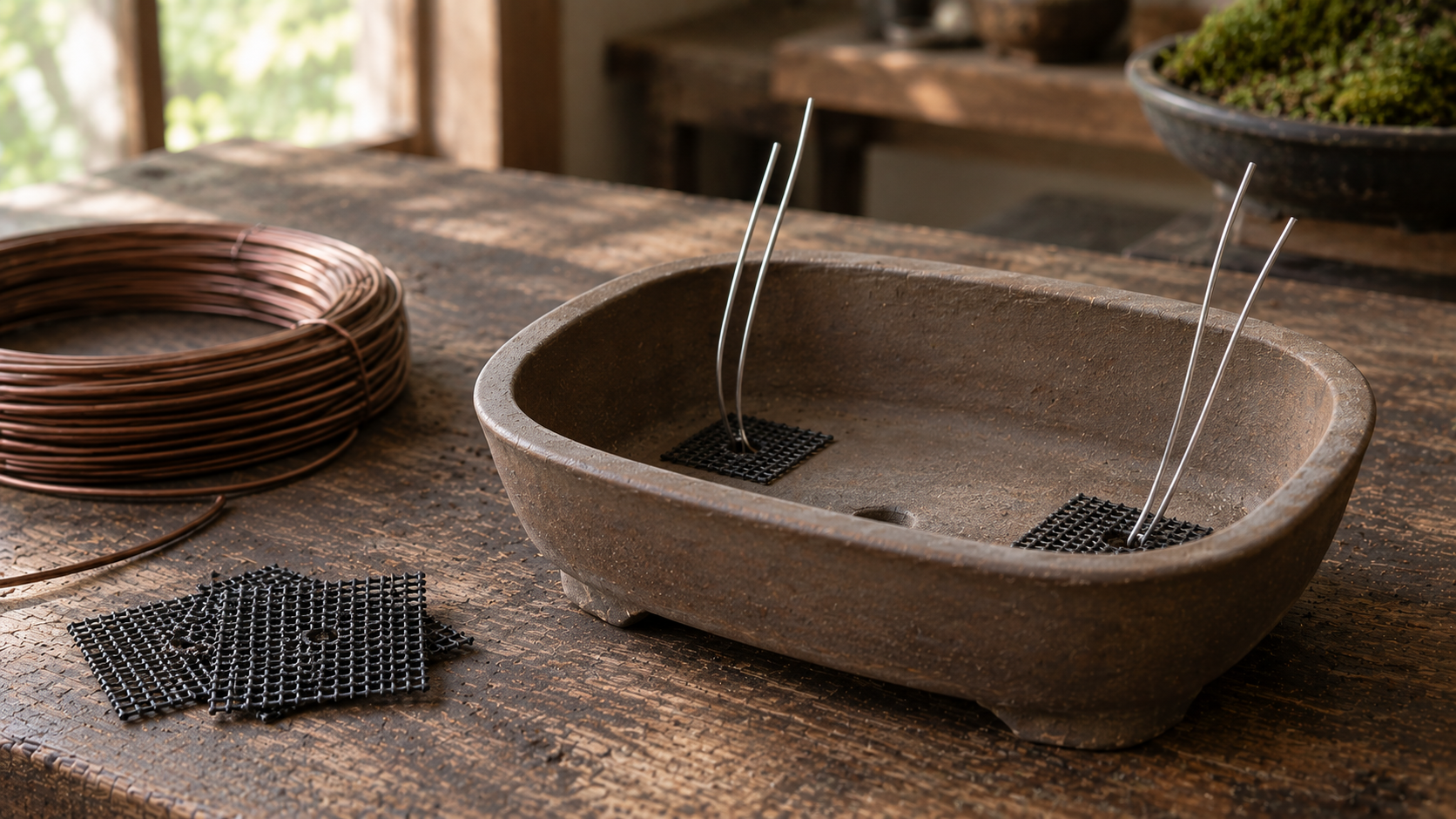
Tie-down wire holds the tree firmly in the pot. Typically, it’s threaded up through the drainage or tie-down holes, then pulled over the root ball and twisted tight. The same kind of wire is also used to make small pins that hold the mesh in place.
Most growers use anodized aluminum wire for this, because it’s soft enough to bend and twist easily and doesn’t rust. Thicker wire holds better on larger trees. If you already have bonsai training wire, you probably have what you need. Our bonsai wire guide compares aluminum and copper and covers gauges.
A popular trick from the bonsai blog Adamaskwhy: to hold mesh in place, cut a piece of wire about three times the hole’s diameter (the author suggests at least 2.5–3 mm thick), form two loops facing opposite directions, push it through the mesh into the hole, and bend the ends outward. The tension keeps the mesh from slipping or spinning. It’s one of those small bonsai repotting supplies tricks that saves a lot of frustration.
Pros
- Holds the tree still while new roots grow
- Also makes mesh pins
- Aluminum is easy to bend and doesn’t rust
Cons
- Choosing the right thickness takes a little practice
- Overtightening can damage roots
Best for: every repot. Don’t skip it.
Search anodized aluminum bonsai wire on Amazon
5. Bamboo Chopsticks – the cheapest tool that matters most
A bamboo chopstick might be the most underrated repotting tool there is.
Bonsai Mirai lists bamboo chopsticks among its five most important repotting tools. Worked gently into the soil, a chopstick pushes soil into gaps around the roots so there are no air pockets. It can also scrape soil away from the edge of a pot to free a tree, and act as a prop to hold the tree at the right angle while you tie it in.
You can use ordinary chopsticks, but many serious growers make their own from bamboo. Mirai’s guide suggests making each one from a single section of bamboo, keeping the node as a handle, and shaping a sharp tip so it moves soil gently and leaves clean wounds if it touches a root. They note that a chopstick should never span more than one node, because the swelling can crush soil and break roots.
Pros
- Very cheap or free
- Eliminates air pockets
- Gentle on roots
- Easy to make in different sizes
Cons
- Wears down over a repotting season
- Homemade ones take a little time to make
Best for: every grower, from beginner to professional.
Search bamboo chopsticks for bonsai on Amazon · Read Bonsai Mirai’s chopstick guide
6. Pliers for Tie-Down Wire – the tool that makes tying in easy
Tying a tree in by hand is possible. Tying it in tightly and neatly is much easier with pliers.
Bonsai Mirai calls anchoring the tree with tie-down wire the most important step for stability, and notes that pliers are used constantly throughout a repot: to pull wire tight, twist it, form hooks and remove old wire. Bonsai jin pliers are ideal, because they grip wire firmly and many also have a cutting edge.
If you already own jin pliers for wiring, you’re set. If not, our bonsai jin pliers guide compares Japanese options.
Pros
- Makes tie-down wire tight and secure
- Also used for wiring and deadwood work
- Saves your fingers
Cons
- Good Japanese pliers are an investment
- Easy to overtighten if you’re not careful
Best for: anyone who repots more than one or two trees a year.
Search Japanese bonsai jin pliers on Amazon
Which bonsai repotting supplies should you buy? (By situation)
You’re repotting for the first time: A pack of Japanese mesh, a coil of aluminum wire and a couple of chopsticks. That’s all you really need.
You’re in the US: Japanese mesh from Wigert’s Bonsai.
You’re in the UK: Mesh sheets from Herons, or pre-cut discs from Yorkshire Bonsai.
You repot many shohin or small trees: Pre-cut mesh discs save time and look neat.
You repot larger trees: Large mesh sheets, thicker tie-down wire and pliers.
You want a complete repotting setup: Mesh, aluminum wire, chopsticks, jin pliers, a root rake, a root cutter and a bonsai soil sieve for clean soil.
A simple repotting kit checklist
Before you start, have these ready on your bench:
- Mesh cut to size for every drainage hole
- Wire pins to hold the mesh
- Tie-down wire threaded through the pot
- Sifted soil, ready to use
- A chopstick or two
- Pliers and wire cutters
- A spray bottle to mist roots
If all of that is ready before the tree comes out of the old pot, the roots spend minutes exposed instead of an hour.
Where each supply fits in the repotting process
- Prepare the pot. Cut mesh, pin it over the drainage holes, and thread tie-down wire through the pot.
- Add a base layer of soil. Many growers use slightly larger particles at the bottom.
- Position the tree. Use chopsticks as props if you need to hold an angle.
- Tie the tree in. Pull the wire over the root ball and tighten with pliers until the tree doesn’t move.
- Fill with soil. Add soil and work it in with a chopstick until there are no gaps.
- Water thoroughly. Water until it runs clear from the bottom.
How to store bonsai repotting supplies
- Keep mesh flat. Rolled mesh tends to curl up in the pot.
- Store wire dry. Aluminum doesn’t rust, but tangled coils are frustrating.
- Keep chopsticks dry. Damp bamboo can grow mold.
- Keep everything together. A small box with mesh, wire, chopsticks and pliers means you’re always ready.
Common bonsai repotting supply mistakes
Skipping tie-down wire. A tree that moves after repotting struggles to grow new roots.
Using window screen that’s too fine. Very fine screen can clog and slow drainage.
Not pinning the mesh. Loose mesh slides when you add soil.
Using a thick stick to push soil. Pushing hard with a blunt stick compacts soil and crushes particles. A sharp chopstick works gently.
Overtightening the wire. Firm is good. Cutting into roots is not.
Conclusion: small supplies, big difference
Bonsai repotting supplies are cheap, simple and easy to forget. But they decide whether your tree sits firmly in a well-drained pot, or wobbles in soil full of air pockets.
For most growers, a pack of Japanese pot mesh, a coil of aluminum tie-down wire and a couple of bamboo chopsticks are the essentials. Add pliers to tie the tree in firmly, and pre-cut discs if you repot lots of small trees.
Prepare everything before you start, work in the shade, and tie the tree in so it doesn’t move. That’s most of what makes a repot successful.
Ready for repotting season? Check Japanese mesh at Wigert’s Bonsai, or pick up aluminum tie-down wire on Amazon before your next repot.