Affiliate disclosure: Some links on this page are affiliate links. If you buy through them, Aribonsai may earn a small commission at no extra cost to you. It doesn’t change what we recommend or how we rank anything.
Small pot, hungry tree
A bonsai lives in a very small amount of soil. And most bonsai soil, especially granular mixes based on akadama, pumice and lava, holds very little food on its own.
So everything the tree needs to grow, it gets from you. Too little feeding and growth stalls, leaves get small and pale, and the tree slowly weakens. Too much, or the wrong kind at the wrong time, and you get long, coarse shoots that undo a season of refinement.
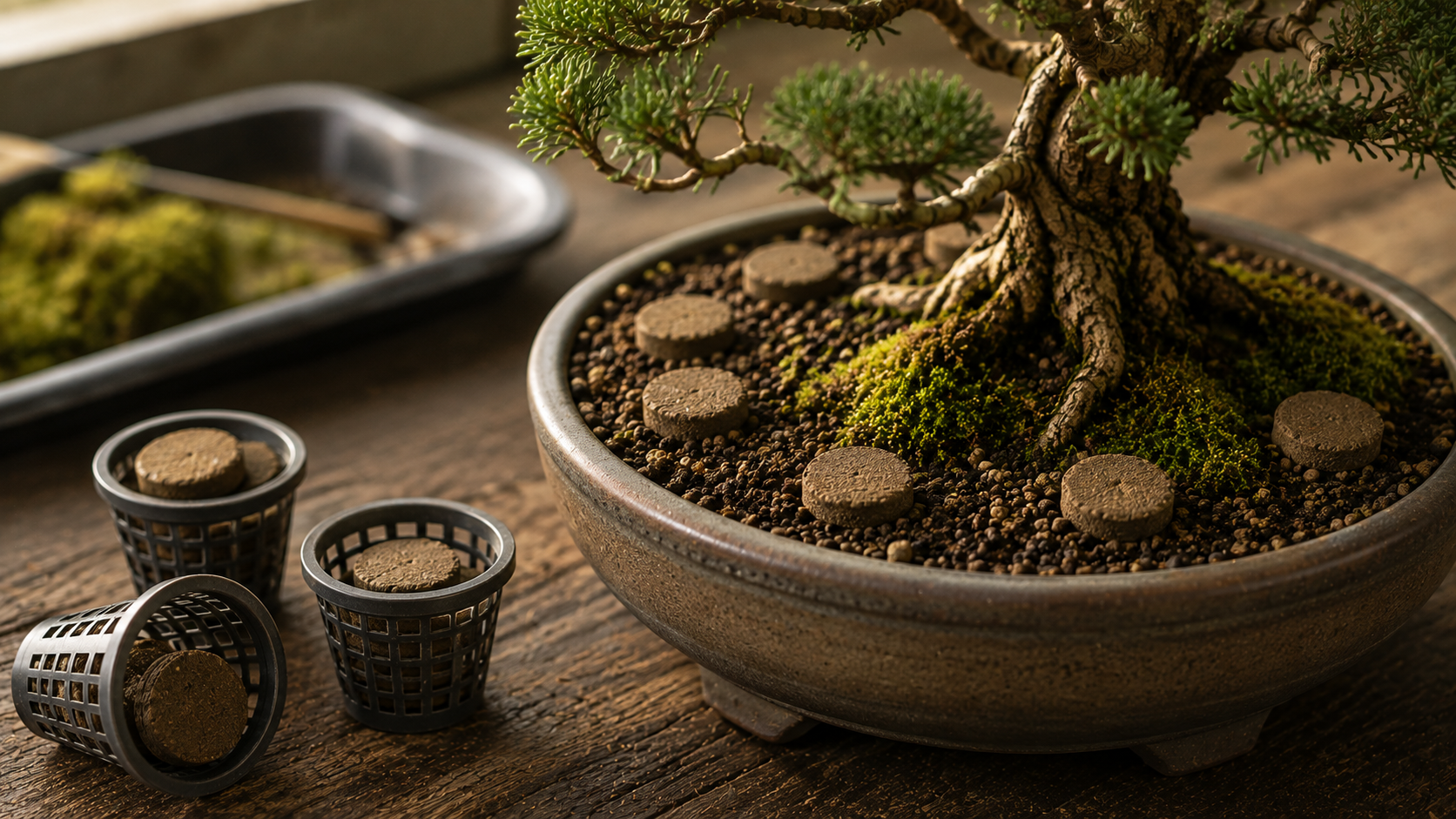
That’s where Japanese organic fertilizers come in. Walk through any Japanese bonsai nursery and you’ll see little brown cakes or pellets sitting on the soil surface of almost every tree, sometimes under small plastic baskets. They release food slowly every time you water, for weeks at a time.
Outside Japan, the choice is confusing. BioGold, rapeseed cakes, Tamahi, Hanagokoro, flowering formulas. Pellets, cakes, baskets. NPK numbers that don’t seem to match between retailers.
In my experience, the right fertilizer matters less than feeding consistently through the growing season. But a good slow-release organic fertilizer makes consistency much easier. This guide compares five Japanese options you can buy outside Japan, and explains which suits which tree.
Who this article is NOT for
It’s not a feeding schedule guide. When to feed, and when to stop, depends a lot on the species, the tree’s stage of development and your climate. We’ll mention general patterns, but always check guidance for your specific trees.
It’s not about synthetic liquid fertilizers. Many growers use them successfully, often alongside organic feeds. This guide focuses on Japanese organic solid fertilizers.
It’s not for you if your tree is sick, freshly repotted or recently collected. Those trees usually need recovery time before heavy feeding. Ask an experienced grower or your local club first.
Still with us? Let’s go.
How we picked these (3 things that actually matter)
1. Slow-release and organic
Japanese bonsai fertilizers are mostly organic: rapeseed meal, bone meal, fish meal, blood meal and similar ingredients, often fermented. They break down gradually as you water, feeding the tree a little at a time.
That slow release is the main appeal. You place the fertilizer on the soil and it keeps working for weeks. Retailers list around 50 days for rapeseed cakes, about two months for BioGold, and two to three months for Tamahi cakes.
One nice side effect: granular soils like akadama work well with this approach. Bonsai Tonight describes akadama as able to “hold and release fertilizer,” which is part of why the two are often used together. Our akadama and Japanese bonsai soil guide covers soil choice in more detail.
2. NPK balance
NPK is the ratio of nitrogen (N), phosphorus (P) and potassium (K).
- Nitrogen drives leaf and shoot growth.
- Phosphorus supports roots, flowers and fruit.
- Potassium supports overall health and hardiness.
Rapeseed cakes are usually higher in nitrogen, which is why they’re popular for spring and summer growth. Flowering fertilizers are lower in nitrogen and higher in phosphorus, so they don’t push long shoots at the expense of flowers.
One caution: retailers don’t always agree. BioGold, for example, is listed as 3.5-3.7-3.3 by Eastern Leaf, 4-5-4 by Bonsai Tonight, and 5.5-6.5-3.5 by a UK retailer. Check the bag you actually receive.
3. Odor, mold and practicality
Organic fertilizers can smell, especially when first wet, and some develop surface mold. That’s usually normal. One Hanagokoro seller says it doesn’t deteriorate even when it looks moldy, and a Tamahi listing says its slight initial odor disappears after the first watering.
For indoor trees, low odor matters a lot more. For outdoor benches, birds and animals sometimes move cakes around, which is why many growers use fertilizer baskets: small plastic cups that hold the cake in place on the soil. They also make it easy to remove old fertilizer and replace it.
A few habits that matter more than the brand.
- Space it out on the soil. Place cakes or pellets evenly around the pot, a little away from the trunk, rather than in one pile. That spreads the feeding across the root system.
- Replace, don’t pile on. When the old cakes have broken down, remove what’s left before adding new ones. Stacking new fertilizer on top of old makes it hard to tell how much the tree is actually getting.
- Keep notes. Write down when you fed each tree. With slow-release fertilizer lasting six to ten weeks, it’s easy to lose track.
- Watch the tree, not the calendar. Healthy color and steady growth suggest the feeding is about right. Very long, coarse shoots on a tree you’re refining can be a sign to ease off.
- Store it dry and sealed. Organic fertilizer can absorb moisture and clump in storage. A sealed bag or tub in a cool, dry place keeps it usable.
A note on fertilizer baskets. Baskets aren’t essential, but they solve a few small problems at once. They stop birds from picking at cakes, keep pellets from washing to the edge of the pot, and make it obvious where the fertilizer is when it’s time to replace it. Some growers also like that they keep the soil surface cleaner on display trees.
Prices below are approximate and were checked in October 2026 at retailers outside Japan.
Comparison table
| Fertilizer | Type | NPK (as listed) | Size | Approx. price | Best for |
|---|---|---|---|---|---|
| BioGold Original | Fermented organic pellets | Listed from 3.5-3.7-3.3 to 5.5-6.5-3.5 | 240g / 900g (also 2.4kg, 5kg) | ~$17 (240g) / ~$30 (900g) | All-round feeding, low odor |
| Maruta Rapeseed Cakes | Rapeseed cakes | 5-2-1 | 500g | ~$17 (sale) | Spring and summer growth |
| Tamahi Rapeseed Cake + Baskets | Rapeseed and bone meal | 5-4-1 | 500g + 10 baskets | ~$24 | Starting with baskets |
| Hanagokoro | Organic pieces | About 5-4-2 | About 500g | ~C$25 | Root development, steady feeding |
| Hanasaku Hiryo | Flowering fertilizer | 1.5-9-4.5 | 10 oz pouch | ~$12–30 | Flowering and fruiting trees |
Individual reviews
1. BioGold Original
The most popular Japanese bonsai fertilizer outside Japan, and our pick for most people.
BioGold is a made-in-Japan organic fertilizer, fermented with microorganisms and sold as small pellets of about 12.7mm. Eastern Leaf sells 240g for $16.95 and 900g for $29.95. Bonsai Tonight sells 900g for $30, plus larger 2.4kg and 5kg bags.
You can use it two ways. Bonsai Tonight explains that you can sprinkle the pellets on the soil, where they stay effective for about two months. Or you can dissolve two or three pellets in a liter of water as a liquid feed that lasts about ten days, useful when you want a quicker effect.
It’s also known for being relatively low in odor. Bonsai Tonight’s customer reviews specifically mention the lack of smell.
Pros
- Widely available from US and UK retailers
- Low odor compared with traditional rapeseed cakes
- Can be used as pellets or dissolved as a liquid feed
- Sizes from 240g up to 5kg
Cons
- NPK figures vary between retailer listings
- Pellets are small, so birds can sometimes move them
- More expensive per kilo than bulk rapeseed cakes
The liquid option is worth remembering. It’s handy for trees that need a quicker boost, or for indoor trees where you’d rather not leave pellets sitting on the soil for weeks.
Who it’s for: Almost anyone. A safe first Japanese fertilizer for outdoor trees, and a reasonable choice indoors thanks to the low odor.
2. Maruta Rapeseed Bonsai Fertilizer Cakes
The classic Japanese rapeseed cake.
Stone Lantern sells Maruta rapeseed cakes, made in Japan, at $16.95 per 500g bag (on sale from $22.95). They’re about 1″ across, listed as 5-2-1, and last about 50 days. The retailer suggests 4–6 cakes for an 8″ bonsai pot.
Stone Lantern notes that the higher nitrogen makes rapeseed especially useful in spring and summer, while being mild enough to use year-round.
In my experience, rapeseed cakes are what most people picture when they think of Japanese bonsai fertilizer. They’re simple and reliable. The main downside is that they’re more noticeable, both in smell and on the soil surface.
Pros
- Traditional, proven fertilizer
- Higher nitrogen for active growth
- Clear guidance on how many cakes per pot size
- Affordable, especially on sale
Cons
- More odor than BioGold, especially when first wet
- Larger cakes are more visible on display trees
- Can attract birds or animals without baskets
They’re also a good way to understand how organic feeding works. You can see each cake slowly soften and shrink over the weeks, which makes it easy to tell when it’s time to replace them.
Who it’s for: Outdoor trees in active growth, especially during spring and summer.
3. Tamahi Original Rapeseed Cake + 10 Baskets
The easiest way to get started with cakes and baskets together.
Cali Bonsai Depot sells a 500g bag of Tamahi rapeseed cake fertilizer with 10 fertilizer baskets for $23.99. It’s a product of Japan, made from rapeseed meal and bone meal, listed as 5-4-1. The pellets are about 25mm. The baskets come with covers, are made in Japan and include anti-UV ingredients.
The listing suggests scattering pellets on the soil or placing them in a basket, not too close to the roots, and watering over the basket for slow release. One application lasts about two to three months. It also notes a slight initial odor that disappears after the first watering.
House of Bonsai also sells Tamahi in a 7kg bulk size, for growers with large collections.
Pros
- Comes with 10 baskets with covers
- Bone meal adds phosphorus compared with plain rapeseed
- Long-lasting, around two to three months
- Bulk size available
Cons
- Slight initial odor
- Larger pellets than BioGold
- Baskets are small, so very large pots may need several
Ten baskets is enough for a small collection, and once you see how convenient they are, it’s easy to pick up more as you add trees.
Who it’s for: Growers who want to try the traditional cake-and-basket approach without buying baskets separately.
4. Hanagokoro
A rapeseed-based fertilizer with a broader mix of ingredients.
The Garden Cafe in Canada sells Hanagokoro at C$25 for about 500g (C$20 each when buying three or more). It lists ingredients as rapeseed oil, blood meal, bone meal, rice bran and algae extracts, with an NPK of about 5:4:2. The seller says the algae extracts help fine root development. The page describes it as traditionally used in Japan, though it doesn’t say where this particular product is made.
The seller gives a clear guide by pot size: 3–4 pieces for a 5″ pot, 4–5 for a 6″ pot, 5–7 for a 7″ pot and 6–8 for an 8″ pot, replaced about every 50 days in summer. It also says it’s “nearly impossible to overfeed” with it, because it releases slowly. As always, take that as the seller’s view and follow the label.
Pros
- Broad mix of organic ingredients
- Clear dosage by pot size
- Steady, slow release
Cons
- Origin isn’t stated on the listing we checked
- Repackaged by the retailer in smaller amounts
- Canadian retailer, so shipping elsewhere may cost more
Who it’s for: Growers who want a well-rounded organic feed with clear dosing, especially in Canada where shipping is simplest.
5. Hanasaku Hiryo (Japanese Flowering Fertilizer)
The specialist pick for flowering and fruiting trees.
Bonsai Outlet sells Hanasaku Hiryo, a Japanese flowering fertilizer, in a 10 oz pouch, listed between $11.90 and $29.90 depending on the option. Its NPK is 1.5-9-4.5, much lower in nitrogen and much higher in phosphorus than rapeseed cakes.
That balance is the point. Too much nitrogen on a flowering tree pushes leafy growth instead of flowers. A low-nitrogen, high-phosphorus feed supports flowering without encouraging long, coarse shoots. Bonsai Outlet also sells it in a “Flowering Feeding Bundle” with fertilizer cups.
Pros
- Formulated for flowering trees
- Low nitrogen avoids pushing excess shoots
- Small pouch, easy to try
Cons
- Not an all-purpose fertilizer
- Pricing depends on the option you pick
- Mostly useful for specific species
Many growers use a flowering fertilizer for part of the year and a general one for the rest, rather than one or the other. If you have a mixed collection, a small pouch alongside a bag of BioGold covers most needs.
Who it’s for: Growers with azaleas, flowering quince, crabapples and other flowering or fruiting bonsai.
Recommendation by use case
“I just want one good fertilizer for most of my trees.” BioGold Original. Start with 240g or 900g.
“My trees are growing outdoors and I want strong spring growth.” Maruta Rapeseed Cakes or Tamahi.
“I want to try fertilizer baskets.” Tamahi + 10 Baskets.
“I want clear dosing by pot size.” Hanagokoro or Maruta, both of which give per-pot guidance.
“I grow flowering or fruiting trees.” Hanasaku Hiryo for the flowering period, with a general fertilizer at other times.
“I keep trees indoors.” BioGold, for its lower odor. The liquid method is an option if you’d rather not leave pellets on the soil.
Conclusion: feed steadily, and match the fertilizer to the tree
Here’s the short version.
For most people, BioGold is the easiest place to start. It’s low in odor, widely available, and flexible. Rapeseed cakes are a classic, cheaper choice for outdoor trees in active growth. A flowering fertilizer is worth adding if you grow azaleas or fruiting trees.
Whatever you choose, consistency matters more than brand. Organic fertilizers release a little at a time as you water, which is why good watering habits and good feeding go together. Our bonsai watering guide covers the tools that make watering easier and more even.
If you’re just starting out, keep it simple. One general fertilizer, applied steadily through the growing season, will do more for your trees than a shelf of specialist products used occasionally. Add a flowering feed or baskets later, once you know what your trees need.
And always follow the label. Retailer guidance is a good starting point, but the instructions on the bag you actually buy should come first.
Ready to stock up?